
Curated by Zach has turned 3D supercar design into a new form of digital collecting—creating hyper-realistic concepts that sit between automotive fantasy, industrial design and viral culture. His breakthrough matte-pink Bugatti Chiron generated more than 20 million views, proving that a render could command the same attention as a physical reveal.
Yet Zach’s work is not built around shock value alone. His most successful concepts feel believable enough to exist: unusual colourways, transparent aerodynamic elements, reimagined bodywork and materials presented with the precision of a manufacturer’s campaign. In conversation with LAPSOFLUX, he explains how he developed that visual language, why new artists should resist shortcuts and where artificial intelligence fits into the future of 3D design.

How Curated by Zach Found His Design Language
Zach’s visual identity grew from an obsession with cars and a frustration familiar to collectors: factory configurators offer choice, but only within carefully controlled boundaries. “I remember sitting on the Porsche configurator thinking, ‘There’s not enough creative freedom here,’” he says. “I wanted to build something that didn’t just look different—it felt different.”
Three-dimensional design gave him the freedom that conventional configuration could not. He could test combinations no manufacturer would approve, change proportions, develop one-off aerodynamic pieces and treat paint, glass and carbon fibre as parts of a larger composition. Because the finished images were rendered realistically, viewers could imagine the concepts moving from the screen into a private collection.
“I just kept trying things—wild colourways, unconventional materials, unique wings, all of it,” Zach explains. “Bringing it to life in a realistic way made it feel even more powerful. That freedom to experiment has 100% shaped my voice.”

The matte-pink Bugatti Chiron became the clearest demonstration of that approach. Colour gave the image immediate stopping power, while the quality of the execution encouraged a second look. More than 20 million views followed. The render succeeded because it worked on two levels: instantly readable as social content and detailed enough to be considered digital automotive art.
Learning 3D Design Without Taking Shortcuts
For aspiring designers, Zach’s starting point is practical: download Blender. The open-source program is free, powerful and supported by an enormous community of artists and educators. His next recommendation is almost a rite of passage in the field—the famous Blender doughnut tutorial.
“Everyone says it, but watch the Blender doughnut tutorial,” he says. “I dreaded it too, but it teaches you the fundamentals. From there, YouTube is your best friend. Whether you’re into art, cars or architecture, there’s a tutorial for you. Just get into the software, play around and build that foundation.”
The temptation is to chase a polished result before understanding the system beneath it. Zach sees that as the most common mistake. “Trying to take shortcuts,” he says. “You’ve got to do the hard stuff. Watch the tutorials. Learn basic modelling. Understand how mapping works. If you skip those early steps, you’re going to hit a wall later.”
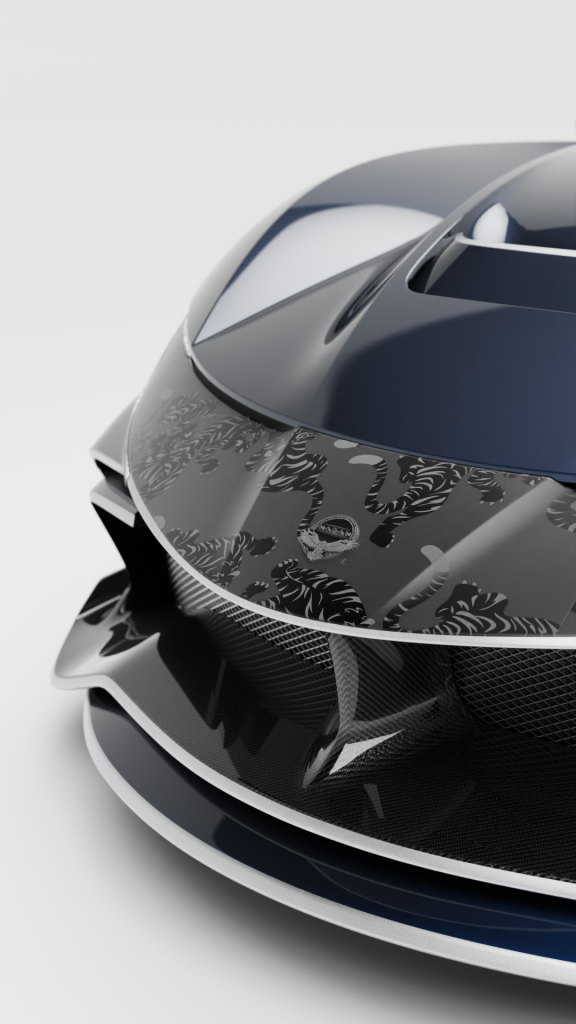
That foundation includes modelling, topology, materials, lighting, camera placement and post-production. None is glamorous in isolation, but together they determine whether a concept feels tangible. The same principle applies beyond automotive work: the artist must first understand how a surface, reflection or proportion behaves before deliberately pushing it into unfamiliar territory.
Turning Digital Supercars Into a Recognizable Brand
Social media gave Zach access to an audience that once would have required a design studio, manufacturer or gallery. It also created a harder challenge: producing work that remains artistic while competing inside a fast, repetitive content cycle.
“It all comes down to content—not just any content, great content,” he explains. “You have to find a way to blend short-form content with real art. If someone can’t tell whether your post is ‘just content’ or an actual work of art, that’s where the magic happens.”

Consistency turns that attention into identity. A viral post may introduce an artist, but a coherent body of work makes the name memorable. Zach’s repeated use of bold colour, dramatic aero and photorealistic presentation means viewers can often recognize one of his designs before reading the credit.
For collectors and brands, that recognizability creates commercial value. A bespoke render can explore a specification before a physical build begins, communicate the personality of a private commission or give an existing vehicle a digital life beyond traditional photography. It becomes part concept study, part campaign and part collectible artwork.
Keeping One Foot in Reality as AI Changes the Tools
Zach’s work regularly approaches the boundary between possible and impossible. “I try to sit right at the edge of what’s possible,” he says. A transparent wing is one example. The idea began as a visual experiment, but he is now working with a company to explore making it real—a process complicated by safety regulations, engineering and production limitations.
“Sometimes I push things into that dreamlike space, but I always try to keep one foot in reality,” he explains. “If it feels too fake, people won’t connect with it. But if you can dream up something that could be real, that’s the sweet spot.”
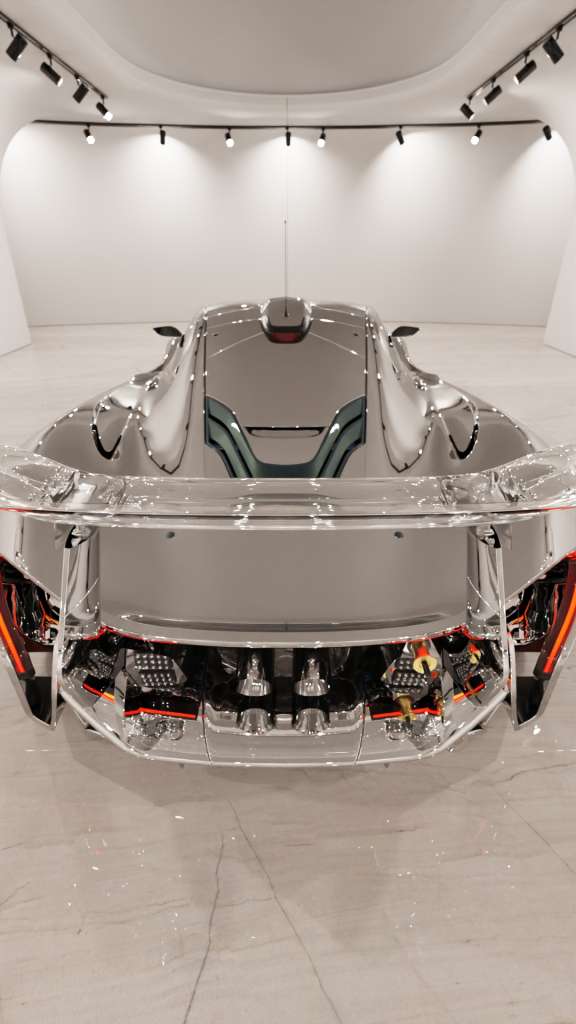
Artificial intelligence is making that boundary move faster. Zach already uses AI-assisted tools such as Topaz in post-production and is exploring emerging systems that can help generate or refine 3D models. He sees automation reducing technical friction, but not replacing the judgement that gives a design meaning.
“I think we’re heading toward a world where AI enhances our creative process, not replaces it,” he says. “More plugins, more automation, but still rooted in creativity. You’ve got to stay ahead of it, though—it’s moving fast.”
The future of Curated by Zach may move beyond renders into physical components, brand collaborations and fully realized collector commissions. The underlying idea remains consistent: technology is most powerful when it expands an artist’s range without erasing the point of view that made the work worth noticing.