
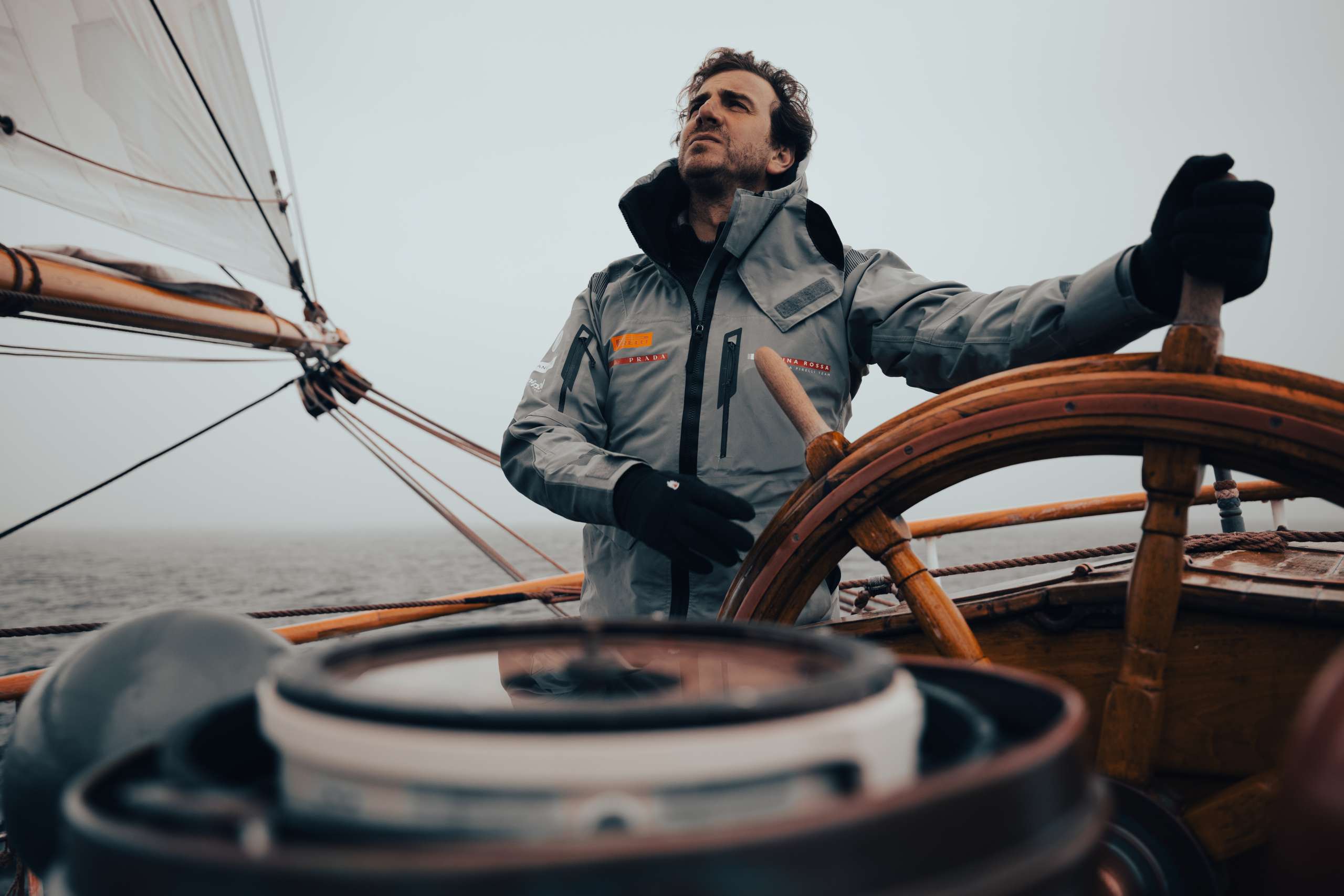
Some people plan trips. Niccolò Banfi follows currents. The Italian explorer has built a life shaped by wind, water, and the quiet spaces most of the world rushes past. His voyages stretch from polar ice to open ocean, but what truly defines his work is not distance. It is depth. Each journey becomes a reflection on nature, time, and the stories that only reveal themselves when everything else falls silent.
His relationship with the edge of the world deepened in Antarctica, reached the old way, under sail, after crossing the formidable Drake Passage. Icebergs rose like monuments. The sea softened into an almost spiritual stillness. Among vast penguin colonies moving in instinctive harmony, Banfi felt both wonder and reckoning. “Few things prepare you for the moment the white continent rises on the horizon,” he says. “It feels like the planet is introducing itself in its purest form.”

That introduction, however, came with heartbreak. Glaciers in retreat and collapsing ice fronts stood as undeniable proof of environmental change. The emotional tension between awe and urgency now lives at the core of his creative project Remoteness Eyes to the Edge, and in his forthcoming book of the same name. Through photography and reflective narrative, Banfi translates remote landscapes into intimate human experience. “You cannot stand in front of a melting glacier and stay neutral,” he reflects. “Beauty and loss exist in the same breath there.”
Now his compass points toward another long passage, from England to the Canary Islands and onward across the Atlantic aboard a historic tall ship carrying a German flag. The planning involves charts, weather patterns, and provisions, yet Banfi insists the true preparation happens within. Long days at sea dissolve routine and distraction, creating space for deeper introspection. “The ocean is a mirror,” he says. “When there is nothing around you but water and sky, your mind finally has room to speak.”
Life aboard a vessel more than a century old demands humility and awareness. Every sound of wood and canvas echoes with maritime history. Banfi packs with intention, choosing durable technical gear, natural fiber layers, and tools that allow him to document the journey without disconnecting from it. A satellite phone offers safety, but his journal remains just as essential. “I never sail without something to write on,” he explains. “If you do not record what the sea teaches you, the lesson fades like a wake behind the stern.”
Storytelling has always been part of his compass, shaped early on by tales like The Little Mermaid, Peter Pan, and Pirates of the Caribbean. Comparisons to Prince Eric and Jack Sparrow make him smile, but he understands the symbolism. Adventure, for him, is not fantasy, it is a lived philosophy. “Those characters chase something beyond the map,” Banfi says. “I think we all feel that pull at some point, I just chose to follow it.”
The United States is also on his horizon, with creative conversations unfolding in Los Angeles and New York City. With a growing audience there, Banfi hopes to share Remoteness Eyes to the Edge through exhibitions, talks, and collaborations that bridge exploration with visual culture.
Time spent in remote places has permanently reshaped his perspective. In isolated coastal villages or alone on night watch mid ocean, he feels the layers of modern noise fall away. What remains is clarity and connection. Landscapes feel older than memory, and human presence feels smaller but more meaningful. These experiences have recalibrated his understanding of scale, fragility, and belonging.
For those inspired by his path, Banfi offers grounded advice. Start small. Learn practical skills. Spend time outdoors. Make mistakes and grow stronger from them. Most importantly, keep a record of the journey, even if no one else ever reads it. Exploration begins long before the horizon.
Beyond the upcoming Atlantic crossing, another dream is quietly forming, a long term circumnavigation that would follow ancient wind routes across every ocean. It exists for now in sketches and notes, waiting for the right moment to become reality. Until then, Niccolò Banfi continues to move with the elements, listening for direction not only from charts and forecasts, but from the wind itself.