
Before the stage lights, before the crowds, before the mystery, there was a four-year-old at a keyboard, completely locked into the moment sound came to life. That spark did not fade. It multiplied. Every move after that chased one thing: music. No backup plan, no distractions, just relentless focus and a pull that felt bigger than choice.
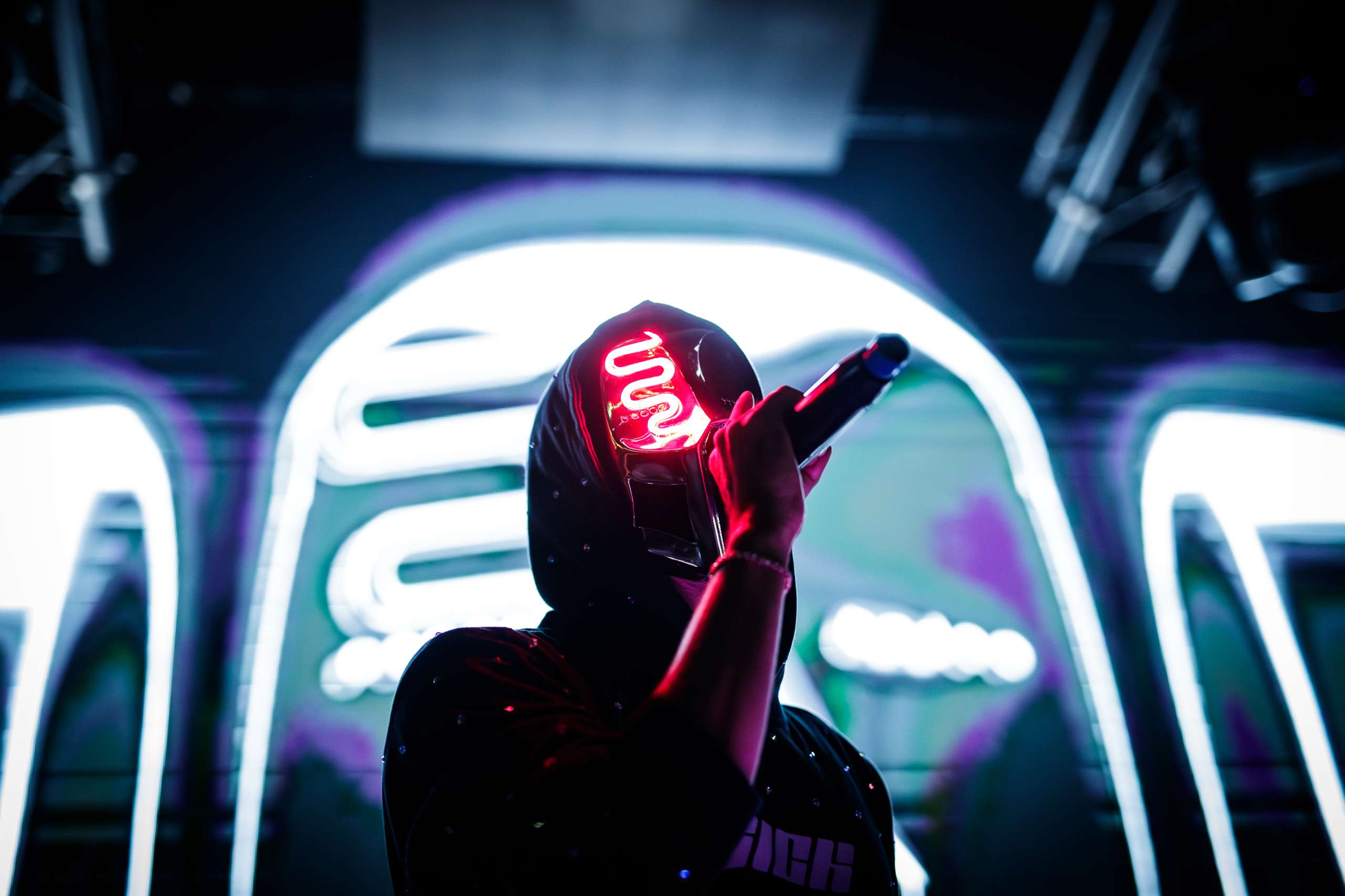
That obsession turned into identity, and that identity became Sickick.
A musical sensation, DJ, and artist pulling in millions of views online, building a brand that lives beyond the tracks. Not just sound, but energy, emotion, and a presence that people feel before they even press play..

Ask Sickick where that obsession came from and he points directly to the keyboard his mother gave him on his fourth birthday. “I will never forget the moment I started playing my first keyboard,” he says. “My mom gave it to me on my fourth birthday, and I was completely blown away by the fact that I could create melodies. That feeling stayed with me. It became something I wanted to chase for the rest of my life.” Everything since stems from that first moment. “Every decision since then has been based on whether it brings me closer to music,” he adds. “That kind of focus is what led me here.”
“Here” is a career that has made him one of the most magnetic figures in modern music. More than fifteen million followers across platforms. A YouTube mashup of Sean Paul classics streamed over fifty-one million times. His 2017 single “Mind Games” has amassed over forty million streams. A hand-picked collaboration with Madonna on her 1998 anthem “Frozen” that ignited more than 125,000 TikTok videos, charted in major markets within a day of its official December 2021 release, and spawned further official versions featuring Fireboy DML and 070 Shake. Along the way, an iHeartRadio Future Star Award in 2017, the MTV Europe Music Award for Best Canadian Act in 2018, and, most recently, an industry win at Miami Music Week in 2025. He has attracted unprompted praise from Missy Elliott, Timbaland, Sean Paul, Jason Derulo and even Shaquille O’Neal, an ever growing collection of endorsements broad enough to make clear he is not a niche act.
And yet he operates nothing like a conventional star with similar levels of success in social media, Sickick breaks predictive patterns and is always upping the ante. This constant evolution of his music and his performances, coupled with his lack of fear to deviate from a set path continually increases the separation between him and every other DJ in his tier.
Start with the sound. Rather than settle into any single format, he invented one. “I call my sound SickHop,” he says, “but honestly it is more about feeling than genre. It is whatever comes naturally in the moment.” It sounds casual and is in fact the whole philosophy: a hybrid of trap, bass, reggaeton, electro and R&B that functions less as a template than as a mood. The goal behind it is plainly stated. “More than anything, I want people to walk away from my music feeling empowered. I want them to feel fearless and in control of their own lives. That is the real goal behind everything I create.”
Then there is the mask. In an era when algorithms reward faces as much as sound, Sickick refused the face entirely. It was not, he says, a marketing device. It was a clarifying one. “At one point, wearing a mask was not just a creative choice,” he explains. “It was a way to remove bias and let the music speak first.” The mask forced the audience to meet him on his terms. It turned the act of listening into the only reasonable first impression. And it gave him room to evolve without the expectations fame ordinarily imposes.
Staying independent by choice was the third departure, and perhaps it’s the hardest. Without a label’s resources, every piece of the operation had to be built from the ground up. “Being independent brings freedom, but also full responsibility,” Sickick says. “One of the biggest challenges is learning how to market yourself and gain attention. Social media has been key, and through consistency I have built a global audience.” That audience was earned slowly, then, as with so many careers that explode on socials, all at once. When others went quiet during the pandemic, he doubled down. “I think one of my greatest achievements was how I used the years during COVID,” he says. “Instead of letting it become a dark period, I stayed consistent and kept creating. The content I released during that time helped propel me into four straight years of touring every single weekend. Standing in front of sold out crowds filled with people who showed up specifically for me, there is no feeling like that.”
What emerges in conversation, more than any single accomplishment, is a creative philosophy that is disarmingly unmodern for a producer whose audience lives inside a feed. Sickick talks about the work less like a technician and more like a jazz musician. “In a world filled with noise, distractions and constant pressure to perform,” he says, “the real challenge became silence. Learning to trust instinct. Learning to create without overthinking.” It is a doctrine of inward listening, and it explains why the music so often feels like a revelation, rather than a manufactured sound built with a typical layering. e.”
His heroes make sense in that light. “Freddie Mercury is my favorite performer,” he says. “His energy and stage presence deeply inspire me, and I feel we would have connected as friends. Similarly, Michael Jackson has strongly influenced my craft, though I am not sure we would have been as close.” These are not the reference points of an artist content to remain behind a laptop. They are the reference points of a showman who understands that the ultimate job of the work is to make an audience feel something uncommon.
Which is where the next chapter begins. Sickick has signalled a pivot from DJ into artist, a move most producers attempt, few complete, and fewer still complete on their own terms. “I am stepping from DJ into artist, with a wave of original music set to redefine what fans expect,” he says. “I am ready to break my image, rebuild it in real time, and rise from it all like a phoenix.”
It is, on its face, a bold promise. But Sickick has already engineered one unlikely ascent, so who’s to say he can’t repeat the feat. He has built a catalog without revealing his face, a global audience without a label, a collaboration with Madonna from a bedroom remix, a genre where none existed. The luxury of his position now is not the scale of it. It is the optionality, the rare permission to reinvent without losing the audience that found him.
What makes Sickick different, in the end, is not the mask, or the collaborators, or the streaming counts, though each facet of his artistry is remarkably impressive on its own. It is the quiet refusal to let any of those things define him. If the first decade was about building something the industry could not ignore, the second appears to be about building something only he could have made.