
Moishe Mana did not arrive in America as a property tycoon. He arrived from Tel Aviv in 1983 with little money, worked as a dishwasher, sold goods on Manhattan streets and eventually turned access to a van into a moving business. Four decades later, the entrepreneur is pursuing a much larger kind of move: buying enough of Miami’s urban core to influence how entire neighborhoods evolve.
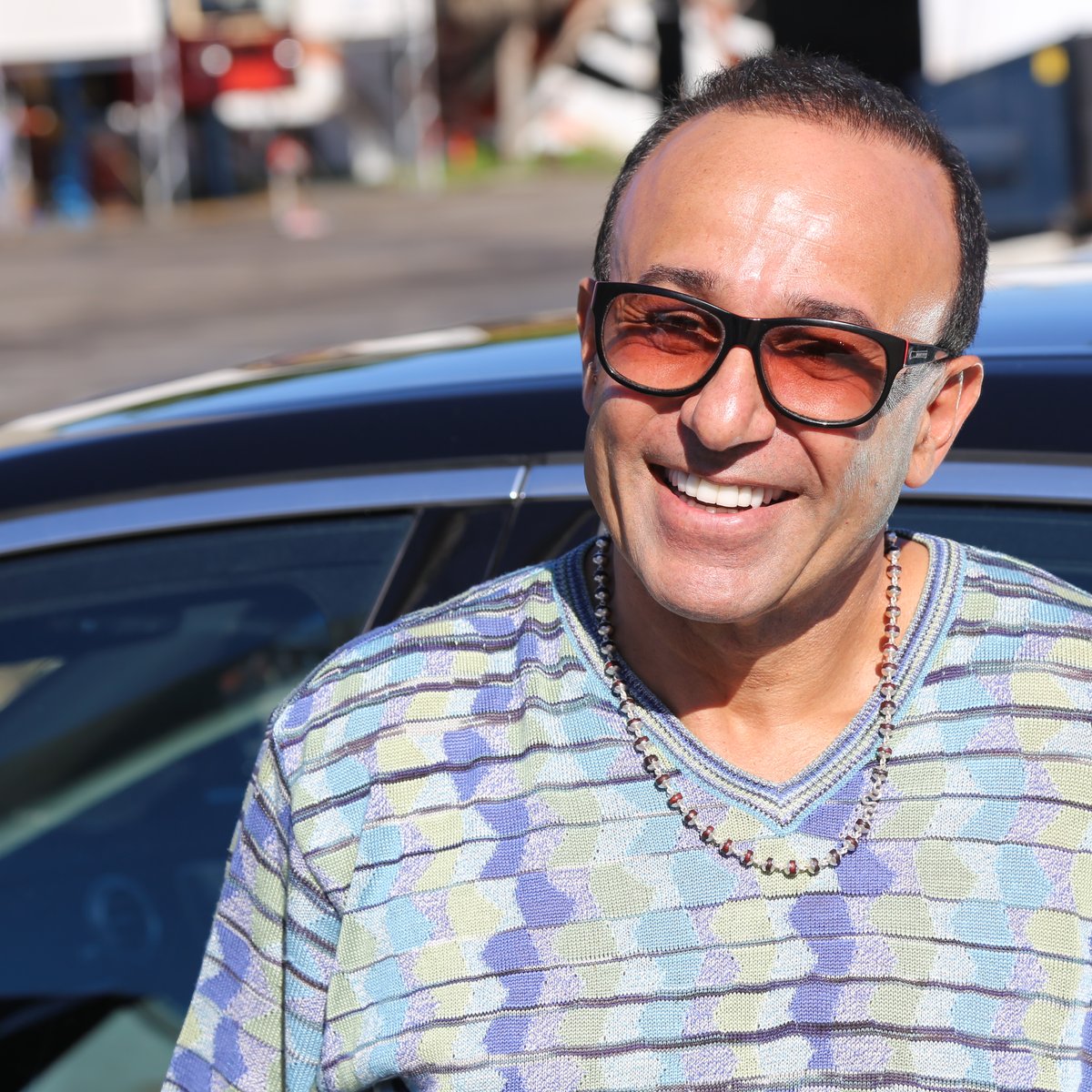
Through Mana Common, the privately held platform he chairs, Mana has accumulated more than 45 acres in Wynwood and a Downtown Miami portfolio that the company says now comprises roughly 80 buildings. The scale is the story. This is not simply a collection of trophy assets; it is an assemblage—a concentration of adjoining or strategically connected properties that can be planned as a district rather than managed one address at a time.
From moving boxes to buying blocks
Mana’s first fortune grew from Moishe’s Moving Systems and the storage businesses that followed it. He moved into document management through GRM, art logistics and storage, and later creative real estate. Milk Studios placed fashion and media inside Manhattan’s once-industrial Meatpacking District. Mana Contemporary transformed a former tobacco warehouse in Jersey City into a vast arts campus.

The through-line is easy to see. Moving created storage; storage created warehouses; warehouses created real-estate holdings; and those holdings became platforms for art, fashion, events and business. Miami is the most ambitious version of that playbook.
The 45-acre Wynwood bet
Mana began buying in Wynwood around 2010, when he paid approximately $5 million for three industrial buildings on eight acres, according to Florida Trend. He continued assembling land until his holdings exceeded 45 acres, making him Wynwood’s largest landowner.
Mana Wynwood became an events and exhibition campus, hosting art fairs, concerts, fashion programming and large public gatherings. In July 2026, Mana added the roughly 13,000-square-foot building occupied by French brasserie Pastis and lighting brand Apparatus for $24.5 million. The purchase was notable not because it introduced Mana to Wynwood, but because it tightened an already dominant position in one of Miami’s most valuable cultural districts.
A Downtown portfolio built one address at a time
Downtown is where Mana’s strategy becomes most consequential. For more than a decade, he has acquired buildings and storefronts along and around Flagler Street, Miami’s historic commercial spine. Recent deals have added both scale and symbolic weight to the portfolio.
| Property | Price | Year | Why it matters |
|---|---|---|---|
| Museum Tower, 150 W Flagler St. | $73.8 million | 2023 | A 28-story office tower in the legal and government district. |
| One Downtown, 1 SE 3rd Ave. | $110 million | 2026 | A 31-story, roughly 450,000-square-foot office tower formerly known as SunTrust International Center. |
| Historic Old U.S. Post Office and adjacent lot | $20.3 million | 2026 | A landmark 1914 building plus a 15,000-square-foot development site. |
| Pastis Wynwood building | $24.5 million | 2026 | A fully leased hospitality and design asset inside his wider Wynwood assemblage. |
The post office purchase is especially revealing. The transaction combines a protected piece of Miami history with an adjacent development parcel. That balance—preserving character while creating new commercial value—is precisely what Mana says his neighborhood model is designed to achieve.
Why control matters—and why it worries people
Ordinary developers must negotiate with dozens of neighboring owners to create a coherent district. Mana’s assemblage reduces that friction. With control over many connected sites, he can coordinate tenants, streetscapes, programming and renovations; build clusters around technology, fashion and culture; and hold properties through market cycles rather than chase a quick resale.
That concentration also raises the central question: when one private owner controls a meaningful share of a neighborhood, whose vision determines its future? Mana describes the project as community building and talks about walkability, middle-income housing, entrepreneurship and stronger connections between Miami and Latin America. But residents and downtown observers have also criticized the pace of visible redevelopment. As early as 2021, Florida Trend noted the joking nickname “Mana-mañana,” born from years of promised activity and still-vacant storefronts. Mana’s answer was simple: “It’s not an overnight project.”
Both arguments can be true. District-scale redevelopment takes time, especially when it involves old buildings, infrastructure and fragmented approvals. Yet land banking can also leave communities waiting while values rise. Ownership provides leverage, but it does not substitute for delivery.
The bet behind the buildings
Mana is not merely betting that Miami property will appreciate. He is betting that a coordinated network of spaces can manufacture its own demand. His plan links real estate to Mana Tech, fashion showrooms, coworking, cultural events, hospitality and international business. If those pieces reinforce one another, the value lies not only in each building but in the ecosystem between them.
That is what makes his portfolio different from a conventional billionaire’s collection of towers. The goal is less about owning Miami’s skyline than controlling enough street-level territory to shape the experience of a district. It is a powerful strategy—and an unusually public test of whether private ownership can produce a genuinely shared city.
Miami has become a laboratory for new forms of luxury property, from branded residences to self-propelled floating homes. Mana’s experiment is larger and more civic: can one entrepreneur assemble a neighborhood, preserve its identity and still leave room for the people who made it valuable?
Related LAPSOFLUX Coverage
Explore our Founders coverage and a related feature: The Joyful Scent of Ronaldinho: Elegance Aroma Collaboration.
Frequently Asked Questions
What does this feature cover?
Moishe Mana did not arrive in America as a property tycoon. He arrived from Tel Aviv in 1983 with little money, worked as a dishwasher, sold goods on Manhattan streets and eventually turned access to a van into a moving business. Four decades later, the entrepreneur is pursuing a much larger kind of move: buying enough of Miami’
What detail does it highlight?
Through Mana Common, the privately held platform he chairs, Mana has accumulated more than 45 acres in Wynwood and a Downtown Miami portfolio that the company says now comprises roughly 80 buildings. The scale is the story. This is not simply a collection of trophy assets; it is an assemblage—a concentration of adjoining or stra