The rise of Polymarket and Kalshi is changing how we consume information, measure uncertainty and place a price on what happens next.
There was a time when predicting the future belonged to economists, political analysts, sports commentators and that one friend who somehow always knew what was coming next.
Today, anyone with access to the right platform can put a price on tomorrow. Will a candidate win an election? Will the Federal Reserve cut interest rates? Will a particular film dominate awards season? These aren’t just questions for conversation anymore. They’re markets.
And the more I look at prediction markets, the more fascinating the idea becomes. Not necessarily because everyone wants to gamble, but because we’re watching information, belief and human behaviour merge into something that looks increasingly like a new financial ecosystem.
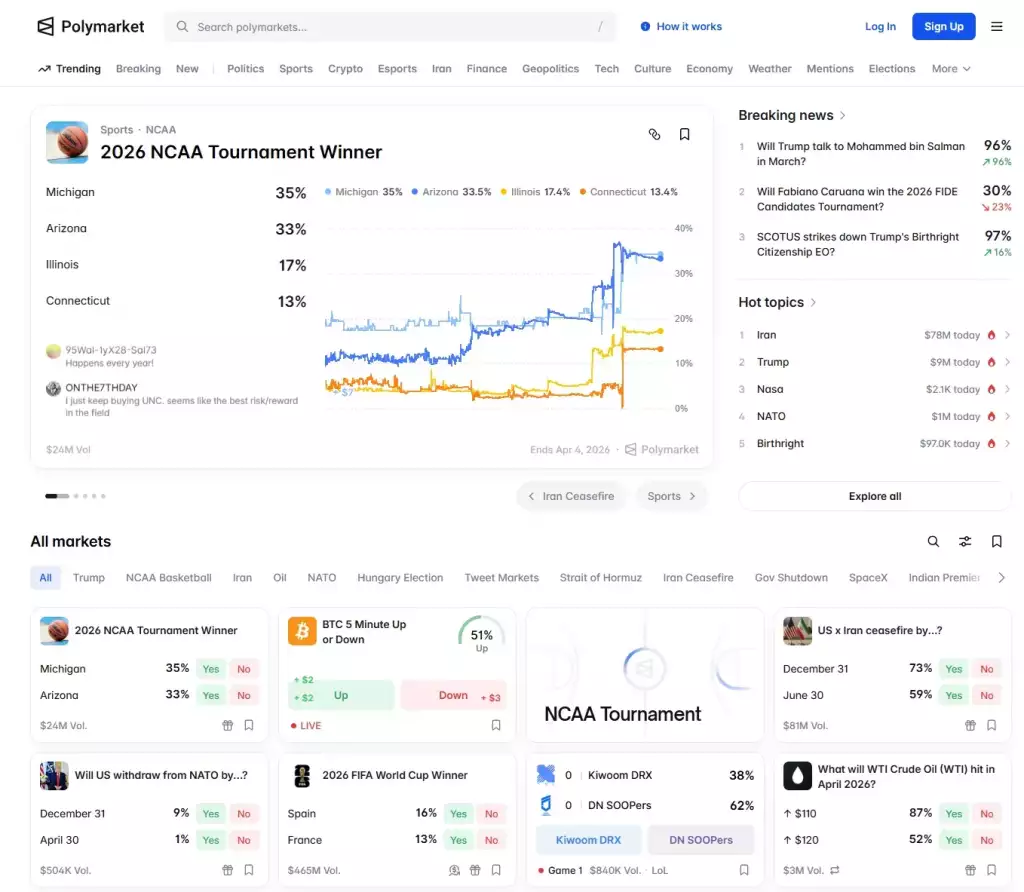
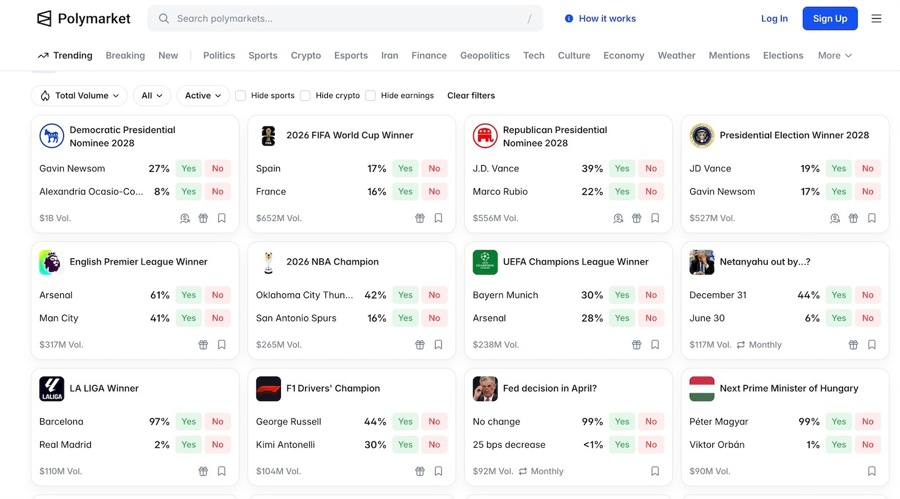
At the centre of this movement are platforms like Polymarket and Kalshi, which allow users to trade contracts tied to the outcomes of real-world events. The concept is relatively straightforward.
Imagine a market asking whether a specific event will happen before the end of the year. If a contract that pays $1 when the answer is yes trades for 70 cents, its price suggests roughly a 70% market-implied probability. That number changes as people buy, sell and react to new information.
It’s not a scientific forecast, and it isn’t necessarily what most people believe. It’s the price produced by traders willing to put money behind a particular outcome. Traditional opinion polls ask people what they think. Prediction markets introduce a different question: how confident are you when something is financially at stake?
Prediction markets have existed in various forms for decades. What’s different now is their visibility. They’re no longer confined to academic experiments or obscure corners of finance. Their probabilities are increasingly appearing in discussions about elections, technology, entertainment and major economic decisions.
Reuters reported in October 2026 on the growth of trading tied to the U.S. midterm elections, while raising concerns about concentrated activity and possible conflicts of interest. That combination of popularity and controversy tells us something important.
Prediction markets are becoming influential enough that we have to question not just what they predict, but how they might affect the events they’re predicting. And that’s a much bigger conversation than whether someone wins a trade.
When Information Becomes Entertainment
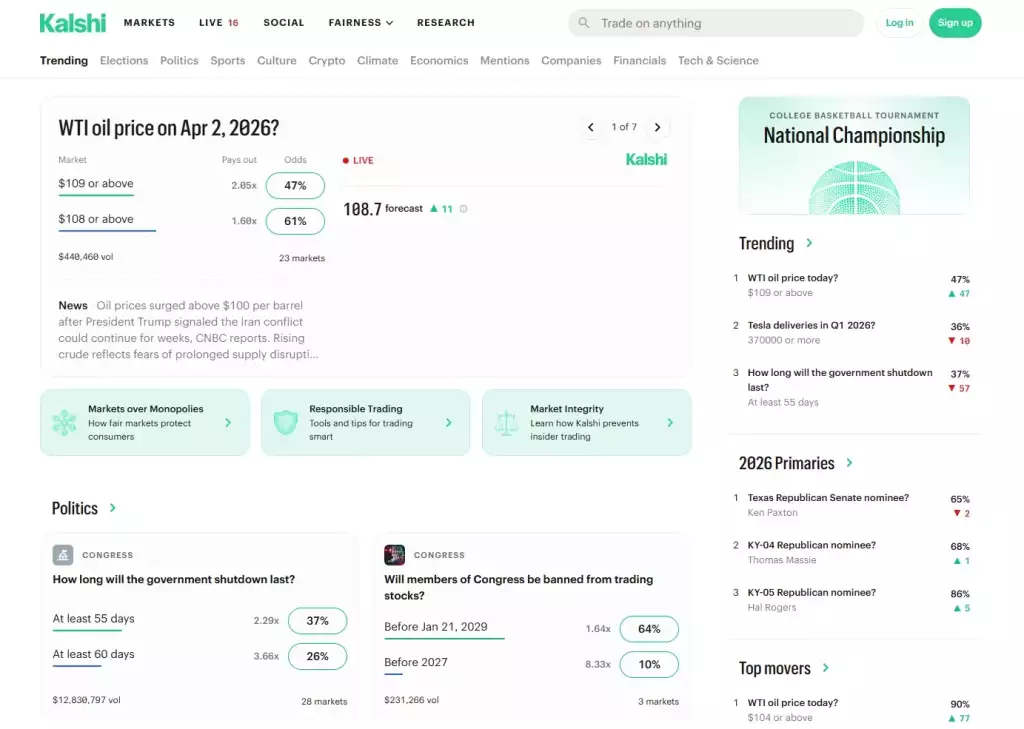
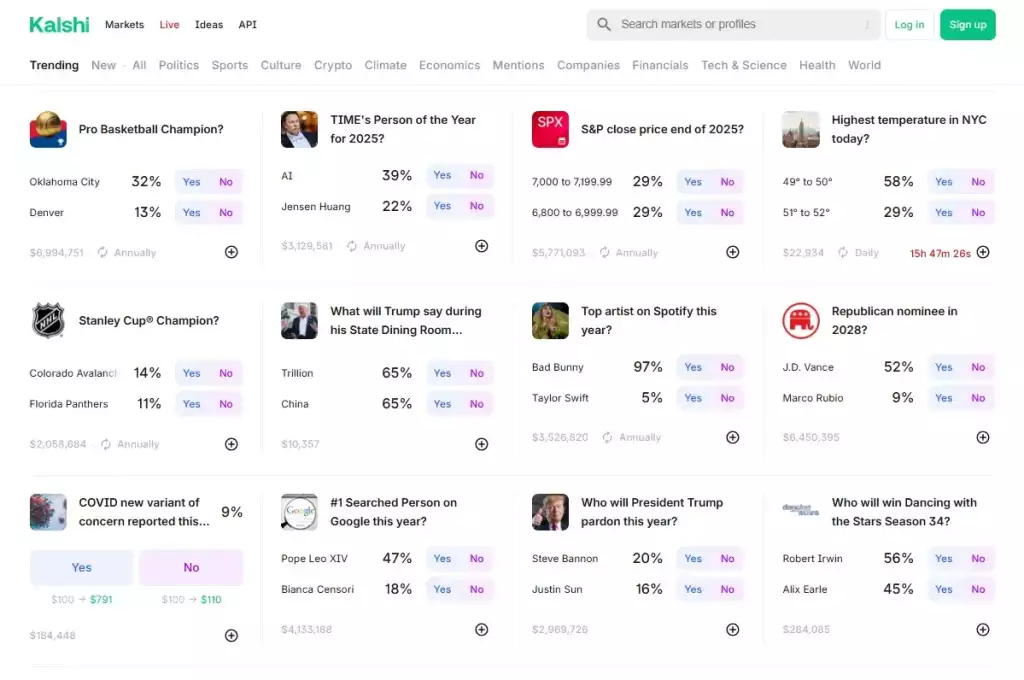
Kalshi dashboard. Screenshot: VegasInsider.
What interests me most is the cultural side. We live in a world where attention has become one of the most valuable commodities. News moves at extraordinary speed. A celebrity announcement can dominate social media within minutes. A single political statement can shift an entire narrative.
Prediction markets add another layer. Instead of simply watching a story unfold, people can participate financially in what happens next. A film announcement becomes a potential contract. A technology launch becomes a probability chart. A political debate becomes a series of constantly moving prices.
Suddenly, the news isn’t just something we consume. It’s something people trade. There’s an undeniable appeal to that, but there’s also a danger of turning every meaningful event into another opportunity for speculation. Not everything that matters should necessarily have a market attached to it.
Supporters argue that prediction markets can aggregate information from thousands of participants, potentially revealing insights that conventional forecasts miss. There’s logic behind that argument: people bring different knowledge, experiences and expectations into a marketplace.
But collective judgment has limitations. A market with little trading activity can be distorted by a handful of participants. Wealthier traders can exert disproportionate influence. And people with access to confidential information may possess advantages ordinary participants simply don’t have.
In February 2026, the U.S. Commodity Futures Trading Commission published an enforcement advisory discussing improper trading and misuse of nonpublic information in event markets. In September, it also flagged manipulation concerns involving certain so-called mention contracts. A price is only as trustworthy as the market producing it.
The Future Is Still Unwritten
Regulation remains unresolved. In the United States, federal regulators and individual states continue debating where financial event contracts end and gambling begins. The answer could shape which markets are available, who can participate and how platforms operate.
For readers in Canada, local rules matter too: a market being accessible online does not necessarily mean trading it is permitted in your province. That distinction deserves as much attention as the odds on the screen.
Yet the larger cultural shift is already underway. We’re becoming comfortable translating uncertainty into numbers. A percentage beside a headline can feel more authoritative than a paragraph of analysis, even when the underlying market is imperfect.
Perhaps that’s the real story of prediction markets. They’re not just creating a new way to trade. They’re creating a new way to think about the future. A market can tell us what people are willing to pay for a prediction. It cannot tell us with certainty what tomorrow will bring.
The future is becoming tradable. That doesn’t mean it has become predictable.
Sources: Kalshi; CFTC; Reuters. Editorial commentary, not financial advice.