
Images courtesy of Cartier, Bvlgari and Judith Leiber Couture. Product and campaign imagery sourced from the brands’ official websites.
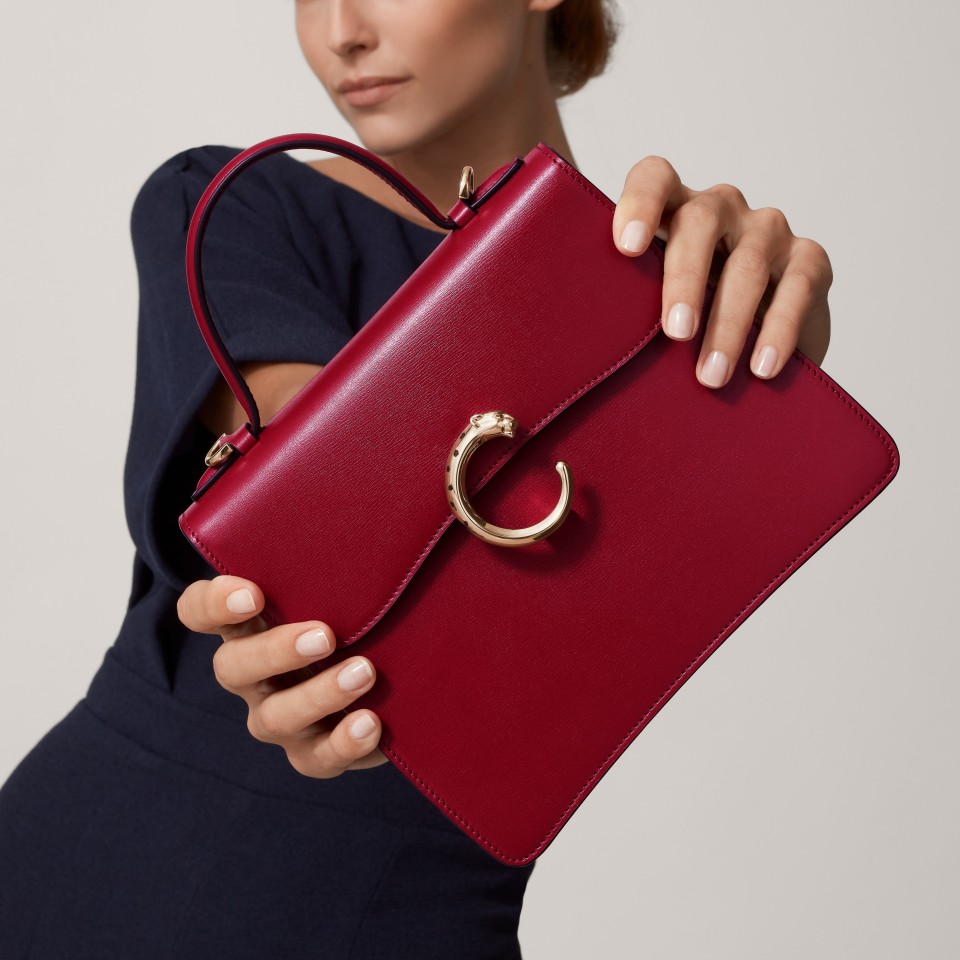
For decades, the luxury handbag occupied a category of its own: part fashion statement, part status symbol and part everyday object. Now, the boundary between handbag and fine jewellery is beginning to disappear.
Across the luxury market, bags are being treated less like leather goods and more like wearable objets d’art. Gem-set clasps, sculptural metalwork, crystal-covered surfaces and limited production are giving these pieces the emotional weight—and often the visual impact—of high jewellery.
When the clasp becomes the centrepiece
Cartier’s Soir collection makes the shift explicit. The maison has translated its jewellery vocabulary into evening bags, including a black calfskin cabochon design finished with green onyx, hessonite garnet and amethyst. The stones are not simply decoration added at the end. They become the focal point, turning the clasp into something closer to a brooch.
That distinction matters. Traditional handbags are usually understood through silhouette, leather and logo. Jewellery-led bags begin with precious materials and craftsmanship, then build the object around them.

Bvlgari turns jewellery codes into structure
Bvlgari has long positioned the serpent as both a jewellery icon and a design signature across its leather goods. Under Mary Katrantzou’s creative direction for bags and accessories, that connection has become even more deliberate.
The Serpenti line uses jewel-like snake-head closures as the visual centre of the bag, while the Tubogas clutch borrows its form from Bvlgari’s flexible, coiled metal jewellery. The result is not merely a handbag carrying a decorative emblem. The jewellery code determines the bag’s structure.
An old idea returns
The concept is not entirely new. In the 1920s and 1930s, Mario Buccellati created small evening purses in velvet and embroidered silk, decorating them with silver, enamel, pearls and diamonds. Women attending La Scala in Milan treated the pieces as statements for the grand soirée.
Buccellati revived that history during Paris High Jewellery Week in 2025 with three unique bejewelled bags designed by Andrea Buccellati. One spherical black velvet piece features yellow and white gold with 713 brilliant-cut diamonds totalling 18.79 carats. Another green matelassé bag combines gold applications, diamonds and a cabochon rubellite.
These are not seasonal accessories produced to fill a retail wall. They are singular craft objects, closer in spirit to a high-jewellery commission than a conventional handbag launch.
The collectible handbag
Judith Leiber has built an entire world around this idea. Its crystal-covered minaudières transform familiar objects, animals and symbols into miniature sculptures. Their practicality is almost secondary. The appeal is fantasy, recognition and collectability.
That mindset is spreading. A jewelled handbag can function as the centrepiece of an evening look, but it can also live beyond a single season. Precious materials, limited editions and specialist craftsmanship encourage buyers to view the bag as an heirloom rather than a trend-driven purchase.
Why luxury is moving in this direction
The shift also reflects a wider change in how consumers assess value. As luxury handbag prices continue to rise, buyers are asking what makes an object feel lasting. Fine jewellery offers clear materiality, technical craft and emotional permanence. By bringing those qualities into handbags, maisons can create pieces that feel more personal and more collectible.
A recent Financial Times report noted that handbags and jewellery are expected to outperform apparel growth through 2028, citing McKinsey forecasts. For luxury houses, combining the two categories is both a creative opportunity and a strategic one.
The most compelling examples do not simply cover a familiar bag in crystals. They rethink what a handbag can represent. It becomes ornament, sculpture, conversation piece and portable archive of a maison’s craft.
The handbag is no longer merely carrying the jewel. Increasingly, the handbag is the jewel.
For more on how luxury houses are reworking their most recognizable accessories, read Louis Vuitton Speedy P9: LV Buttersoft Leather Reimagines an Icon.
Sources: Financial Times, Cartier, Bvlgari, Buccellati and Judith Leiber Couture.