
TIFF returns September 10–20, 2026, but one of its most exciting experiences does not require a premiere ticket. For four days, King Street West becomes Toronto’s open-air cinema district.
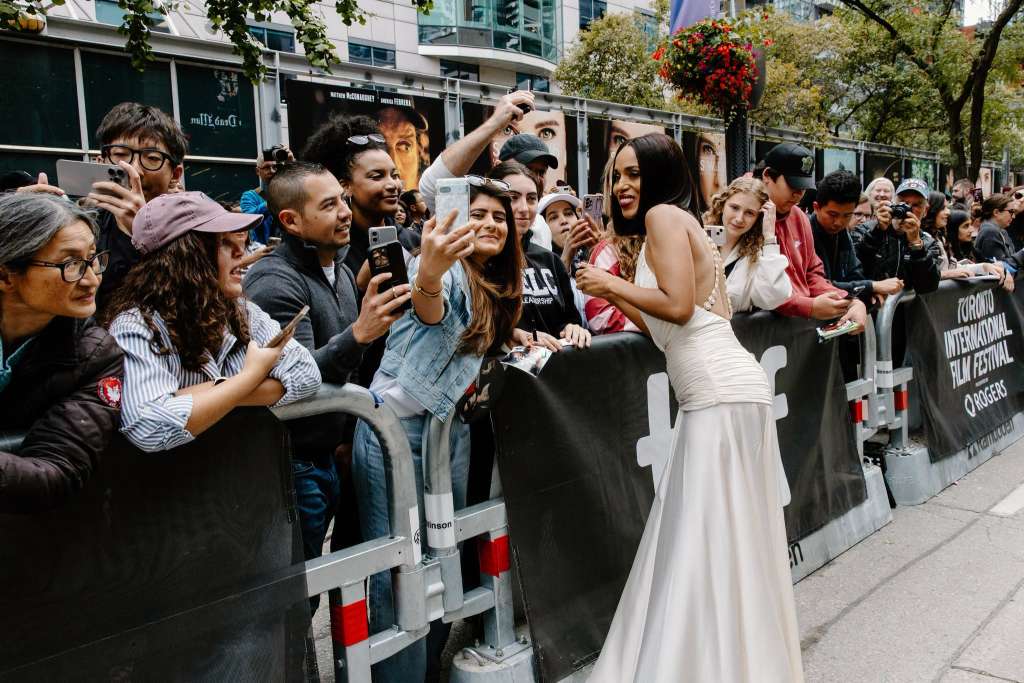
The Toronto International Film Festival has always lived in two worlds. Inside the theatres, filmmakers introduce new work to critics, buyers and packed audiences. Outside, the city becomes part of the production: red carpets glow, restaurants stay full, cameras turn toward King Street and Toronto briefly feels like the centre of the film world.
From September 10–13, TIFF Festival Street transforms King Street West between Peter Street and University Avenue into a pedestrian-first celebration of movies, music, art and community. Admission is free, creating a way to experience TIFF’s opening-weekend atmosphere without purchasing a screening ticket.
King Street Becomes the Festival’s Public Stage
Festival Street connects some of TIFF’s most recognizable venues and gathering points, including TIFF Lightbox, the Princess of Wales Theatre, Royal Alexandra Theatre, Roy Thomson Hall and David Pecaut Square. Red carpets remain part of the attraction, but the street program is built to be more than a celebrity-spotting route.

The four-day lineup includes public art, live DJs, fan zones, food, community organizations, partner experiences, games and free outdoor screenings. Visitors can arrive without a ticketed itinerary and still build a full day around the festival.
Two newly redesigned TIFF signs will anchor the essential Festival Street photo—one at King and University and another at King and Peter. The updated signs add LED lighting while preserving one of the event’s most familiar public traditions.
Cinema Park: Ten Free Movies Under the Toronto Skyline
Cinema Park returns to David Pecaut Square with a free outdoor screening every night from September 10–19. Films begin at 10 p.m., are presented with open captions and are scheduled to run rain or shine.
The program opens with the 95th anniversary of Charlie Chaplin’s City Lights on September 10. The silent-era landmark follows Chaplin’s Little Tramp through a story of love, dignity and mistaken identity—an elegant reminder that cinema’s emotional language existed before synchronized dialogue.
On September 11, the screen turns toward Toronto with Michael Dowse’s The F Word, starring Daniel Radcliffe and Zoe Kazan. Set throughout the city, the romantic comedy makes local streets, restaurants and neighbourhoods part of its personality—an especially fitting selection for a festival audience watching outdoors in the place where it was filmed.
The remaining Cinema Park schedule moves freely across generations and genres: Madagascar on September 12, Now You See Me on September 13, Alfred Hitchcock’s Strangers on a Train on September 14, the original Freaky Friday on September 15, Hoosiers on September 16, Spy Kids on September 17, Willy Wonka & the Chocolate Factory on September 18 and The Great Muppet Caper on September 19.
Festival Street’s installations explore the mechanics and collective memory of cinema. Filmmaker Naomi Jaye’s SLOW, produced by Celeste Ovita Cole, reimagines the zoetrope as a life-size, human-powered cylinder. Inspired by Jaye’s observation of her father’s changing movement following a Parkinson’s diagnosis, the work only becomes fully animated when visitors move it together. A dance class and artist talk with Dancing with Parkinson’s and Jaye takes place September 11 at 1 p.m.
Matt Jones’ The Disco Speakers combines mirrored tiles, oversized speakers and responsive LED lighting. Sunlight activates its reflective surface during the day; after dark, the work shifts into an audio-reactive spectacle.
The Tree of Cinema, created for TIFF ’26 by Alina Tacmelova and Yury Goncharov, presents film as a living archive. A steel trunk supports a canopy of flowing film strips combining cinematic moments with photographs of audiences watching together. The message is simple: viewers are not outside cinema’s history—they help create it.
The Festival Street Art Market, presented with Toronto Film School, brings local festivals and arts organizations together on John Street. Participating groups include Inside Out, Reel Asian, imagineNATIVE, Reel Canada, LATAFF, Muse Arts, Workman Arts, Regent Park Film Festival, Toronto Public Library and LIFT.
The Little Free Cinema by Bus Collective makes experimental film public at an intimate scale. Visitors look through a peephole inspired by Toronto’s familiar Neighbourhood Watch signs to discover works by Canadian filmmakers including Philip Hoffman, Lindsay McIntyre, Martin Heath and Christina Dovolis.
Festival Street will also host Fellini Forever, described as the world’s largest privately held archive devoted to Federico Fellini. The educational touring museum brings original materials and the creative legacy of one of cinema’s most influential directors into an accessible public setting.
Music, Food, Sports and Fan Experiences
Three DJ stages will run with programming curated by TIFF and Canadian Music Incubator, supported by the Toronto Downtown West BIA. The lineup includes Nino Brown, Young Teesh, Videri, Classic Roots, Cozmic Cat, Big Sound Barbie, Shysofly, Paul Chin and other Toronto artists.
The Food Market returns on the east side of King Street with food trucks and local hospitality partners, while a seating patio on Simcoe Street offers space to reset between activities.
Toronto sports will also be represented. AFC Toronto invites visitors into a film-set-inspired activation, while the Toronto Tempo brings pop-a-shot, prizes and games connected to Canada’s new WNBA franchise. Toronto Animal Services adds a red carpet of its own, with adoptable dogs, photographs and meet-and-greets.
Additional public activations range from Korean culture and travel experiences to food sampling, photo booths and interactive brand installations. Access rules vary: some free programs require advance registration, while certain red-carpet viewing areas are reserved for partner members or contest winners.
How to Experience TIFF Festival Street
The simplest route is Line 1 to St Andrew Station, followed by a short walk into the Festival Street area. King Street West will operate differently during the pedestrian takeover, so visitors should allow extra time and verify TTC service changes before travelling.
A strong free itinerary starts with the installations and Art Market in daylight, moves through the food and partner experiences, catches a DJ set as the street shifts into evening, and finishes with the 10 p.m. Cinema Park screening at David Pecaut Square. Arrive early for popular films and bring weather-appropriate clothing—the outdoor program is intended to continue rain or shine.
TIFF may be internationally influential, but Festival Street protects the part of its identity that belongs to Toronto. It turns spectators into participants, the Entertainment District into a set, and a major global festival into something the city can experience together.
Information and imagery: Official TIFF Festival Street 2026 and TIFF film-program pages. Selected images are supplied by TIFF for editorial use within coverage of its programming. Dates, access requirements and schedules may change; verify details with TIFF before attending.