
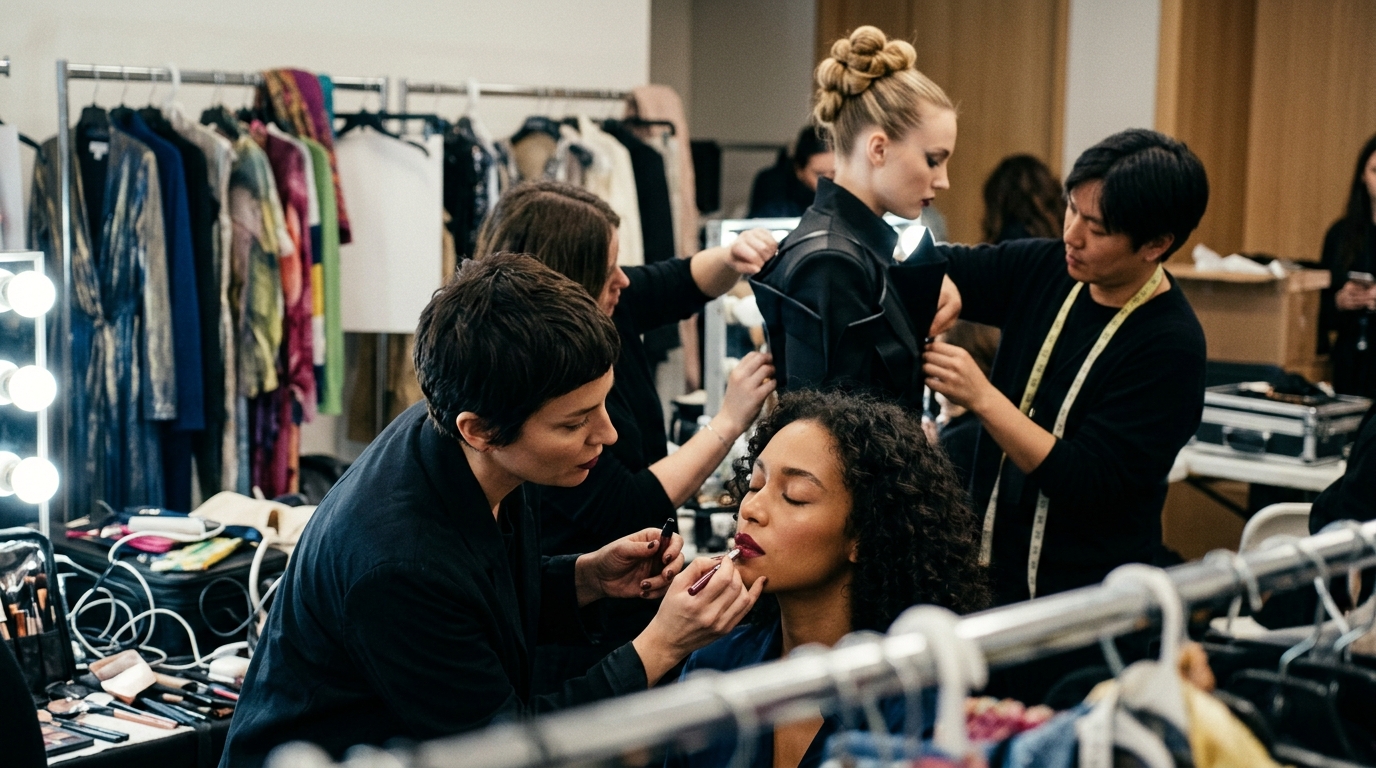
When New York Fashion Week 2026 Takes Over the City
New York is about to become fashion’s most closely watched city again. From September 10 through 15, New York Fashion Week presents the Spring/Summer 2027 collections through runway shows, presentations, private dinners and the kind of street-level spectacle that turns entire blocks of Manhattan into a stage. If you’re asking exactly when the season starts, the short answer is this: the Council of Fashion Designers of America lists the official schedule running from Thursday, September 10 through Tuesday, September 15, 2026.
But treat that as the official framework, not the full picture. Several brands begin showing on September 9, effectively turning the eve of the calendar into an opening act that sets expectations before the CFDA’s clock even starts. That pre-week energy has become a fixture of modern NYFW planning, a way for certain houses to claim attention before the week’s inevitable scheduling conflicts and overlapping invitations pile up. Anyone mapping out which shows matter should treat September 9 as part of the story, not a footnote to it.

The Names Defining the Runway
Every September, New York Fashion Week has to answer a question London, Milan and Paris don’t face in quite the same way: can American ready-to-wear still set a global tone, or is it simply the appetizer before the main European course? The 2026 lineup suggests the city intends to keep arguing for the former. Calvin Klein Collection, Carolina Herrera, Michael Kors Collection, Tory Burch, Coach, Khaite, Altuzarra, Proenza Schouler, LaQuan Smith, Prabal Gurung and Christian Siriano are among the established names expected to command attention, each bringing a distinct read on what American luxury should feel like in 2027.
Ralph Lauren presents Spring 2027 on September 9, which tells you something about how the brand wants to be positioned this season — ahead of the noise, not competing inside it. Coach, Cult Gaia, Libertine and Rachel Comey, who is marking her 25th anniversary in the industry, also help set the tone before the main calendar officially begins. That anniversary is worth pausing on: a quarter-century in an industry known for burning through talent is its own kind of statement, regardless of what appears on the runway.
At the other end of the week, Thom Browne is positioned as a theatrical closing statement — a role the designer has more or less made his own over the years, using the final slot to send editors and buyers out with something memorable rather than merely competent. A few names worth tracking across the week:
- Calvin Klein Collection and Michael Kors Collection, the anchors of American sportswear-meets-luxury
- Khaite, Altuzarra and Proenza Schouler, representing the more directional, editorial wing of the calendar
- Ralph Lauren and Coach, opening the conversation before the official schedule begins
- Thom Browne, closing the week with his usual sense of theater
Taken together, this isn’t a lineup coasting on heritage. It’s a mix of brands that built their reputations decades ago and are now being asked, season after season, to prove that reputation still means something to a customer who has endless alternatives.
Debuts, Fresh Faces and a Fur-Free Standard
The most interesting story of any fashion week rarely comes from the brand with the biggest name — it comes from whoever is stepping into a role for the first time, with something to prove and nothing yet to protect. That’s what makes Henry Zankov’s scheduled debut for Diane von Furstenberg worth watching. It places a fresh creative perspective inside one of New York’s most recognizable houses, and it will be judged not just on craft but on whether it can modernize a legacy label without erasing what made it recognizable in the first place.
Zankov isn’t the only new name on the calendar. First-time official participants include Conner Ives, Magda Butrym, Sabyasachi by Sabyasachi Mukherjee, High Sport and Zaldy. That mix — a British-based provocateur, a Polish label known for its distinctly European romanticism, an Indian couturier with a global following, and designers building quieter, more focused practices — reinforces something New York has been trying to prove for years: that it can function as an international platform rather than a closed showcase of American labels talking mainly to each other.
There’s also a structural change worth flagging for anyone who follows the industry’s slower-moving debates. The CFDA’s fur-free policy now applies to brands on the official NYFW schedule. It’s easy to treat a policy update as background noise compared to the clothes themselves, but it reflects a larger luxury reset that’s playing out well beyond New York: houses now have to balance fantasy with responsibility, craftsmanship with traceability, and tradition with expectations that shift faster than a runway calendar does.
💡 Tip: If you’re following the week remotely, pay attention to the debuts as closely as the flagship shows. A first outing at a legacy house — like Zankov’s at Diane von Furstenberg — often signals where a brand’s creative direction is headed for several seasons, not just one.What This Season Says About Luxury Right Now
Every fashion week eventually gets asked to answer a bigger question than “what did the clothes look like,” and Spring/Summer 2027 is no exception. Will quiet luxury continue its long run, or will designers finally answer years of restraint with stronger color, bolder volume and a little more noise? Will archival references remain the industry’s safety net, or will customers — increasingly selective, increasingly resistant to being sold nostalgia at a markup — start rewarding brands that take visible risks instead? And as shoppers get harder to impress, which houses will make their craftsmanship legible enough, in the fabric and the finishing, to justify what they’re charging for it?
New York tends to be strongest when elegance collides with the pace of city life rather than floating above it. Expect tailoring built to actually move through a workday, eveningwear designed with the awareness that it will be photographed from a hundred angles before midnight, elevated sportswear that blurs the line between gym and gala, and accessories engineered to become immediate objects of desire rather than slow-burn investments. That tension — between practicality and spectacle — is arguably New York’s real signature, more than any single silhouette or color story.
It’s worth remembering, too, that modern fashion week has expanded well past the runway itself. Front rows, after-parties, pop-ups and street style now create an audience far larger than any venue could ever seat, and a single influencer’s outfit outside a show can travel further online than the show’s own images. A runway may last ten minutes, but its strongest idea — a silhouette, a color, a single accessory — can shape an entire season’s shopping decisions, the same way a standout moment from a past NYFW or a rival city’s fashion week can echo through collections released months later.
Luxury, broadly, is navigating a demanding period. Customers want quality and heritage, but they also want novelty, cultural fluency and a genuinely convincing reason to buy now rather than wait for the next sale cycle. New York Fashion Week is where a large number of brands will attempt to answer that challenge in public, under lights, with very little room to hide a weak collection behind a strong invitation list.
September 2026 Has the Ingredients for a Reset
Between major houses, global arrivals and first-time official participants, this season looks less like a routine calendar entry and more like a genuine turning point. The clothes arrive first. The influence follows.
When New York Fashion Week 2026 Takes Over the City
New York is about to become fashion’s most closely watched city again. From September 10 through 15, New York Fashion Week presents the Spring/Summer 2027 collections through runway shows, presentations, private dinners and the kind of street-level spectacle that turns entire blocks of Manhattan into a stage. If you’re asking exactly when the season starts, the short answer is this: the Council of Fashion Designers of America lists the official schedule running from Thursday, September 10 through Tuesday, September 15, 2026.
But treat that as the official framework, not the full picture. Several brands begin showing on September 9, effectively turning the eve of the calendar into an opening act that sets expectations before the CFDA’s clock even starts. That pre-week energy has become a fixture of modern NYFW planning, a way for certain houses to claim attention before the week’s inevitable scheduling conflicts and overlapping invitations pile up. Anyone mapping out which shows matter should treat September 9 as part of the story, not a footnote to it.
The Names Defining the Runway
Every September, New York Fashion Week has to answer a question London, Milan and Paris don’t face in quite the same way: can American ready-to-wear still set a global tone, or is it simply the appetizer before the main European course? The 2026 lineup suggests the city intends to keep arguing for the former. Calvin Klein Collection, Carolina Herrera, Michael Kors Collection, Tory Burch, Coach, Khaite, Altuzarra, Proenza Schouler, LaQuan Smith, Prabal Gurung and Christian Siriano are among the established names expected to command attention, each bringing a distinct read on what American luxury should feel like in 2027.
Ralph Lauren presents Spring 2027 on September 9, which tells you something about how the brand wants to be positioned this season — ahead of the noise, not competing inside it. Coach, Cult Gaia, Libertine and Rachel Comey, who is marking her 25th anniversary in the industry, also help set the tone before the main calendar officially begins. That anniversary is worth pausing on: a quarter-century in an industry known for burning through talent is its own kind of statement, regardless of what appears on the runway.
At the other end of the week, Thom Browne is positioned as a theatrical closing statement — a role the designer has more or less made his own over the years, using the final slot to send editors and buyers out with something memorable rather than merely competent. A few names worth tracking across the week:
- Calvin Klein Collection and Michael Kors Collection, the anchors of American sportswear-meets-luxury
- Khaite, Altuzarra and Proenza Schouler, representing the more directional, editorial wing of the calendar
- Ralph Lauren and Coach, opening the conversation before the official schedule begins
- Thom Browne, closing the week with his usual sense of theater
Taken together, this isn’t a lineup coasting on heritage. It’s a mix of brands that built their reputations decades ago and are now being asked, season after season, to prove that reputation still means something to a customer who has endless alternatives.
Debuts, Fresh Faces and a Fur-Free Standard
The most interesting story of any fashion week rarely comes from the brand with the biggest name — it comes from whoever is stepping into a role for the first time, with something to prove and nothing yet to protect. That’s what makes Henry Zankov’s scheduled debut for Diane von Furstenberg worth watching. It places a fresh creative perspective inside one of New York’s most recognizable houses, and it will be judged not just on craft but on whether it can modernize a legacy label without erasing what made it recognizable in the first place.
Zankov isn’t the only new name on the calendar. First-time official participants include Conner Ives, Magda Butrym, Sabyasachi by Sabyasachi Mukherjee, High Sport and Zaldy. That mix — a British-based provocateur, a Polish label known for its distinctly European romanticism, an Indian couturier with a global following, and designers building quieter, more focused practices — reinforces something New York has been trying to prove for years: that it can function as an international platform rather than a closed showcase of American labels talking mainly to each other.
There’s also a structural change worth flagging for anyone who follows the industry’s slower-moving debates. The CFDA’s fur-free policy now applies to brands on the official NYFW schedule. It’s easy to treat a policy update as background noise compared to the clothes themselves, but it reflects a larger luxury reset that’s playing out well beyond New York: houses now have to balance fantasy with responsibility, craftsmanship with traceability, and tradition with expectations that shift faster than a runway calendar does.
💡 Tip: If you’re following the week remotely, pay attention to the debuts as closely as the flagship shows. A first outing at a legacy house — like Zankov’s at Diane von Furstenberg — often signals where a brand’s creative direction is headed for several seasons, not just one.What This Season Says About Luxury Right Now
Every fashion week eventually gets asked to answer a bigger question than “what did the clothes look like,” and Spring/Summer 2027 is no exception. Will quiet luxury continue its long run, or will designers finally answer years of restraint with stronger color, bolder volume and a little more noise? Will archival references remain the industry’s safety net, or will customers — increasingly selective, increasingly resistant to being sold nostalgia at a markup — start rewarding brands that take visible risks instead? And as shoppers get harder to impress, which houses will make their craftsmanship legible enough, in the fabric and the finishing, to justify what they’re charging for it?
New York tends to be strongest when elegance collides with the pace of city life rather than floating above it. Expect tailoring built to actually move through a workday, eveningwear designed with the awareness that it will be photographed from a hundred angles before midnight, elevated sportswear that blurs the line between gym and gala, and accessories engineered to become immediate objects of desire rather than slow-burn investments. That tension — between practicality and spectacle — is arguably New York’s real signature, more than any single silhouette or color story.
It’s worth remembering, too, that modern fashion week has expanded well past the runway itself. Front rows, after-parties, pop-ups and street style now create an audience far larger than any venue could ever seat, and a single influencer’s outfit outside a show can travel further online than the show’s own images. A runway may last ten minutes, but its strongest idea — a silhouette, a color, a single accessory — can shape an entire season’s shopping decisions, the same way a standout moment from a past NYFW or a rival city’s fashion week can echo through collections released months later.
Luxury, broadly, is navigating a demanding period. Customers want quality and heritage, but they also want novelty, cultural fluency and a genuinely convincing reason to buy now rather than wait for the next sale cycle. New York Fashion Week is where a large number of brands will attempt to answer that challenge in public, under lights, with very little room to hide a weak collection behind a strong invitation list.
September 2026 Has the Ingredients for a Reset
Between major houses, global arrivals and first-time official participants, this season looks less like a routine calendar entry and more like a genuine turning point. The clothes arrive first. The influence follows.
When New York Fashion Week 2026 Takes Over the City
New York is about to become fashion’s most closely watched city again. From September 10 through 15, New York Fashion Week presents the Spring/Summer 2027 collections through runway shows, presentations, private dinners and the kind of street-level spectacle that turns entire blocks of Manhattan into a stage. If you’re asking exactly when the season starts, the short answer is this: the Council of Fashion Designers of America lists the official schedule running from Thursday, September 10 through Tuesday, September 15, 2026.
But treat that as the official framework, not the full picture. Several brands begin showing on September 9, effectively turning the eve of the calendar into an opening act that sets expectations before the CFDA’s clock even starts. That pre-week energy has become a fixture of modern NYFW planning, a way for certain houses to claim attention before the week’s inevitable scheduling conflicts and overlapping invitations pile up. Anyone mapping out which shows matter should treat September 9 as part of the story, not a footnote to it.
The Names Defining the Runway
Every September, New York Fashion Week has to answer a question London, Milan and Paris don’t face in quite the same way: can American ready-to-wear still set a global tone, or is it simply the appetizer before the main European course? The 2026 lineup suggests the city intends to keep arguing for the former. Calvin Klein Collection, Carolina Herrera, Michael Kors Collection, Tory Burch, Coach, Khaite, Altuzarra, Proenza Schouler, LaQuan Smith, Prabal Gurung and Christian Siriano are among the established names expected to command attention, each bringing a distinct read on what American luxury should feel like in 2027.
Ralph Lauren presents Spring 2027 on September 9, which tells you something about how the brand wants to be positioned this season — ahead of the noise, not competing inside it. Coach, Cult Gaia, Libertine and Rachel Comey, who is marking her 25th anniversary in the industry, also help set the tone before the main calendar officially begins. That anniversary is worth pausing on: a quarter-century in an industry known for burning through talent is its own kind of statement, regardless of what appears on the runway.
At the other end of the week, Thom Browne is positioned as a theatrical closing statement — a role the designer has more or less made his own over the years, using the final slot to send editors and buyers out with something memorable rather than merely competent. A few names worth tracking across the week:
- Calvin Klein Collection and Michael Kors Collection, the anchors of American sportswear-meets-luxury
- Khaite, Altuzarra and Proenza Schouler, representing the more directional, editorial wing of the calendar
- Ralph Lauren and Coach, opening the conversation before the official schedule begins
- Thom Browne, closing the week with his usual sense of theater
Taken together, this isn’t a lineup coasting on heritage. It’s a mix of brands that built their reputations decades ago and are now being asked, season after season, to prove that reputation still means something to a customer who has endless alternatives.
Debuts, Fresh Faces and a Fur-Free Standard
The most interesting story of any fashion week rarely comes from the brand with the biggest name — it comes from whoever is stepping into a role for the first time, with something to prove and nothing yet to protect. That’s what makes Henry Zankov’s scheduled debut for Diane von Furstenberg worth watching. It places a fresh creative perspective inside one of New York’s most recognizable houses, and it will be judged not just on craft but on whether it can modernize a legacy label without erasing what made it recognizable in the first place.
Zankov isn’t the only new name on the calendar. First-time official participants include Conner Ives, Magda Butrym, Sabyasachi by Sabyasachi Mukherjee, High Sport and Zaldy. That mix — a British-based provocateur, a Polish label known for its distinctly European romanticism, an Indian couturier with a global following, and designers building quieter, more focused practices — reinforces something New York has been trying to prove for years: that it can function as an international platform rather than a closed showcase of American labels talking mainly to each other.
There’s also a structural change worth flagging for anyone who follows the industry’s slower-moving debates. The CFDA’s fur-free policy now applies to brands on the official NYFW schedule. It’s easy to treat a policy update as background noise compared to the clothes themselves, but it reflects a larger luxury reset that’s playing out well beyond New York: houses now have to balance fantasy with responsibility, craftsmanship with traceability, and tradition with expectations that shift faster than a runway calendar does.
💡 Tip: If you’re following the week remotely, pay attention to the debuts as closely as the flagship shows. A first outing at a legacy house — like Zankov’s at Diane von Furstenberg — often signals where a brand’s creative direction is headed for several seasons, not just one.What This Season Says About Luxury Right Now
Every fashion week eventually gets asked to answer a bigger question than “what did the clothes look like,” and Spring/Summer 2027 is no exception. Will quiet luxury continue its long run, or will designers finally answer years of restraint with stronger color, bolder volume and a little more noise? Will archival references remain the industry’s safety net, or will customers — increasingly selective, increasingly resistant to being sold nostalgia at a markup — start rewarding brands that take visible risks instead? And as shoppers get harder to impress, which houses will make their craftsmanship legible enough, in the fabric and the finishing, to justify what they’re charging for it?
New York tends to be strongest when elegance collides with the pace of city life rather than floating above it. Expect tailoring built to actually move through a workday, eveningwear designed with the awareness that it will be photographed from a hundred angles before midnight, elevated sportswear that blurs the line between gym and gala, and accessories engineered to become immediate objects of desire rather than slow-burn investments. That tension — between practicality and spectacle — is arguably New York’s real signature, more than any single silhouette or color story.
It’s worth remembering, too, that modern fashion week has expanded well past the runway itself. Front rows, after-parties, pop-ups and street style now create an audience far larger than any venue could ever seat, and a single influencer’s outfit outside a show can travel further online than the show’s own images. A runway may last ten minutes, but its strongest idea — a silhouette, a color, a single accessory — can shape an entire season’s shopping decisions, the same way a standout moment from a past NYFW or a rival city’s fashion week can echo through collections released months later.
Luxury, broadly, is navigating a demanding period. Customers want quality and heritage, but they also want novelty, cultural fluency and a genuinely convincing reason to buy now rather than wait for the next sale cycle. New York Fashion Week is where a large number of brands will attempt to answer that challenge in public, under lights, with very little room to hide a weak collection behind a strong invitation list.
September 2026 Has the Ingredients for a Reset
Between major houses, global arrivals and first-time official participants, this season looks less like a routine calendar entry and more like a genuine turning point. The clothes arrive first. The influence follows.
When New York Fashion Week 2026 Takes Over the City
New York is about to become fashion’s most closely watched city again. From September 10 through 15, New York Fashion Week presents the Spring/Summer 2027 collections through runway shows, presentations, private dinners and the kind of street-level spectacle that turns entire blocks of Manhattan into a stage. If you’re asking exactly when the season starts, the short answer is this: the Council of Fashion Designers of America lists the official schedule running from Thursday, September 10 through Tuesday, September 15, 2026.
But treat that as the official framework, not the full picture. Several brands begin showing on September 9, effectively turning the eve of the calendar into an opening act that sets expectations before the CFDA’s clock even starts. That pre-week energy has become a fixture of modern NYFW planning, a way for certain houses to claim attention before the week’s inevitable scheduling conflicts and overlapping invitations pile up. Anyone mapping out which shows matter should treat September 9 as part of the story, not a footnote to it.
The Names Defining the Runway
Every September, New York Fashion Week has to answer a question London, Milan and Paris don’t face in quite the same way: can American ready-to-wear still set a global tone, or is it simply the appetizer before the main European course? The 2026 lineup suggests the city intends to keep arguing for the former. Calvin Klein Collection, Carolina Herrera, Michael Kors Collection, Tory Burch, Coach, Khaite, Altuzarra, Proenza Schouler, LaQuan Smith, Prabal Gurung and Christian Siriano are among the established names expected to command attention, each bringing a distinct read on what American luxury should feel like in 2027.
Ralph Lauren presents Spring 2027 on September 9, which tells you something about how the brand wants to be positioned this season — ahead of the noise, not competing inside it. Coach, Cult Gaia, Libertine and Rachel Comey, who is marking her 25th anniversary in the industry, also help set the tone before the main calendar officially begins. That anniversary is worth pausing on: a quarter-century in an industry known for burning through talent is its own kind of statement, regardless of what appears on the runway.
At the other end of the week, Thom Browne is positioned as a theatrical closing statement — a role the designer has more or less made his own over the years, using the final slot to send editors and buyers out with something memorable rather than merely competent. A few names worth tracking across the week:
- Calvin Klein Collection and Michael Kors Collection, the anchors of American sportswear-meets-luxury
- Khaite, Altuzarra and Proenza Schouler, representing the more directional, editorial wing of the calendar
- Ralph Lauren and Coach, opening the conversation before the official schedule begins
- Thom Browne, closing the week with his usual sense of theater
Taken together, this isn’t a lineup coasting on heritage. It’s a mix of brands that built their reputations decades ago and are now being asked, season after season, to prove that reputation still means something to a customer who has endless alternatives.
Debuts, Fresh Faces and a Fur-Free Standard
The most interesting story of any fashion week rarely comes from the brand with the biggest name — it comes from whoever is stepping into a role for the first time, with something to prove and nothing yet to protect. That’s what makes Henry Zankov’s scheduled debut for Diane von Furstenberg worth watching. It places a fresh creative perspective inside one of New York’s most recognizable houses, and it will be judged not just on craft but on whether it can modernize a legacy label without erasing what made it recognizable in the first place.
Zankov isn’t the only new name on the calendar. First-time official participants include Conner Ives, Magda Butrym, Sabyasachi by Sabyasachi Mukherjee, High Sport and Zaldy. That mix — a British-based provocateur, a Polish label known for its distinctly European romanticism, an Indian couturier with a global following, and designers building quieter, more focused practices — reinforces something New York has been trying to prove for years: that it can function as an international platform rather than a closed showcase of American labels talking mainly to each other.
There’s also a structural change worth flagging for anyone who follows the industry’s slower-moving debates. The CFDA’s fur-free policy now applies to brands on the official NYFW schedule. It’s easy to treat a policy update as background noise compared to the clothes themselves, but it reflects a larger luxury reset that’s playing out well beyond New York: houses now have to balance fantasy with responsibility, craftsmanship with traceability, and tradition with expectations that shift faster than a runway calendar does.
💡 Tip: If you’re following the week remotely, pay attention to the debuts as closely as the flagship shows. A first outing at a legacy house — like Zankov’s at Diane von Furstenberg — often signals where a brand’s creative direction is headed for several seasons, not just one.What This Season Says About Luxury Right Now
Every fashion week eventually gets asked to answer a bigger question than “what did the clothes look like,” and Spring/Summer 2027 is no exception. Will quiet luxury continue its long run, or will designers finally answer years of restraint with stronger color, bolder volume and a little more noise? Will archival references remain the industry’s safety net, or will customers — increasingly selective, increasingly resistant to being sold nostalgia at a markup — start rewarding brands that take visible risks instead? And as shoppers get harder to impress, which houses will make their craftsmanship legible enough, in the fabric and the finishing, to justify what they’re charging for it?
New York tends to be strongest when elegance collides with the pace of city life rather than floating above it. Expect tailoring built to actually move through a workday, eveningwear designed with the awareness that it will be photographed from a hundred angles before midnight, elevated sportswear that blurs the line between gym and gala, and accessories engineered to become immediate objects of desire rather than slow-burn investments. That tension — between practicality and spectacle — is arguably New York’s real signature, more than any single silhouette or color story.
It’s worth remembering, too, that modern fashion week has expanded well past the runway itself. Front rows, after-parties, pop-ups and street style now create an audience far larger than any venue could ever seat, and a single influencer’s outfit outside a show can travel further online than the show’s own images. A runway may last ten minutes, but its strongest idea — a silhouette, a color, a single accessory — can shape an entire season’s shopping decisions, the same way a standout moment from a past NYFW or a rival city’s fashion week can echo through collections released months later.
Luxury, broadly, is navigating a demanding period. Customers want quality and heritage, but they also want novelty, cultural fluency and a genuinely convincing reason to buy now rather than wait for the next sale cycle. New York Fashion Week is where a large number of brands will attempt to answer that challenge in public, under lights, with very little room to hide a weak collection behind a strong invitation list.
September 2026 Has the Ingredients for a Reset
Between major houses, global arrivals and first-time official participants, this season looks less like a routine calendar entry and more like a genuine turning point. The clothes arrive first. The influence follows.
When New York Fashion Week 2026 Takes Over the City
New York is about to become fashion’s most closely watched city again. From September 10 through 15, New York Fashion Week presents the Spring/Summer 2027 collections through runway shows, presentations, private dinners and the kind of street-level spectacle that turns entire blocks of Manhattan into a stage. If you’re asking exactly when the season starts, the short answer is this: the Council of Fashion Designers of America lists the official schedule running from Thursday, September 10 through Tuesday, September 15, 2026.
But treat that as the official framework, not the full picture. Several brands begin showing on September 9, effectively turning the eve of the calendar into an opening act that sets expectations before the CFDA’s clock even starts. That pre-week energy has become a fixture of modern NYFW planning, a way for certain houses to claim attention before the week’s inevitable scheduling conflicts and overlapping invitations pile up. Anyone mapping out which shows matter should treat September 9 as part of the story, not a footnote to it.
The Names Defining the Runway
Every September, New York Fashion Week has to answer a question London, Milan and Paris don’t face in quite the same way: can American ready-to-wear still set a global tone, or is it simply the appetizer before the main European course? The 2026 lineup suggests the city intends to keep arguing for the former. Calvin Klein Collection, Carolina Herrera, Michael Kors Collection, Tory Burch, Coach, Khaite, Altuzarra, Proenza Schouler, LaQuan Smith, Prabal Gurung and Christian Siriano are among the established names expected to command attention, each bringing a distinct read on what American luxury should feel like in 2027.
Ralph Lauren presents Spring 2027 on September 9, which tells you something about how the brand wants to be positioned this season — ahead of the noise, not competing inside it. Coach, Cult Gaia, Libertine and Rachel Comey, who is marking her 25th anniversary in the industry, also help set the tone before the main calendar officially begins. That anniversary is worth pausing on: a quarter-century in an industry known for burning through talent is its own kind of statement, regardless of what appears on the runway.
At the other end of the week, Thom Browne is positioned as a theatrical closing statement — a role the designer has more or less made his own over the years, using the final slot to send editors and buyers out with something memorable rather than merely competent. A few names worth tracking across the week:
- Calvin Klein Collection and Michael Kors Collection, the anchors of American sportswear-meets-luxury
- Khaite, Altuzarra and Proenza Schouler, representing the more directional, editorial wing of the calendar
- Ralph Lauren and Coach, opening the conversation before the official schedule begins
- Thom Browne, closing the week with his usual sense of theater
Taken together, this isn’t a lineup coasting on heritage. It’s a mix of brands that built their reputations decades ago and are now being asked, season after season, to prove that reputation still means something to a customer who has endless alternatives.
Debuts, Fresh Faces and a Fur-Free Standard
The most interesting story of any fashion week rarely comes from the brand with the biggest name — it comes from whoever is stepping into a role for the first time, with something to prove and nothing yet to protect. That’s what makes Henry Zankov’s scheduled debut for Diane von Furstenberg worth watching. It places a fresh creative perspective inside one of New York’s most recognizable houses, and it will be judged not just on craft but on whether it can modernize a legacy label without erasing what made it recognizable in the first place.
Zankov isn’t the only new name on the calendar. First-time official participants include Conner Ives, Magda Butrym, Sabyasachi by Sabyasachi Mukherjee, High Sport and Zaldy. That mix — a British-based provocateur, a Polish label known for its distinctly European romanticism, an Indian couturier with a global following, and designers building quieter, more focused practices — reinforces something New York has been trying to prove for years: that it can function as an international platform rather than a closed showcase of American labels talking mainly to each other.
There’s also a structural change worth flagging for anyone who follows the industry’s slower-moving debates. The CFDA’s fur-free policy now applies to brands on the official NYFW schedule. It’s easy to treat a policy update as background noise compared to the clothes themselves, but it reflects a larger luxury reset that’s playing out well beyond New York: houses now have to balance fantasy with responsibility, craftsmanship with traceability, and tradition with expectations that shift faster than a runway calendar does.
💡 Tip: If you’re following the week remotely, pay attention to the debuts as closely as the flagship shows. A first outing at a legacy house — like Zankov’s at Diane von Furstenberg — often signals where a brand’s creative direction is headed for several seasons, not just one.What This Season Says About Luxury Right Now
Every fashion week eventually gets asked to answer a bigger question than “what did the clothes look like,” and Spring/Summer 2027 is no exception. Will quiet luxury continue its long run, or will designers finally answer years of restraint with stronger color, bolder volume and a little more noise? Will archival references remain the industry’s safety net, or will customers — increasingly selective, increasingly resistant to being sold nostalgia at a markup — start rewarding brands that take visible risks instead? And as shoppers get harder to impress, which houses will make their craftsmanship legible enough, in the fabric and the finishing, to justify what they’re charging for it?
New York tends to be strongest when elegance collides with the pace of city life rather than floating above it. Expect tailoring built to actually move through a workday, eveningwear designed with the awareness that it will be photographed from a hundred angles before midnight, elevated sportswear that blurs the line between gym and gala, and accessories engineered to become immediate objects of desire rather than slow-burn investments. That tension — between practicality and spectacle — is arguably New York’s real signature, more than any single silhouette or color story.
It’s worth remembering, too, that modern fashion week has expanded well past the runway itself. Front rows, after-parties, pop-ups and street style now create an audience far larger than any venue could ever seat, and a single influencer’s outfit outside a show can travel further online than the show’s own images. A runway may last ten minutes, but its strongest idea — a silhouette, a color, a single accessory — can shape an entire season’s shopping decisions, the same way a standout moment from a past NYFW or a rival city’s fashion week can echo through collections released months later.
Luxury, broadly, is navigating a demanding period. Customers want quality and heritage, but they also want novelty, cultural fluency and a genuinely convincing reason to buy now rather than wait for the next sale cycle. New York Fashion Week is where a large number of brands will attempt to answer that challenge in public, under lights, with very little room to hide a weak collection behind a strong invitation list.
September 2026 Has the Ingredients for a Reset
Between major houses, global arrivals and first-time official participants, this season looks less like a routine calendar entry and more like a genuine turning point. The clothes arrive first. The influence follows.