
Every September, the industry holds its breath for one list. This year it arrived under a new name — The 50 Best Hotels, dropping “World’s” from its title as the operation rebrands — but with the same electric effect: a single ranking, voted on by more than 800 anonymous hoteliers, journalists and inveterate travelers, that reshuffles where the world’s most discerning guests will spend their next big trip. The results were unveiled September 15 in Paris, the first time the ceremony has left London since the awards launched in 2023, with 22 destinations across six continents represented across the top 50 and ten new entries this year alone.
We’re not going to reprint that list in full — you can find all 50 names in a minute of searching. What’s more useful is why these ten hotels in particular have captured the attention of an industry that has, frankly, seen everything. Pull them apart and a handful of throughlines emerge: an obsession with cultural specificity over generic five-star polish, a redefinition of privacy as the ultimate luxury amenity, kitchens that now rival architecture as a hotel’s calling card, and Asia’s unmistakable rise as the new center of gravity in global hospitality — a story with its own gravitational pull, which we unpack separately later this week.
Here’s what’s actually redefining luxury travel in 2026, ten hotels at a time.
1. Rosewood Hong Kong — Hong Kong
Visit the official hotel website →
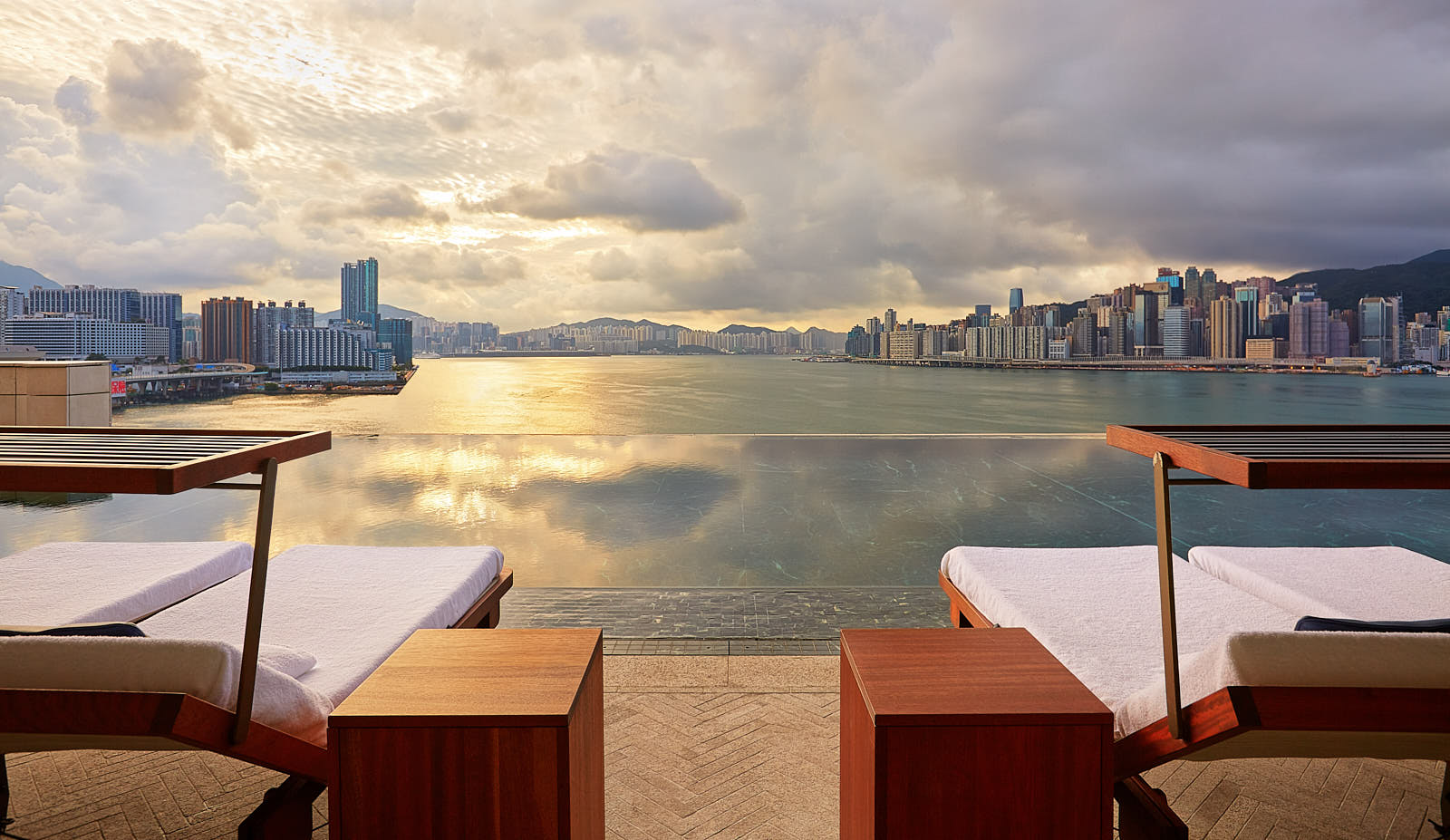
For the second consecutive year, Rosewood Hong Kong holds the top spot — the first property in the ranking’s four-year history to repeat as No. 1. What keeps voters coming back isn’t novelty; it’s density of experience. The 413-key vertical estate on the Tsim Sha Tsui waterfront packs 11 restaurants and bars, a one-Michelin-starred Cantonese dining room in The Legacy House, and the multi-level Asaya wellness concept with its 25-metre infinity pool into 65 storeys, without ever feeling like a mall dressed up as a hotel. Privacy is engineered vertically rather than horizontally: the Rosewood Residences occupy their own floors with separate lift access and a dedicated club, so guests who want total seclusion never have to cross paths with the harbourfront crowds below. The design language — a serious art collection, brass detailing, harbour-facing everything — reads distinctly Hong Kong rather than distinctly “luxury hotel,” which is precisely the point voters keep rewarding. Managing director Hugo Montanari called the repeat win, achieved after climbing from third place in 2024, almost impossible to process. It’s also a bellwether for the rest of this list: Asia now claims the top three spots outright, and seven of the top ten.
2. Capella Bangkok — Bangkok
Visit the official hotel website →

Climbing a spot to No. 2, Capella Bangkok’s case rests on restraint in a city not always known for it. Set directly on the Chao Phraya, the hotel treats the river as its primary design material: low-slung pavilions, sightlines that pull the water into every suite, and a spa built around silence rather than spectacle. Service here is deliberately anti-formal — Capella’s “Culturist” program pairs each guest with a personal host rather than a rotating cast of department staff, collapsing the usual hierarchy of concierge, butler and manager into one relationship for the length of the stay. Its restaurant partnership with three-Michelin-starred chef Mauro Colagreco, Côte by Mauro Colagreco, has become a genuine dining destination independent of the hotel itself — exactly the kind of crossover increasingly deciding these rankings.
3. Four Seasons Hotel Bangkok at Chao Phraya River — Bangkok
Visit the official hotel website →
Bangkok’s second entry in the top three underlines just how competitive this single stretch of riverfront has become. The Four Seasons brings scale and service depth — the brand’s global consistency, married to a genuinely site-specific design by architect Jean-Michel Gathy that treats the river as a working artery of the city rather than scenery from a balcony. Rooms are unusually private for a 299-key property, most arranged around courtyards and gardens rather than long double-loaded corridors, and its longtail-boat transfer service means guests can bypass Bangkok traffic entirely on arrival. Its position next door to Capella has turned this bend of the Chao Phraya into arguably the single most concentrated stretch of world-class hospitality on earth.
4. Atlantis The Royal — Dubai
Visit the official hotel website →
The Best Hotel in the Middle East and winner of the Best Beach Hotel Award, Atlantis The Royal is the rare maximalist property that still reads as considered rather than chaotic. Its cantilevered sky pool and Cloud 22 lounge are built for the photograph, but what keeps it inside the top five is depth of programming: more than 90 restaurant, bar and lounge concepts across the resort, a private beach club, and villas engineered specifically for the kind of privacy ultra-high-net-worth guests now expect as table stakes rather than upsell — several with their own pools, elevators and dedicated service teams that never need to enter through the main lobby.
5. Passalacqua — Lake Como
Visit the official hotel website →
The Best Hotel in Europe and winner of the Best Boutique Hotel Award, Passalacqua is the anti-scale argument in this list: 24 rooms in an 18th-century villa, gardens climbing the hillside behind it, and a level of personal service only possible at that size — staff-to-guest ratios here run closer to those of a private estate than a hotel. There’s no formal restaurant menu in the conventional sense; meals are largely built around what a guest wants, when they want it. It’s proof that “best in the world” doesn’t require hundreds of keys — sometimes the opposite is the entire selling point.
6. Rosewood São Paulo — São Paulo
Visit the official hotel website →
Named Best Hotel in South America for a third straight year, Rosewood São Paulo is a genuine architectural event: Pritzker laureate Jean Nouvel’s timber-wrapped “vertical garden” tower, planted with thousands of trees drawn from the Mata Atlântica rainforest, rises beside the fully restored 1904 Matarazzo Maternity building — the ward where, by the hotel’s own telling, half a million Paulistanos were born. Interiors by Philippe Starck lean hard into Brazilian identity: art from a different Brazilian artist on every floor, a jazz bar, and a restaurant menu built around the country’s regional cuisines rather than a continental default. It’s the clearest example on this list of a hotel functioning as cultural infrastructure rather than mere accommodation.
7. Mandarin Oriental Qianmen — Beijing
Visit the official hotel website →
A new entry and one of the more radical statements on the list: no standard guest rooms at all, just 42 restored courtyard houses (siheyuan) threaded through Beijing’s 600-year-old Caochang hutong, steps from the Forbidden City and Tiananmen Square. Architecture firm CCD preserved roughly 83 percent of the original structures, meaning guests are literally sleeping inside a living, still-inhabited historic neighbourhood rather than beside a reconstruction of one. Privacy here isn’t a suite category — it’s the entire premise, with each house functioning as an independent residence complete with its own courtyard, some as large as 491 square metres. Dining spans Michelin-starred Cantonese cuisine at Yan Garden to regional Italian at VICINI, an unusually international spread for a property this culturally specific.
8. Upper House Hong Kong — Hong Kong
Visit the official hotel website →
Hong Kong’s second entry in the top ten makes its case on pure editing: no lobby in the conventional sense, no visual noise, just André Fu’s pared-back interiors and some of the best harbour views in the city from Café Gray Deluxe. Every one of its 117 rooms is a suite, starting at over 60 square metres — enormous by Hong Kong standards — with service pared down to a single point of contact per guest rather than a rotating cast. Where Rosewood plays maximalist, Upper House is its minimalist counterpoint two kilometres away, proof the city’s hospitality identity isn’t singular.
9. Chablé Yucatán — Chocholá
Visit the official hotel website →
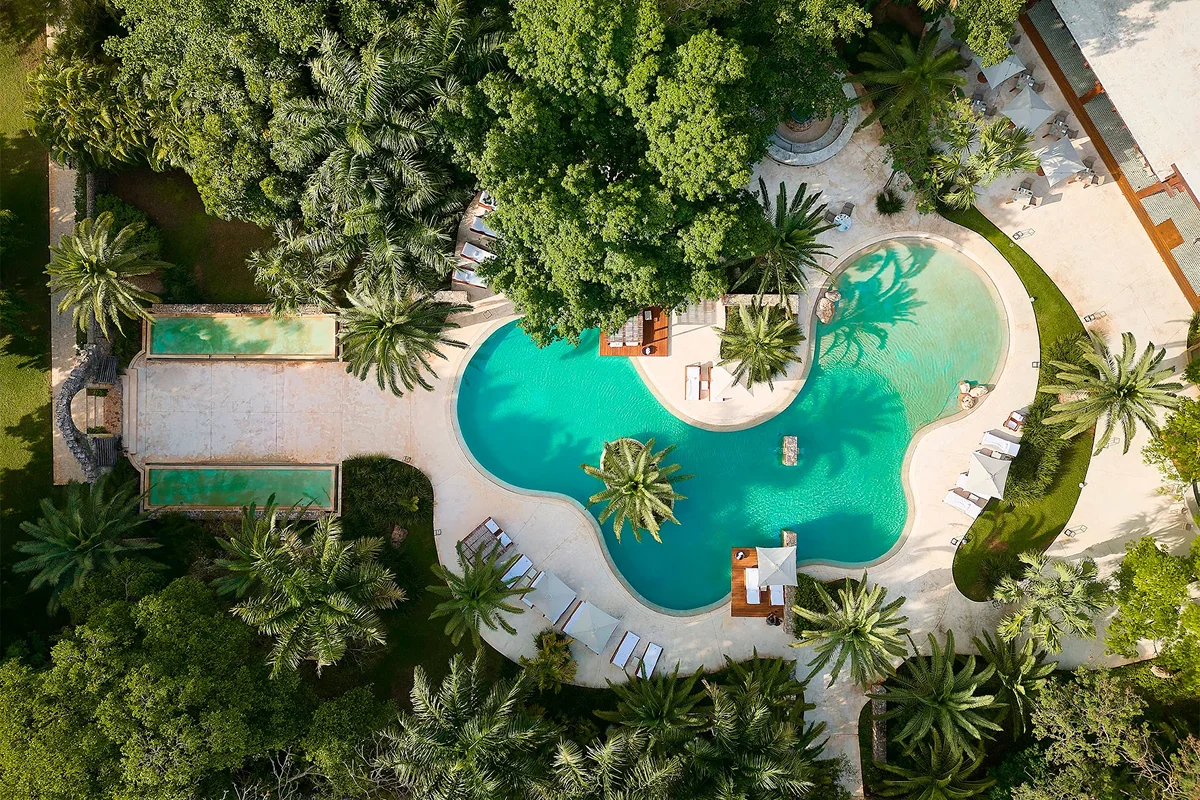
Named Best Hotel in North America and winner of the Bombay Sapphire Eco Hotel Award, Chablé sits inside a former henequen hacienda deep in the Yucatán jungle, its wellness program built around Mayan temazcal ceremonies and a spa carved partly from the region’s cenote cave systems. Each of its villas sits fully secluded within the jungle canopy with a private pool, meaning most guests never see another villa during their stay. It’s the rare resort where sustainability credentials and genuine cultural rootedness — rather than a checklist of solar panels — are doing the actual work of differentiating it.
10. Mandarin Oriental Bangkok — Bangkok
Visit the official hotel website →
Bangkok’s third hotel in the top ten is also its most historic — open since 1876, host to Joseph Conrad and Somerset Maugham in the wing that still bears his name, and still operating the river ferry service that makes arriving by boat as much a part of the experience as the room itself. Longevity is its own kind of luxury signal here: this is a hotel that has been the regional standard for a century and a half and still competes with buildings a fraction of its age, largely on the strength of a service culture passed down through generations of staff.
Add it up and the pattern across all ten is less about star ratings than specificity: a hotel that could only exist in that exact building, that exact city, run by that exact chef, architect or family. The generic five-star has quietly stopped being enough. What wins now is the story only one address on earth can tell.