

The hotel restaurant used to be an afterthought — a convenience for guests too tired or too rushed to go elsewhere. Breakfast before a meeting. A club sandwich after a late flight. Dinner downstairs because the reservation everyone actually wanted was already booked out weeks in advance.
That hierarchy is dissolving. Across the new generation of luxury hospitality, the restaurant is becoming the reason to book the room, the chef is becoming part of the destination’s identity, and dinner is increasingly shaping how a property is perceived long before anyone checks in.
For travelers who choose cities through restaurants as readily as through museums or coastlines, this changes the calculus entirely. The question is no longer simply where to stay. It’s where you actually want to eat — and whether the smartest move is to book the room upstairs.
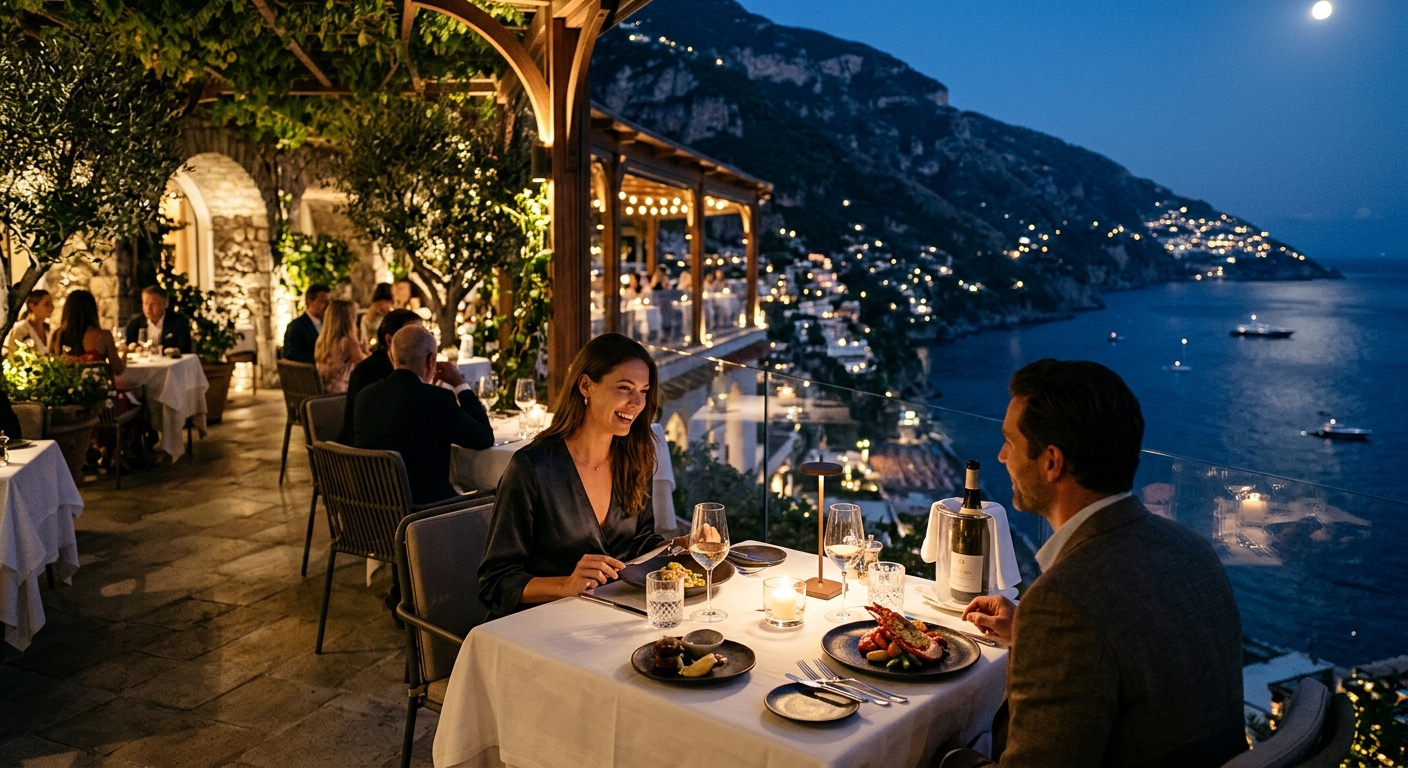
The Hotel Restaurant Is Becoming the Destination
The strongest hotel restaurants today don’t read as amenities. They have a defined point of view, reservations worth planning a trip around, and enough cultural weight to pull in locals who may never spend a single night upstairs. That distinction matters more than it sounds. A dining room filled only with hotel guests is a service. A dining room that pulls an entire city through its front doors becomes part of that city’s culture.
Luxury groups have responded accordingly — giving chefs greater prominence, investing more seriously in restaurant architecture, and building food into the story of a property long before opening night. The relationship that emerges is genuinely reciprocal: the restaurant gives the hotel energy and relevance, while the hotel gives the restaurant a setting a standalone dining room could never reproduce.
That setting might be a restored colonial-era hotel, a walled garden in the hills above a coastline, or a brand-new landmark reshaping a city’s skyline. What unites the strongest examples is that the meal feels genuinely inseparable from the place — not staged inside it, but grown out of it.
Five Restaurants Showing Where Luxury Dining Is Going
This shift is playing out globally, and a handful of 2026 openings make the pattern unmistakable.
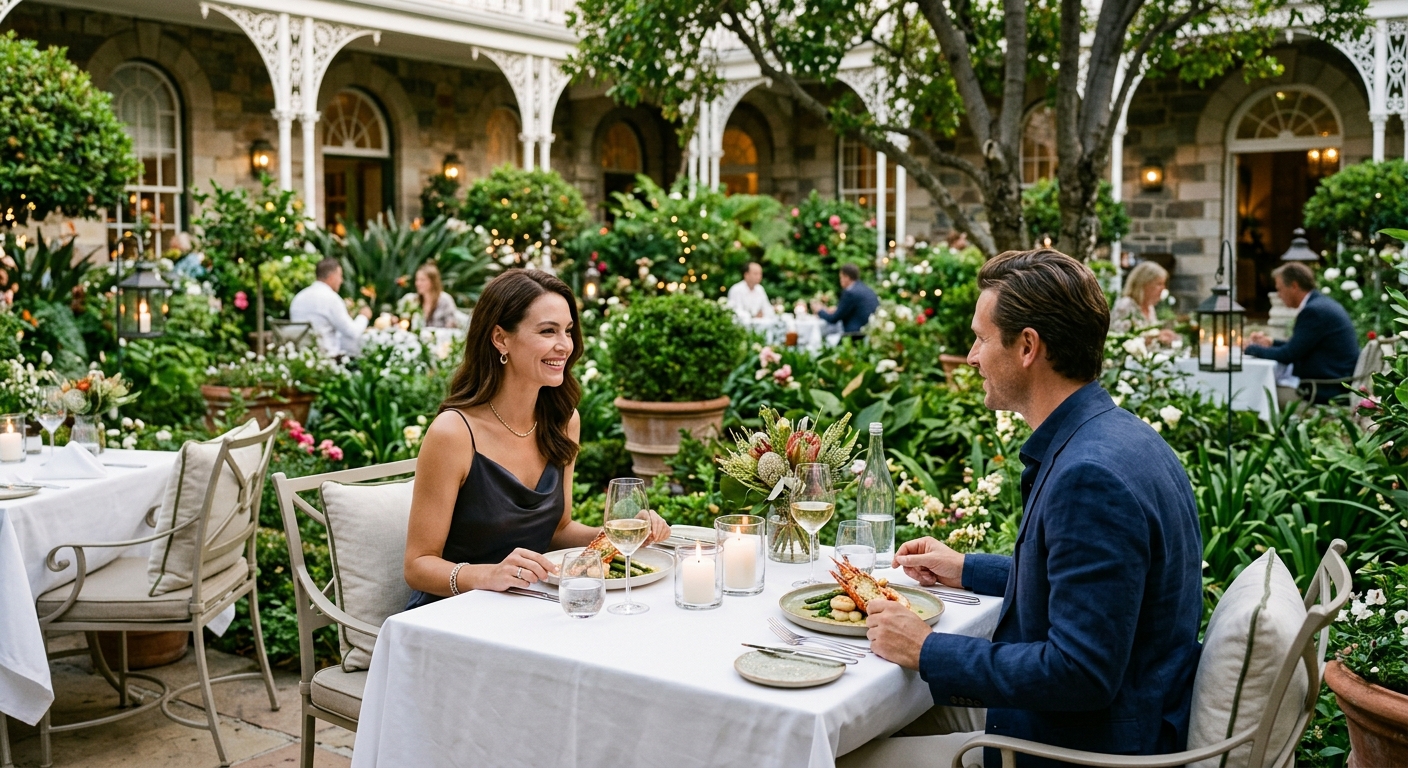
At Mount Nelson, A Belmond Hotel in Cape Town, chef Ángel León brings his marine-focused culinary language to Amura, embedding one of the world’s most distinctive seafood perspectives inside one of South Africa’s most recognizable addresses. It’s the kind of pairing — a celebrated chef, a landmark property, a menu built as an experience rather than an obligation — that travels well beyond ordinary hotel news and into the conversation travelers actually have with each other.
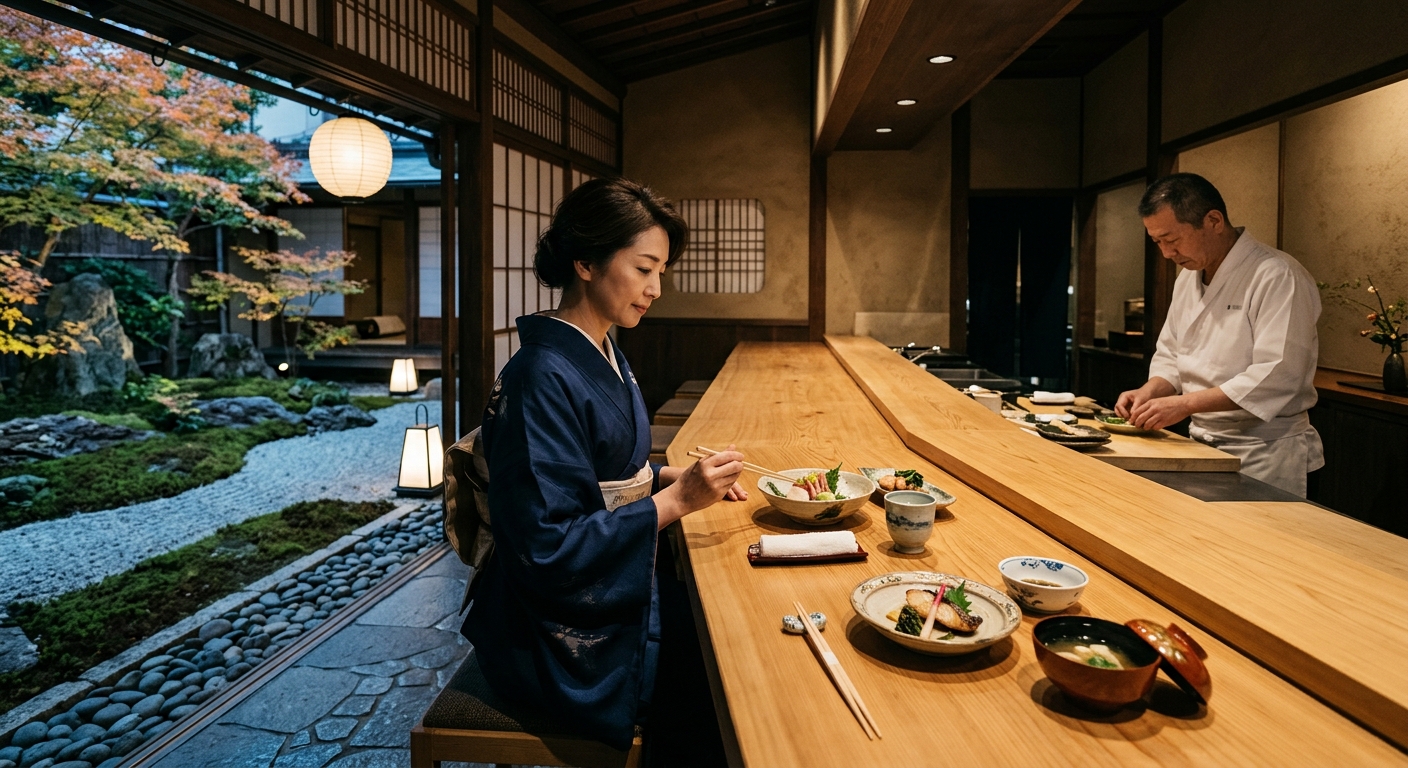
Kyoto offers a quieter, more disciplined interpretation. SoNoMa, connected to the acclaimed SingleThread project, arrives inside Capella Kyoto and centers the conversation on Japanese seasonality, restraint and craft. Here, destination dining isn’t about spectacle so much as precision — the appeal lies in experiencing a culinary philosophy inside the exact place that gives it meaning, rather than a version exported elsewhere.
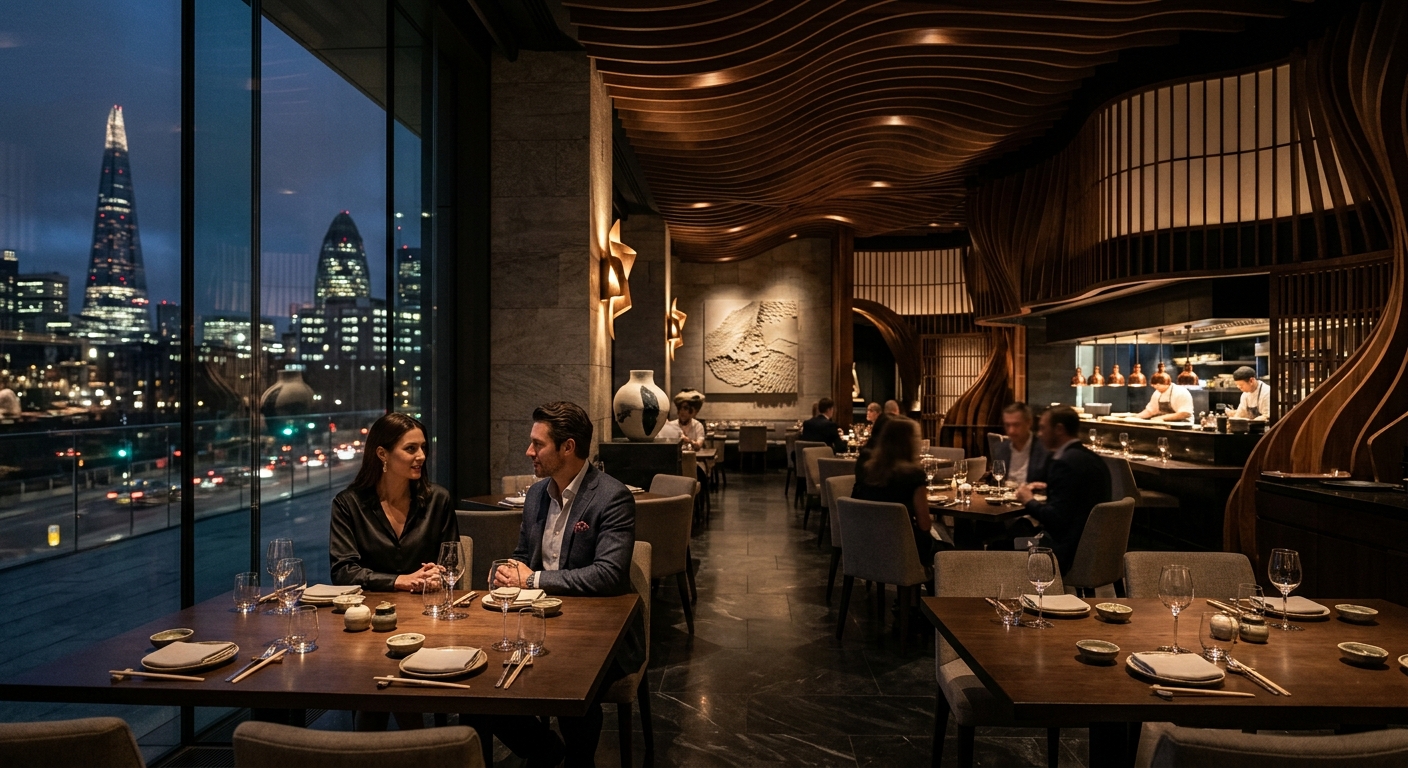
In London, The Chancery Rosewood illustrates another dimension of the shift: major hotels leaning on recognizable culinary talent to establish identity from the very first night. Tobi Masa, carrying the name and technique of chef Masayoshi Takayama, reinforces how a restaurant can function as a cultural anchor for a new property rather than an outlet bolted on after the rooms were already designed.
Outside the largest capitals, the model becomes arguably even more compelling. Serre, at The Maker Hotel in Hudson, New York, shows how food, interiors and atmosphere can turn a smaller town into a genuine overnight destination. Its dining spaces aren’t separated from the rest of the property; they’re part of the same sensual, tightly designed world guests are checking in for.
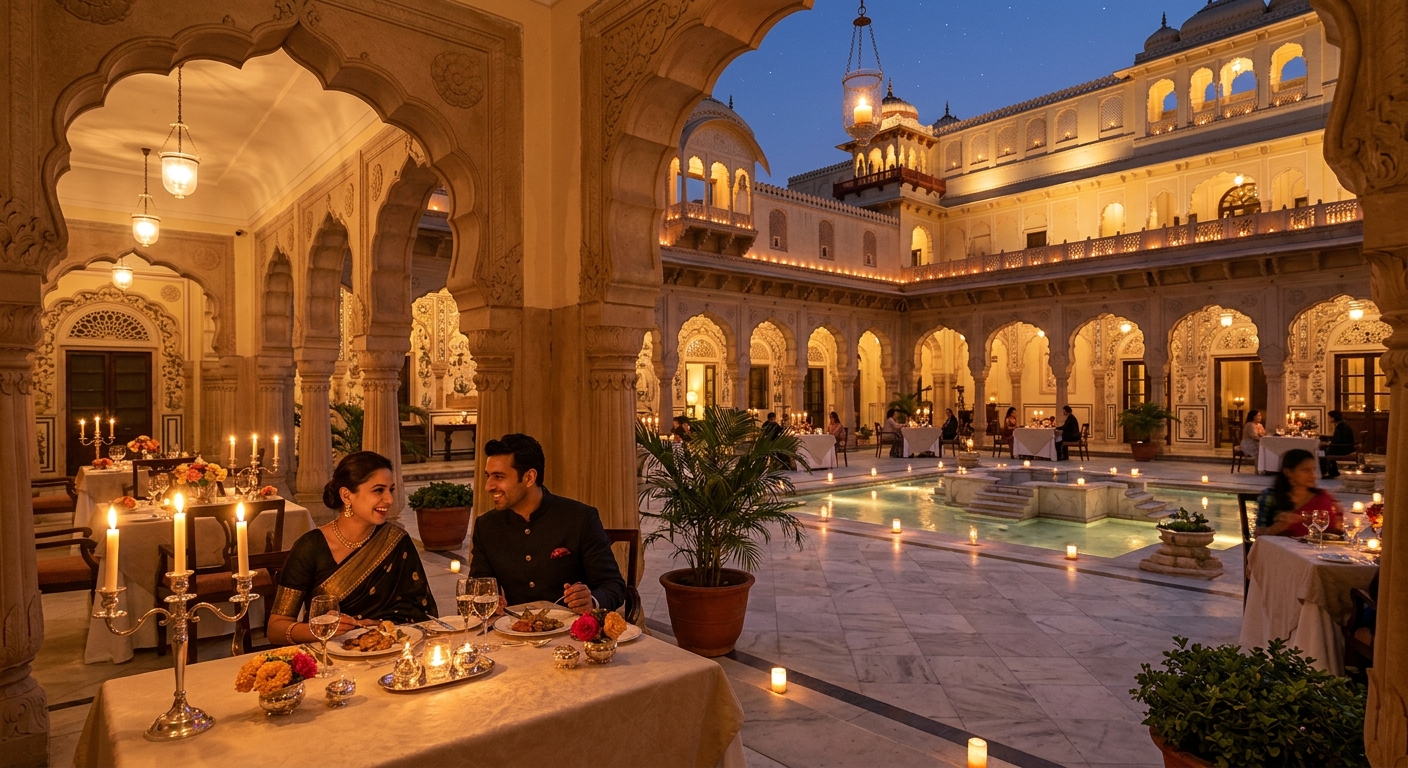
In Jaipur, Amber Terrace at The Leela Palace shows the equation from the opposite direction. Here, a meal acts as an entry point into place itself — architecture, regional ingredients, service rituals and the visual language of Rajasthan combining so that dinner becomes part of the travel experience rather than something scheduled between sightseeing appointments.
Why the Room, the Table and the City Are Merging
The most compelling part of this evolution isn’t simply that hotels are hiring better chefs. It’s that the boundaries between restaurant, hotel and destination are becoming genuinely difficult to draw.
Design plays a defining role. Open kitchens create theatre. Local stone, timber and ceramics tie the dining room physically to its surroundings. Terraces are positioned around views that cannot be replicated anywhere else on earth. Bars evolve into late-night rooms with their own following. Even breakfast can extend a property’s culinary identity instead of defaulting to the universal luxury-hotel buffet.
Sourcing has become part of the storytelling too. The strongest properties lean on proximity — to working farms, fisheries, vineyards and specialist producers — to build an experience tied directly to geography. For a luxury traveler, that specificity carries real value. A marble bathroom can be recreated in almost any city on any continent. A dinner built around one coastline, one growing season or one region’s culinary traditions cannot.
The New Luxury Is Having Nowhere Else to Be
There’s also a simpler reason destination dining works so naturally inside great hotels: dinner can finally take its time.
A tasting menu doesn’t need to end with a scramble for a car. Wine pairings don’t need to be negotiated against a commute home. The night can move seamlessly from restaurant to bar, terrace to suite, and into breakfast the next morning without ever breaking the experience. In an era when premium travel is increasingly sold around privacy, ease and access, that continuity is its own form of luxury — arguably harder to manufacture than any single dish.
For hotels, the opportunity cuts both ways. A great room might secure a guest’s one-night stay. A great restaurant can earn attention from an entire city, generate a reason to return year after year, and give a property cultural relevance that occupancy rates alone never capture.
What This Means for Where You Book Next
That’s why the most interesting question in hospitality right now may not be which hotel has the largest suite or the highest rooftop pool. It may be something far simpler: would you travel somewhere just for dinner?
Increasingly, across Cape Town, Kyoto, London, Hudson and Jaipur, the honest answer is yes. And once the table worth traveling for happens to be downstairs from a room worth staying in, checking in stops being a compromise — it becomes the plan.
Dinner Is No Longer the Second Decision
From Cape Town to Kyoto, the chef and the address are becoming the same decision. The next trip worth planning might start with a reservation, not a room.