

A 100-foot ocean racer. Ferrari-derived flight control. A radical ambition to travel above the waves. Inside Maranello’s most unexpected performance machine.
Length: 100 ft / approx. 30.5 m | Foils-deployed beam: approx. 20 m
Sail area: 462 m² | Solar array: approx. 100 m²
Design: Guillaume Verdier + Ferrari Design Centre | Team Principal: Giovanni Soldini
Built: Marina di Pisa, Italy | Operational base: Livorno, Italy
Launch: targeted spring 2027 | Retail price: not announced; not offered as a production yacht
For Ferrari, speed has always been more than a number. It is a discipline: reducing drag, extracting efficiency and turning difficult engineering into something emotionally compelling. Hypersail extends that philosophy from the circuits of Maranello to the open sea. The result is a purpose-built, full-foiling ocean-racing monohull—not a floating Ferrari showroom, but an experimental machine designed to test what offshore sailing can become.
By October 2026, the hull and livery had been revealed at the Marina di Pisa construction site, while an Azimut partnership was preparing the project’s next phase in Livorno. The scale alone is extraordinary: a mast reported at 35.5 metres, an overall height approaching 44 metres and 462 square metres of sail. Its defining feature, however, is below the waterline: a flight-control architecture intended to keep the hull riding above the waves.
Designed to Fly: The Numbers Behind Hypersail
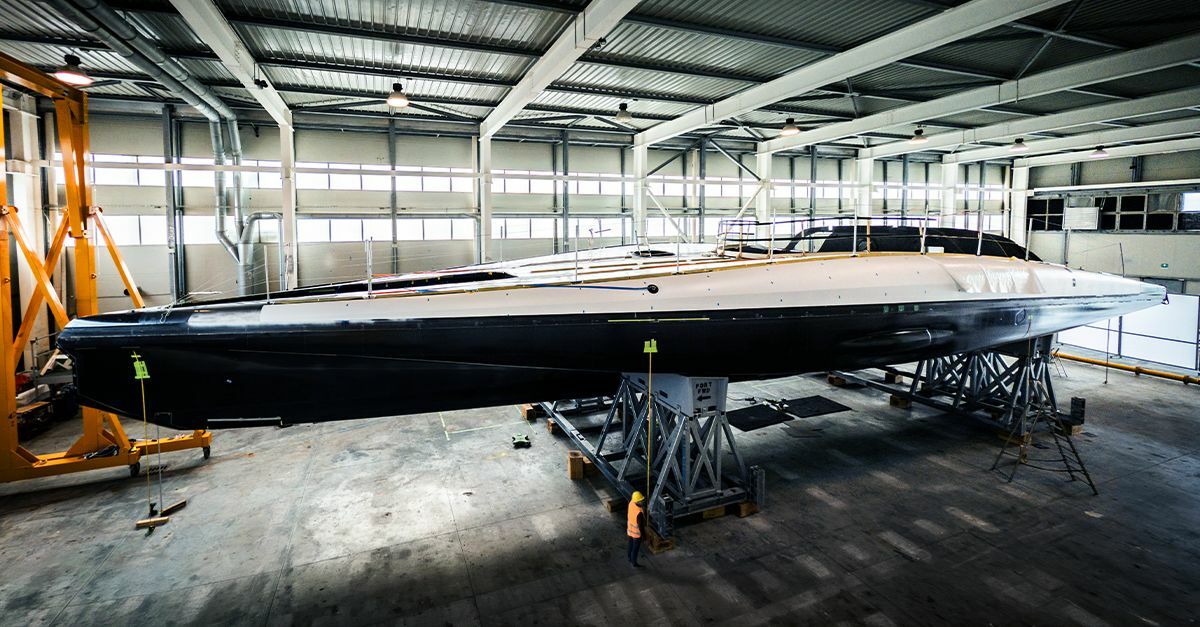
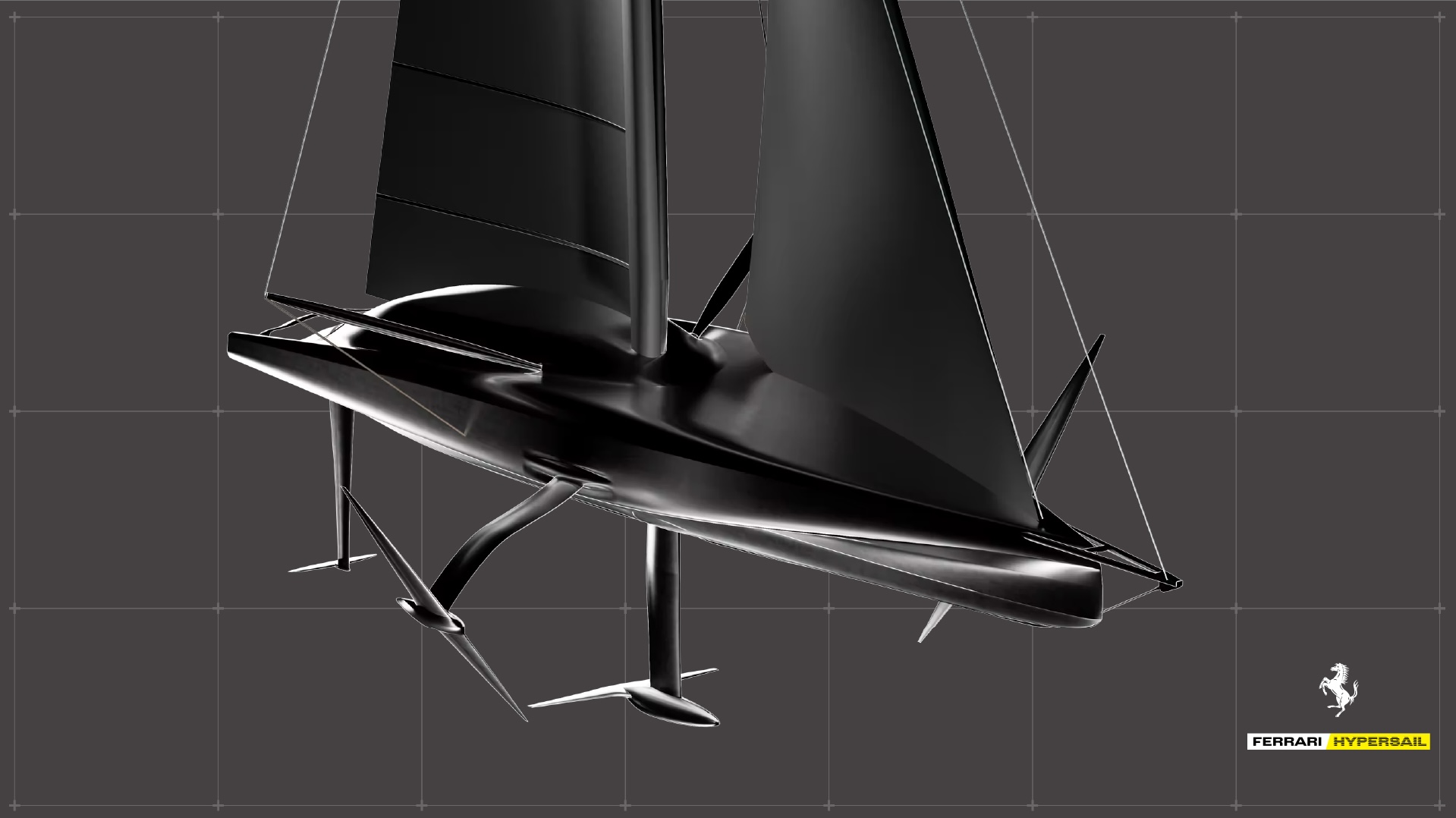
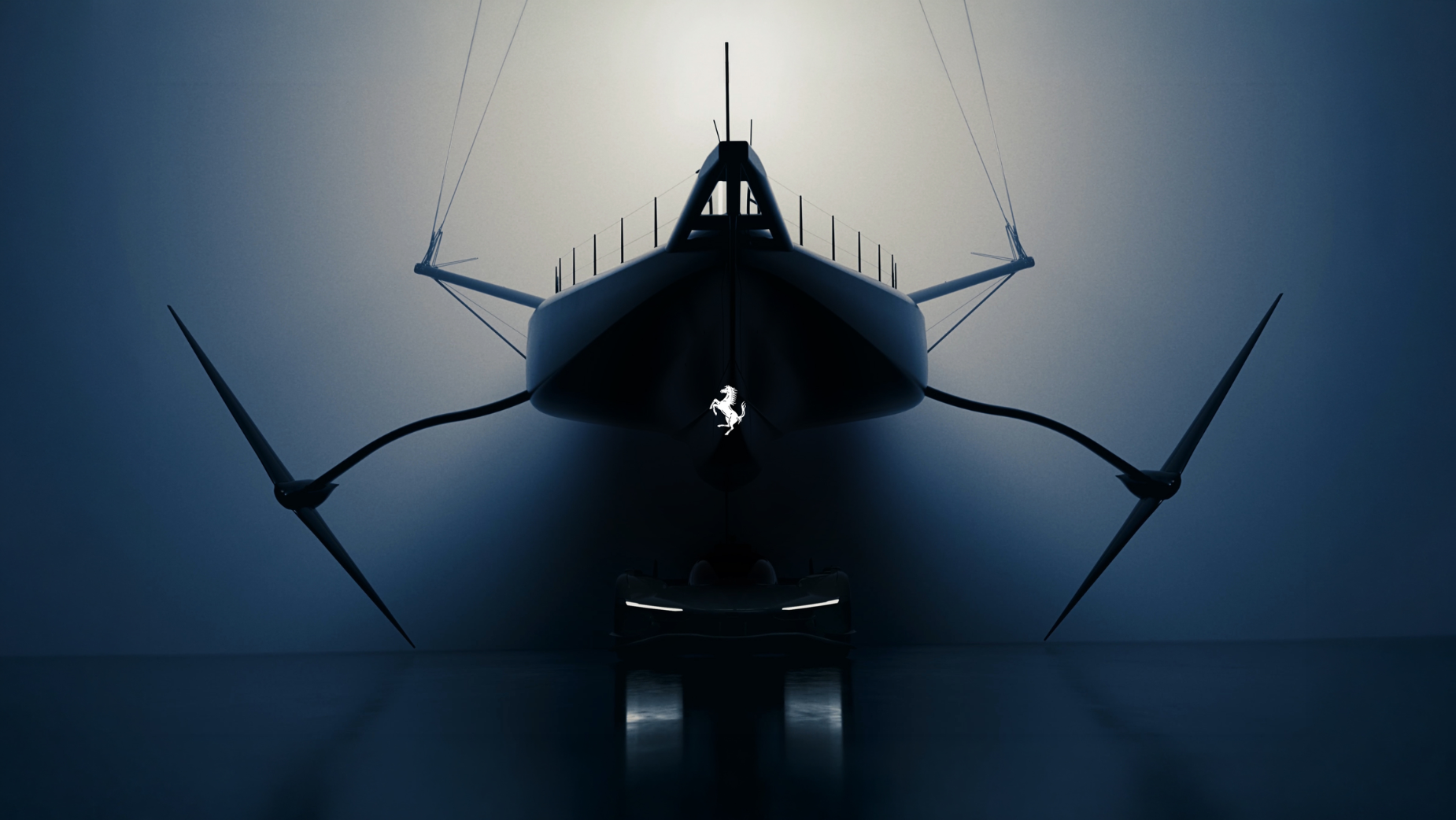
Naval architect Guillaume Verdier, whose work spans elite offshore racing and America’s Cup technology, has designed a 100-foot platform around three-point foiling. Lateral lifting foils work with a winged canting keel and rudder surfaces to control ride height and stability. Unlike a conventional displacement yacht, Hypersail aims to minimise how much hull remains in contact with the water, dramatically reducing hydrodynamic resistance.
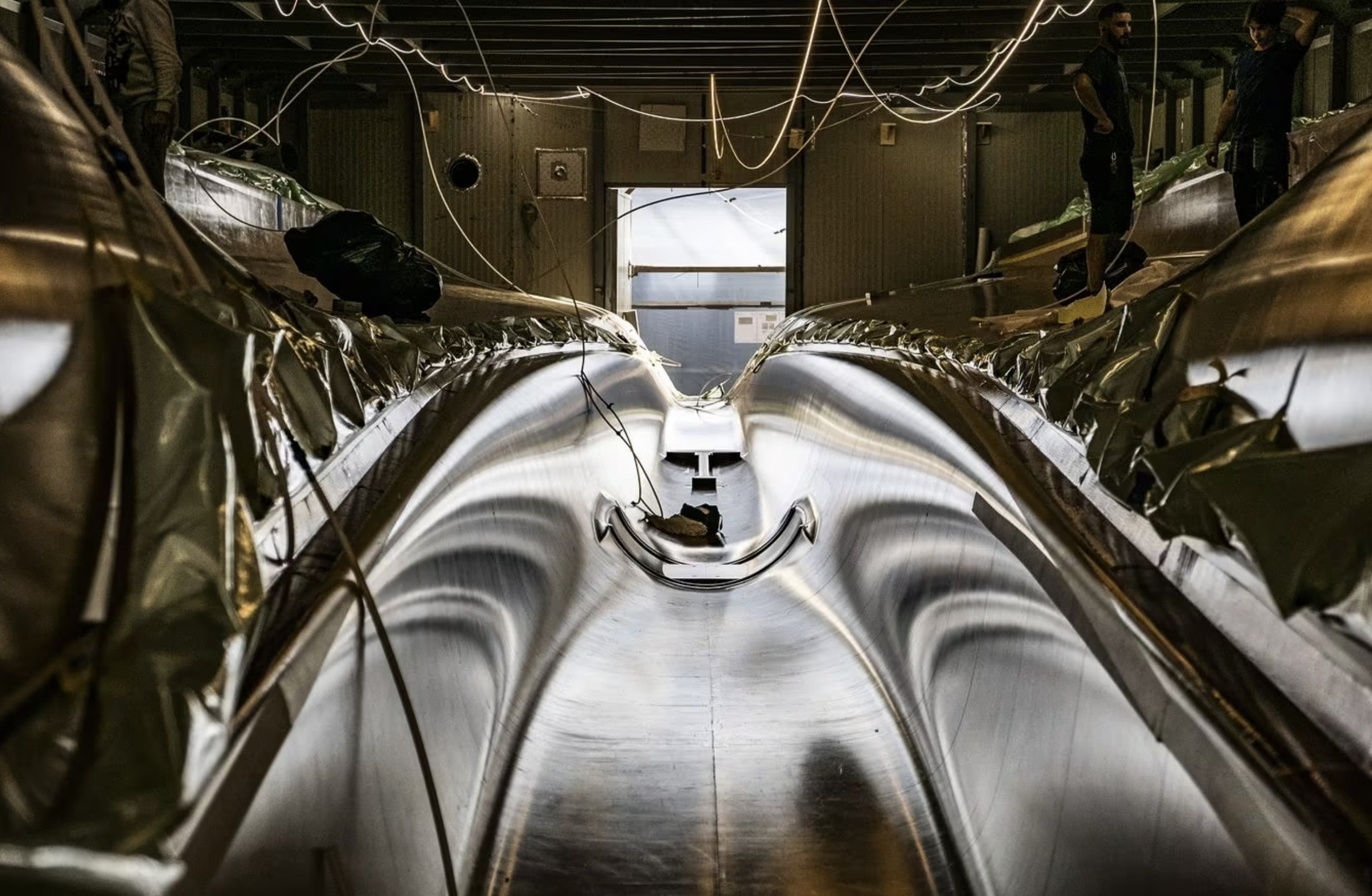
The beam reaches roughly 20 metres with foils deployed, while the keel can cant approximately 35 degrees to either side. Construction reporting describes 6.5-metre foil arms, a five-metre carbon-fibre bowsprit and hydraulic keel actuation operating at 350 bar. These are not decorative details: they reveal the forces required to keep a vessel this large flying safely through changing seas.
How Fast Will It Go?
Speed is the irresistible question, but it deserves precision. Specialist reporting on the project’s simulations describes the yacht exceeding 40 knots—around 74 km/h or 46 mph—in a modelled 14-knot beam-wind scenario. That is a reported simulated performance figure, not a certified top speed achieved at sea. The designers have also discussed an ambitious target of 1,000 nautical miles in 24 hours, equivalent to an average of approximately 41.7 knots; that remains a design aspiration rather than a completed passage.
Even take-off is an engineering milestone. Designers have discussed lifting into flight in winds of roughly 10–12 knots. Ferrari’s challenge is not merely reaching a peak speed in controlled conditions, but sustaining high average speeds when waves, gusts, fatigue and weather systems make the ocean profoundly less predictable than a racetrack.
The Intelligence: Formula 1 Thinking Meets Ocean Racing
Hypersail’s active flight-control concept transfers Ferrari’s expertise in vehicle dynamics, sensors and predictive control into a sailing environment. The system is intended to coordinate fast adjustments to foil and appendage settings as the vessel pitches, rolls and accelerates. Designers have discussed potential performance improvements of 10–20% from advanced control in relevant conditions, but these are engineering expectations, not verified race results.
A crew of approximately 10–12 sailors is envisaged inside an enclosed, aerodynamic cockpit. The winch-by-wire concept allows power generated by grinders to be distributed electrically to winches and hydraulic pumps rather than relying on traditional mechanical shafts. That frees the deck layout to follow ergonomics and performance needs. Carbon fibre, titanium and stainless steel are deployed where weight, stiffness and extreme loads demand different solutions.
Energy Independence: A Racing Yacht Without a Conventional Engine
Ferrari’s ambition goes beyond velocity. The yacht is being developed to produce its operating energy from renewable sources, including solar and recovered wind or motion energy. Around 100 square metres of integrated solar panels have been described, with a reported generation capacity of approximately 20 kW under suitable conditions. The aim is an offshore platform that can run its sophisticated onboard systems without depending on a combustion engine for normal operations.
The challenge is unusually demanding: flight controls, electronics, hydraulics and onboard systems all consume energy, and ocean racing offers no guarantee of sunshine or steady wind. If the programme works as intended, its lessons could extend far beyond competitive sailing into marine energy management and lightweight systems engineering.
Maranello, Marina di Pisa and Livorno: Three Italian Coordinates
Maranello provides Ferrari’s engineering culture and design identity. Marina di Pisa, on Tuscany’s coast, is where the experimental hull has taken shape. Livorno, on the Tyrrhenian Sea, is becoming the programme’s operational home through a collaboration with Azimut Yachts. These are the geographic anchors of a project conceived as Italian innovation with global offshore ambitions.
Azimut’s specially modified Fly 72 support vessel is engineered to tow Hypersail at around 30 knots during early foil trials without mast or sails. To do that, Azimut describes a six-tonne weight reduction and a custom installation producing 4,000 horsepower. Crucially, those numbers describe the support boat, not Hypersail’s own propulsion or confirmed sailing speed.
The Design Inspiration: Ferrari Hypercars, Not Yacht-Club Tradition
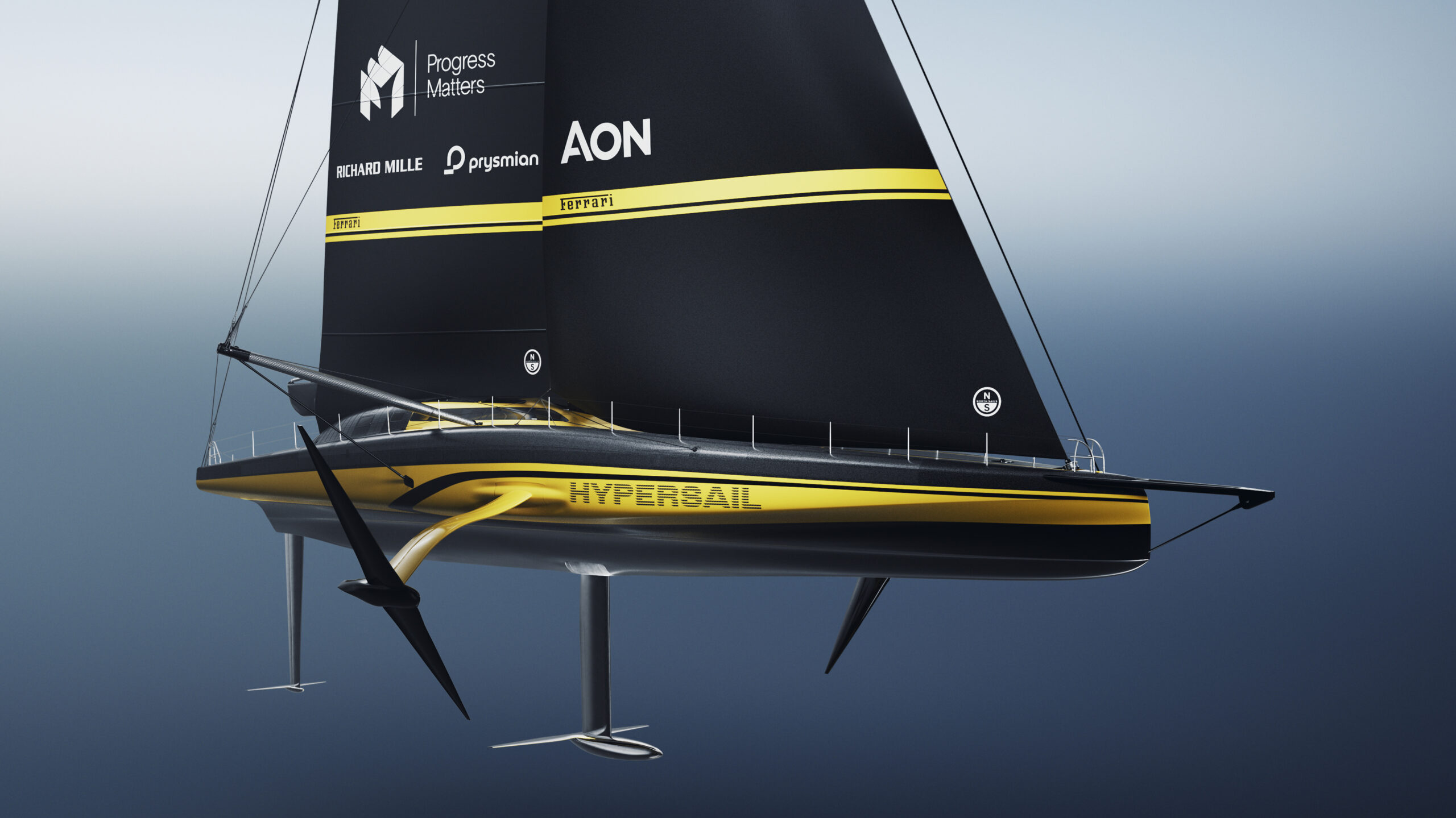
Ferrari’s Design Centre, led by Flavio Manzoni, treats every surface as an expression of function. The livery combines the dark Grigio Hypersail finish with vivid Giallo Fly accents. Design reporting links the yacht’s silhouette and graphics to Ferrari’s road and endurance-racing language, including the Monza SP series and the 499P Hypercar. The result is distinctly Ferrari without pretending a racing sailboat is simply a sports car enlarged.
The enclosed cockpit, carefully integrated solar surfaces and dramatic foil architecture give Hypersail a visual identity shaped by aerodynamics. Its beauty comes from the tension between control and exposure: a machine made for a setting where no two laps are alike.
What Does Ferrari Hypersail Cost—and Can You Buy One?
There is no publicly announced purchase price. Ferrari Hypersail is a bespoke research and offshore-racing programme, not a catalogue superyacht with a published asking price, charter rate or order book. Attaching a speculative multi-million-dollar sticker price would confuse development expenditure with retail value. The meaningful commercial question is what its technologies may eventually teach the wider sailing and marine industries.
As of October 2026, construction progress and the Livorno support infrastructure point toward a targeted spring 2027 launch, followed by testing. Schedules can move as an unprecedented prototype transitions from design to the water. Its 40-knot-plus scenarios, energy autonomy and record ambitions should all be judged against future sea-trial evidence.
Why Hypersail Matters
The most compelling Ferrari projects tend to make engineering ambition feel inevitable in hindsight. Hypersail has not yet proved its boldest claims at sea, but it already reframes the question of what a 100-foot yacht can be: less floating residence, more high-performance laboratory; less emphasis on luxury by excess, more on luxury as extraordinary capability.
If Ferrari can unite sustained offshore foiling, predictive flight control and renewable-energy independence, Hypersail may influence a generation of marine design. For now, its story is the collision of two uncompromising worlds—Italian racing and ocean endurance—and the extraordinary machine emerging between them.