
The latest chapter in Los Angeles hospitality isn’t unfolding behind a glass tower or inside a sprawling resort. It’s taking shape within the walls of a former church in Silver Lake, where Hotel Lucile offers a different perspective on what makes a hotel memorable.
The property represents a compelling direction in independent hospitality: places that draw their identity from existing architecture, neighborhood character and the people who bring them to life. That approach feels particularly relevant in Silver Lake, a neighborhood whose appeal has always been tied to a distinct mix of creative energy, residential streets and independent businesses. Rather than offering visitors a generic version of Los Angeles, a small hotel can become a lens through which to experience its immediate surroundings.
For a city accustomed to reinvention, Hotel Lucile presents an interesting example. Its appeal lies not simply in what has been added, but in what has been preserved.
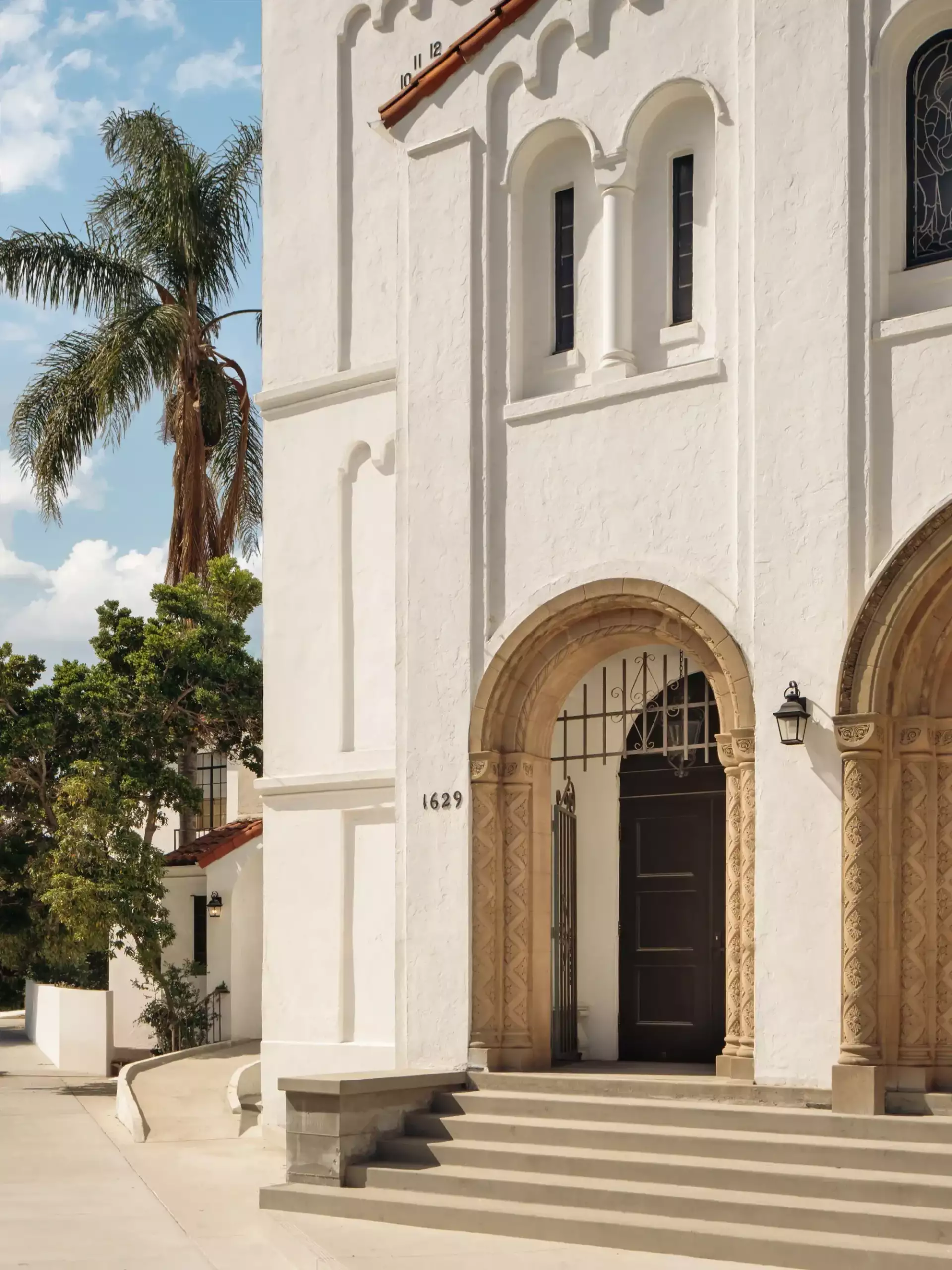
A Church Finds Its Second Life
Built in 1931, the former church has been transformed into a 25-room boutique hotel. Rather than erase the building’s past, the project makes its history part of the guest experience. There is a particular intimacy to staying in a place with a recognizable former life. The architecture carries a narrative before a guest even checks in, allowing the setting to feel grounded rather than manufactured. In a market crowded with new openings, that kind of continuity can be a powerful distinction.
Architectural details, including stained glass, provide a connection to the original structure. The result is a property where history is more than a decorative reference.
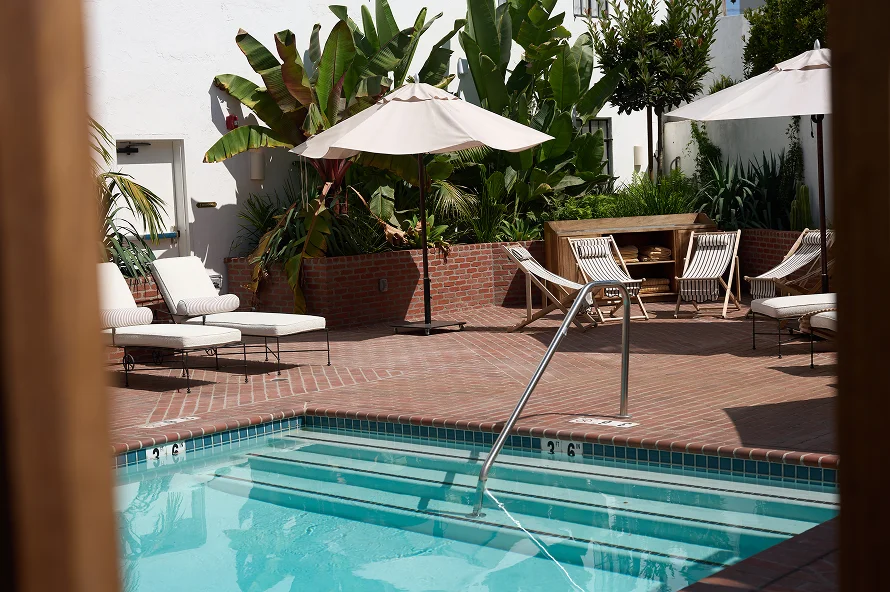
That distinction matters in Los Angeles, where hospitality developments frequently borrow the visual language of the city’s past. At Hotel Lucile, the building itself provides the foundation for the story.

Architecture That Remembers
The design approach, associated with Electric Bowery, brings contemporary hospitality into conversation with the original building. Adaptive reuse is not simply a matter of retaining a beautiful façade. It asks designers to consider how a building’s existing proportions, circulation and light can accommodate an entirely different rhythm of daily life. The most convincing transformations allow those layers to coexist, so the finished space feels neither frozen in history nor stripped of its character.
The challenge in a conversion like this is finding a balance between preservation and everyday comfort. Historic features must coexist with the expectations of modern travelers, from privacy and practical amenities to a sense of calm.
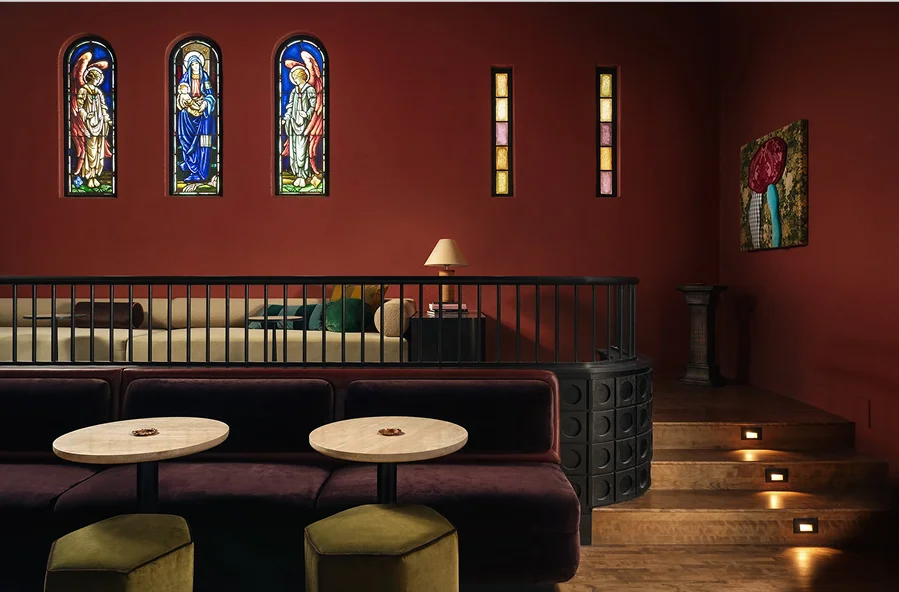
Hotel Lucile offers an opportunity to examine how adaptive reuse can give independent hotels a distinctive identity without relying on spectacle. It also raises a larger question for the hospitality industry: how much of a destination’s character should a hotel preserve, and how much should it reinvent? The answer is rarely found in a single design gesture. It emerges through the relationship between the building, the people working within it and the neighborhood outside its doors.
The Restaurant as a Neighborhood Gathering Place
The hotel’s restaurant, Sous Sous, introduces another dimension to the project.
Drawing on Southern French influences and California ingredients, the dining concept creates a reason to experience the property beyond an overnight stay. A hotel restaurant also has a difficult balancing act: it must serve travelers looking for convenience while giving residents a genuine reason to return. The best examples do not feel like amenities hidden behind a lobby. They develop their own point of view, contributing to the neighborhood’s dining conversation rather than standing apart from it.
For neighborhood hotels, that relationship is significant. A restaurant can become the point where visiting guests and local residents encounter one another, helping a property participate in the cultural life around it.
Whether Sous Sous establishes that kind of relationship over time will be an interesting measure of the hotel’s place within Silver Lake.
A Different Definition of Luxury
Luxury hospitality has long emphasized scale, exclusivity and elaborate amenities. Independent properties such as Hotel Lucile suggest another possibility: that a memorable experience can begin with the character of a building and its relationship to its surroundings.
Silver Lake’s creative identity gives the hotel a setting that is markedly different from the traditional luxury corridors of Beverly Hills and West Hollywood. Here, the appeal is less about grand arrival moments and more about atmosphere, walkable discoveries and the pleasure of finding a place that feels connected to its environment. For travelers who have visited Los Angeles many times, that difference may be precisely the attraction. A smaller property can encourage a slower, more observant way of experiencing the city.
Hotel Lucile’s long-term success will depend on more than architectural appeal. Service, dining, neighborhood engagement and the quality of the guest experience will determine whether the property becomes a lasting part of Los Angeles hospitality.
For now, its transformation offers a compelling editorial subject: how a building designed for one kind of gathering can find a new purpose nearly a century later.