

Nick Mason’s one-of-a-kind 1996 McLaren F1 GTR “Pop Art F1” sold for $34.655 million at RM Sotheby’s Monterey 2026, setting public-auction records for both McLaren and British-built automobiles.
Chassis 10R spent more than 25 years with the Pink Floyd drummer, but celebrity provenance is only one layer of its value. It is the first 1996-specification F1 GTR, one of two Short-Tail factory “XP” prototypes, a Le Mans test car and the only F1 GTR finished in McLaren’s factory Pop Art livery.
When RM Sotheby’s sold the car in Monterey, California, for $34,655,000 USD, it became the most expensive McLaren and the most valuable British-built car ever sold at public auction. The price made the headline; the engineering, design and ownership story explain the premium.
The Pop Art F1: Key Facts
Car: 1996 McLaren F1 GTR
Chassis: 10R
Specification: First of nine 1996-specification GTRs
Identity: One of two Short-Tail factory “XP” prototypes
Provenance: Acquired by Nick Mason directly from McLaren in 1999
Result: $34.655 million at RM Sotheby’s Monterey 2026
Record: Most expensive McLaren and British-built car sold at public auction
From Road-Car Experiment to Le Mans Winner
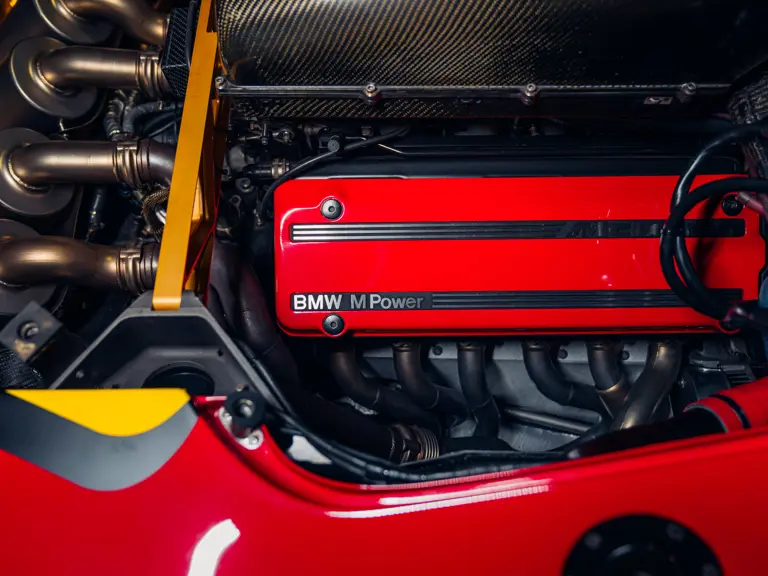
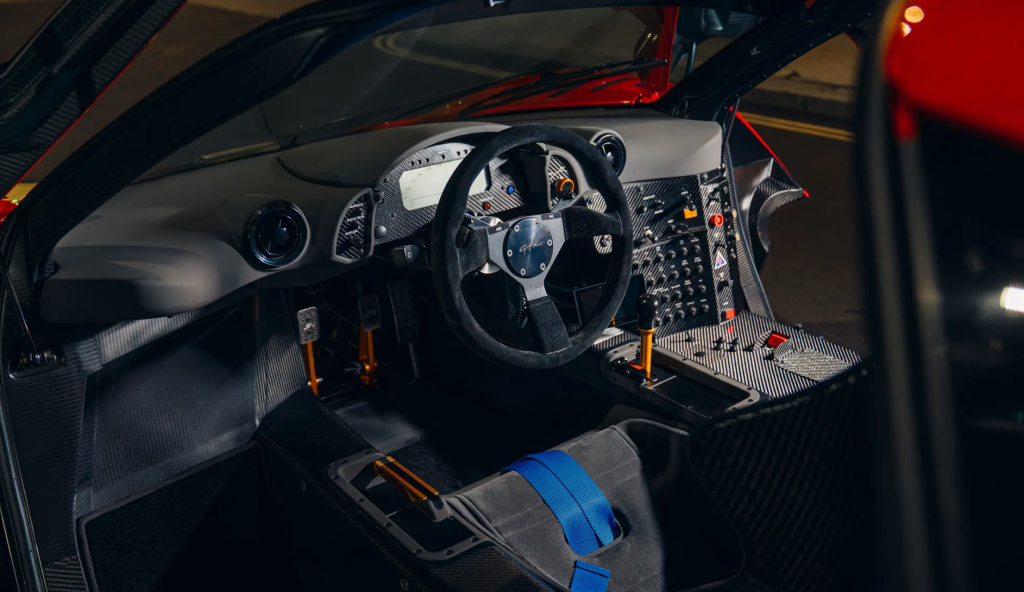
Gordon Murray conceived the original McLaren F1 as the ultimate road car, not as a homologation special waiting for a racing program. Its carbon-fibre monocoque, central driving position and naturally aspirated 6.1-litre BMW V12 were engineered around the driver rather than a rulebook.
Customers saw competition potential immediately. The resulting F1 GTR entered the BPR Global GT Series with new bodywork, a large rear wing, carbon-ceramic brakes and significant weight reduction. Much of the road car’s essential hardware remained—including the production-based engine and gearbox architecture.
Then came the impossible result. On its first attempt in 1995, an F1 GTR won the 24 Hours of Le Mans outright against purpose-built prototypes. McLaren did not merely take the GT class; it conquered the entire race. That victory permanently changed how collectors understood the F1.
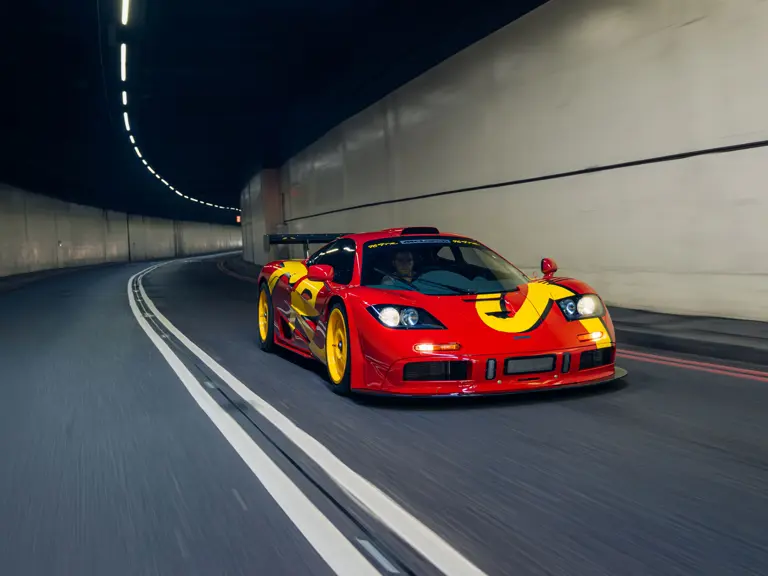
The 1995 victory also created a new problem. For 1996, rivals such as the Porsche 911 GT1 arrived with more specialized machinery. McLaren responded by making the GTR lighter, faster and more aerodynamically focused.
The revised car gained longer bodywork, larger front-wheel-arch extensions, a more aggressive splitter and a reprofiled rear wing. A magnesium gearbox housing and other revisions helped remove 38 kilograms compared with the previous GTR. The result was the fastest iteration of the original F1 GTR—even quicker, according to RM Sotheby’s historical documentation, than the later Long-Tail.
Only nine cars were built to the 1996 specification. Chassis 10R was the first. It left McLaren’s Woking facility in December 1995 and remained with the factory as a development and promotional machine. That “XP” identity matters: collectors are not looking at a customer race car that arrived after the engineering was finished. They are looking at the car that helped define the specification.
McLaren used 10R in winter testing and brought it to Le Mans pre-qualifying in 1996. Works driver David Brabham placed it eighth in class and twentieth overall during the session. Chassis 11R ultimately contested the race, but 10R had already performed its role as the factory test bed for McLaren’s second Le Mans campaign.
The visual identity is as important as the chassis history. Finished in Blood Red with sweeping yellow graphics, matching yellow wheels and the oversized “96 GTR” treatment, 10R is the only McLaren F1 GTR to wear this factory-created livery.
It was not a sponsor wrap assembled from commercial obligations. The design was created to make the car visibly different—to give spectators something beyond a conventional racing colour. Its shape and graphics turned technical development into theatre.
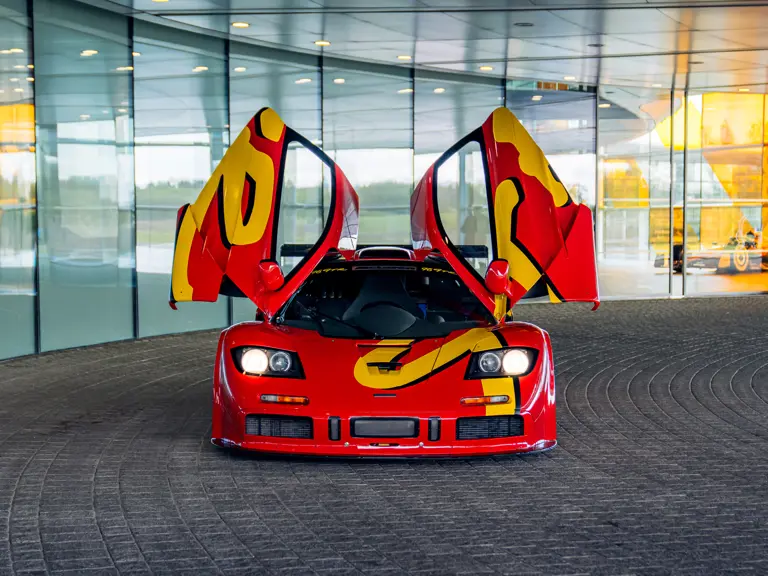
Nick Mason’s 25-Year Ownership Story
In 1999, McLaren sold chassis 10R directly to Pink Floyd drummer and renowned collector Nick Mason. The pairing feels unusually complete. Britain helped shape Pop Art; Pink Floyd’s visual language became part of global culture; and Mason had spent decades building one of the world’s most serious competition-car collections.
His garage has included a Ferrari 250 GTO, Jaguar D-Type, Maserati 250F, Bugatti Type 35 and Porsche 962. Chassis 10R belonged in that company because it blurred the same lines: road car and racing car, engineering object and cultural object.
Before entering Mason’s collection, McLaren converted the GTR for road use. It was registered as “K40 MCL” and later received practical improvements through Paul Lanzante, whose team had led the winning McLaren effort at Le Mans in 1995. One of an estimated 16 road-converted F1 GTRs, 10R completed an extraordinary circle: conceived from a road car, developed for racing, then returned to the street.
Mason owned the McLaren for 25 years. During that period, the car appeared at Rétromobile, Goodwood and private 106 Drivers Club tours through Europe. It was not treated as a static museum piece.
Its active life also included two significant restorations. After a journalist left the road during a 2009 test, Lanzante rebuilt the car without compromise. Mason later struck a tyre barrier during a 2017 demonstration at Goodwood, leading to another comprehensive restoration by Dean Lanzante and his team.
Those incidents do not erase the car’s significance; they reveal how seriously it was used and maintained. RM Sotheby’s described an open-chequebook approach in which the McLaren returned to Lanzante following important drives. By the time it reached Monterey, its history was unusually visible, its care was documented and its connection to the people behind McLaren’s Le Mans success remained intact.
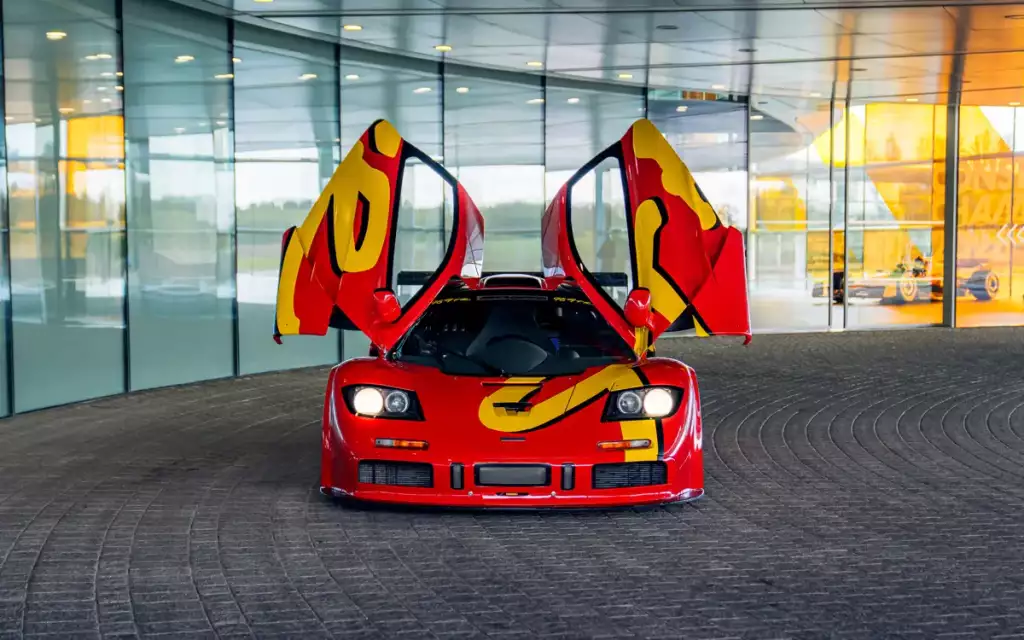
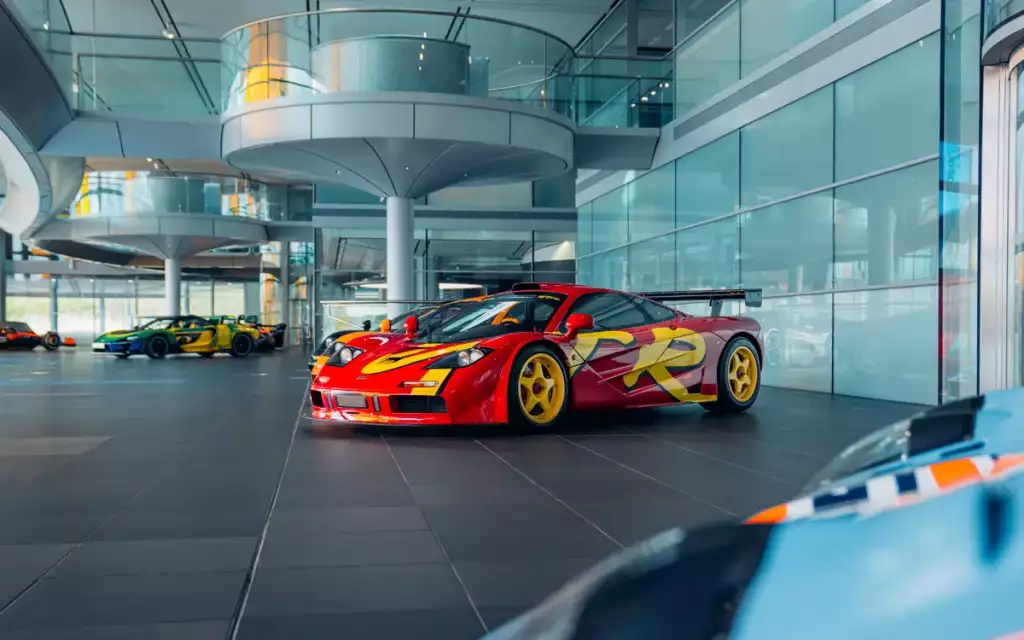
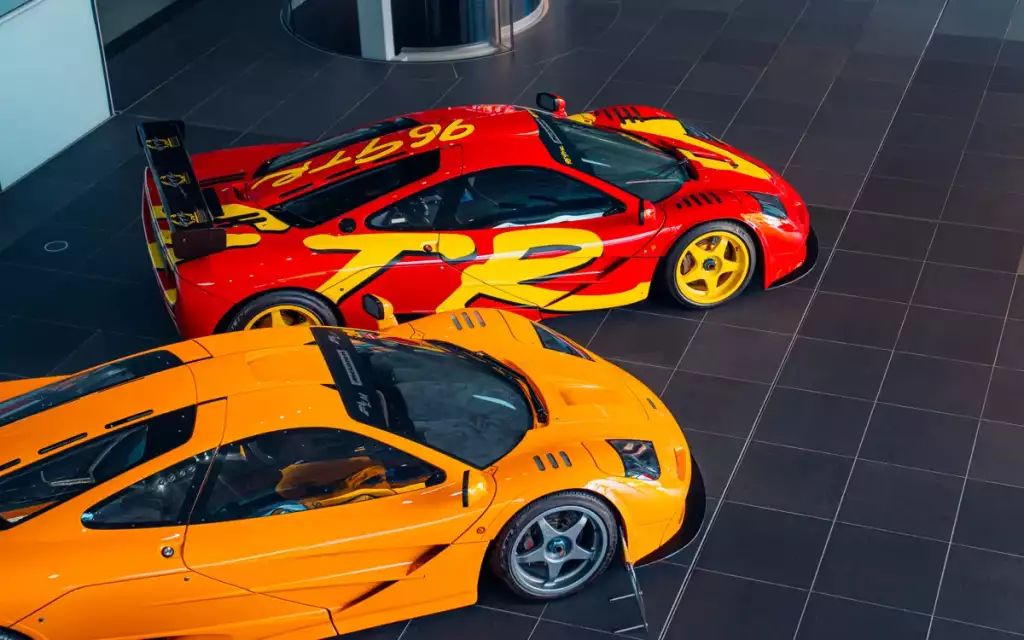
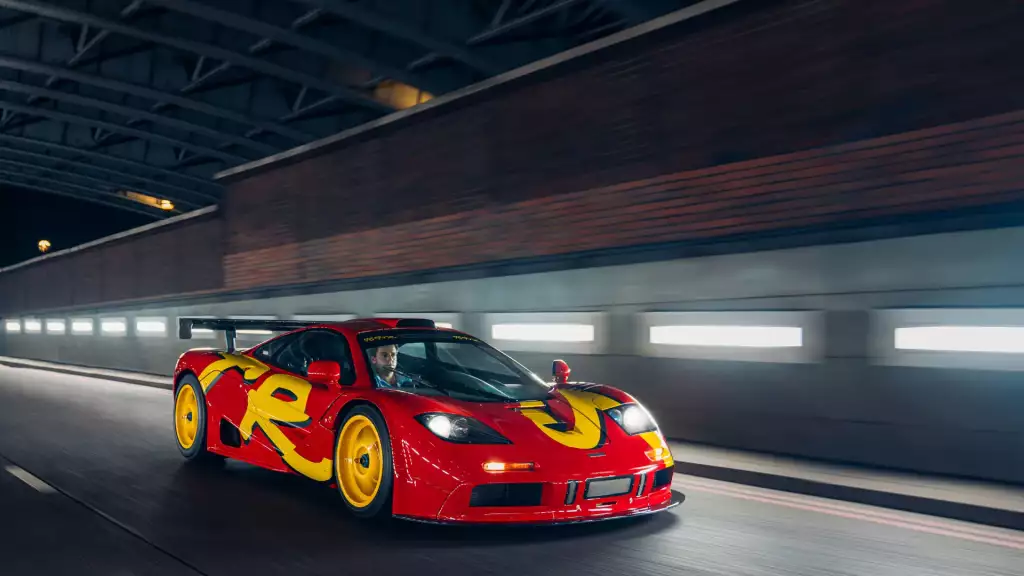
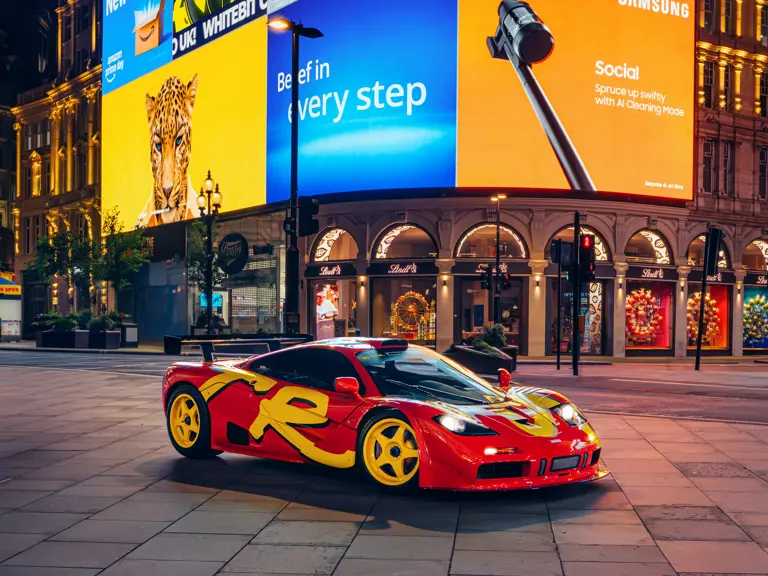
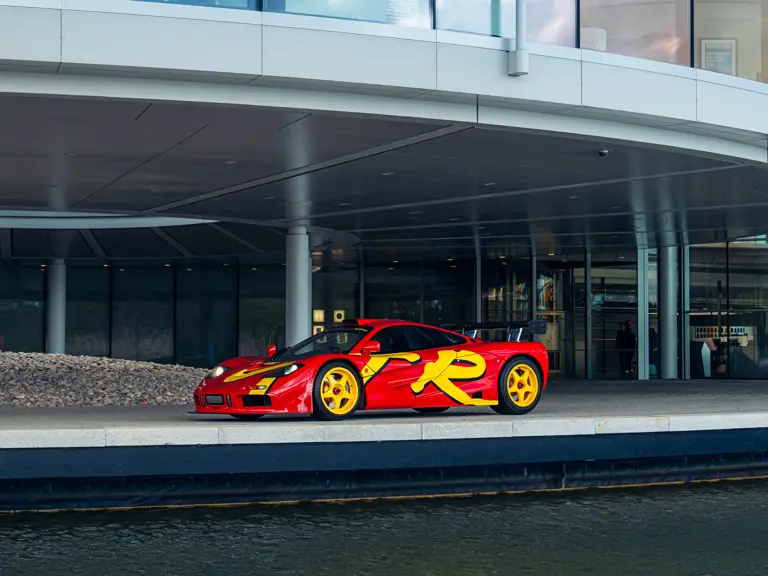
Gallery photography courtesy of RM Sotheby’s.
Where the Record Fits at Monterey 2026
The McLaren’s result arrived during RM Sotheby’s largest auction to date, a Monterey sale that generated more than $380 million. A one-off 2026 Ferrari Luce “Tailor Made” reached $40 million at the same event, while chassis 10R’s $34.655 million result established a different benchmark: no McLaren or British-built automobile had previously achieved more at public auction.
That distinction matters. Chassis 10R did not need to be the week’s most expensive car to redefine its category. It moved the public value of the McLaren name into territory historically occupied by rare competition Ferraris and pre-war masterpieces.
The winning bidder acquired more than a rare McLaren. The price reflected a near-impossible concentration of attributes: the first 1996-specification GTR, one of two Short-Tail factory prototypes, a Le Mans test car, the only example with its factory Pop Art livery, an official road conversion and 25 years of Nick Mason provenance.
The auction also shows how the collector market is changing. For generations, the highest values belonged primarily to pre-war coachbuilt automobiles and racing Ferraris from the 1950s and 1960s. The defining performance cars of the 1990s have now entered the same conversation. Collectors who grew up with the McLaren F1 no longer see it simply as a poster car. They see it as one of the century’s most important industrial designs.
Credit also belongs to RM Sotheby’s for presenting the car as more than a lot number. Its research connected the engineering, racing history, restorations, ownership and visual culture behind 10R—giving bidders the knowledge required to understand why this McLaren stands apart.
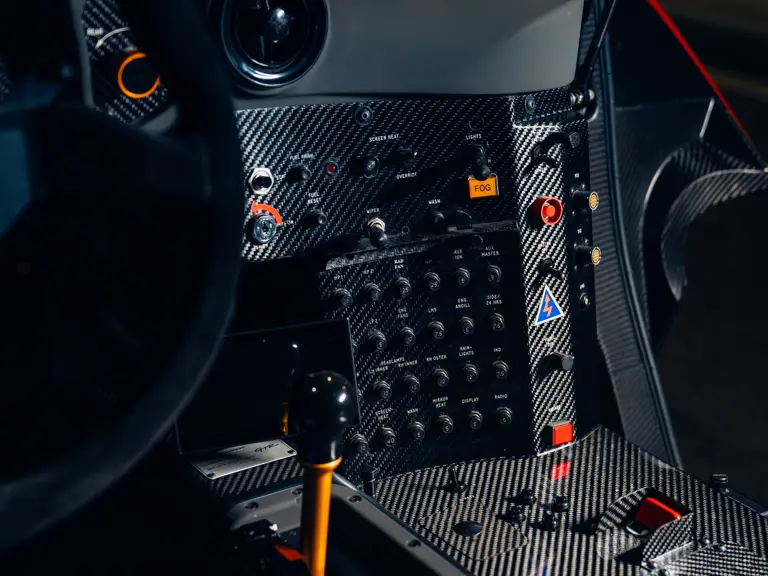
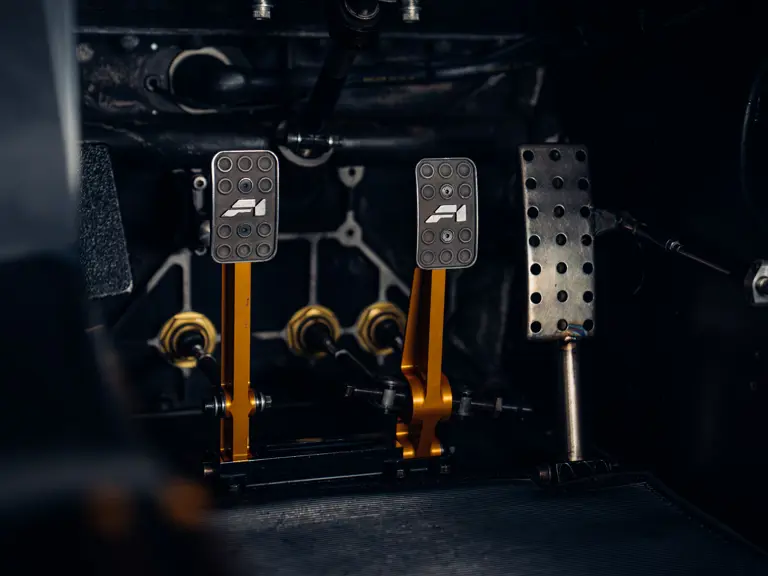
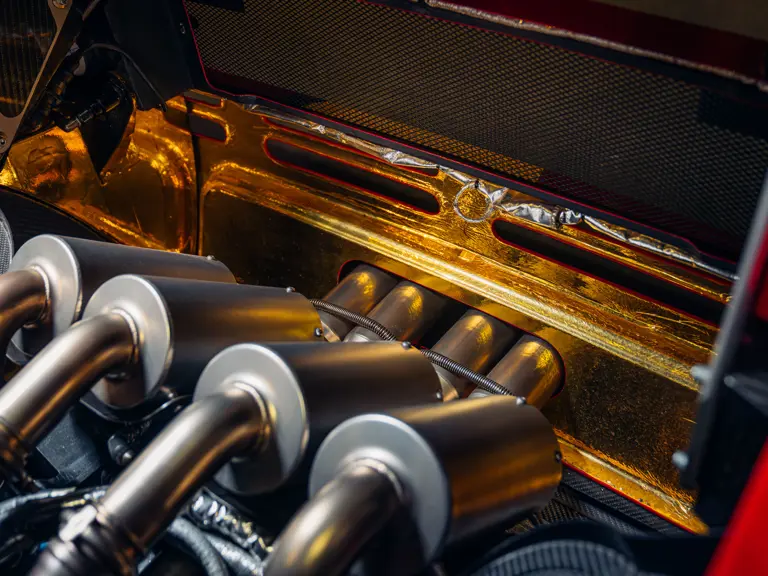
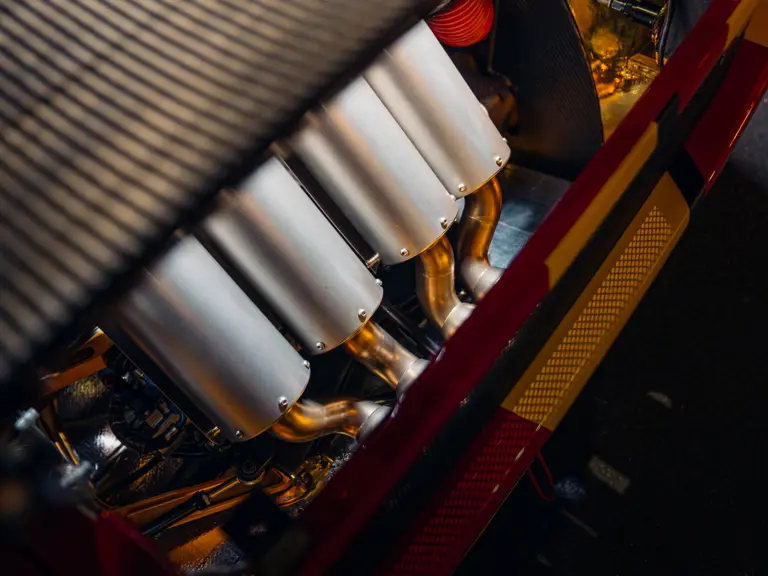
The $34.655 million result became a record for McLaren and for British-built cars at public auction. But the lasting value of chassis 10R cannot be summarized by price alone. It is the road car that went racing, the development prototype that returned to the road, and the Pop Art machine that spent a quarter-century with a member of Pink Floyd.
There are faster modern hypercars. There are older racing cars. There may even be more expensive private transactions. But there is only one chassis 10R. For another look at how rarity, provenance and spectacle shape value, read LAPSOFLUX’s report on the white falcon that sold for AED 1.5 million in Abu Dhabi.
McLaren F1 GTR Auction Record: Quick Answers
How much did the Pop Art McLaren F1 GTR sell for?
RM Sotheby’s sold chassis 10R for $34,655,000 USD at its Monterey 2026 auction.
Who owned the Pop Art McLaren?
Pink Floyd drummer and noted car collector Nick Mason acquired it directly from McLaren in 1999 and kept it for more than 25 years.
Is it the most expensive McLaren ever sold?
Yes. According to RM Sotheby’s, the result made chassis 10R both the most expensive McLaren and the most valuable British-built automobile sold at public auction.
Sources and image credits: Reporting and photography supplied through official RM Sotheby’s press and auction materials. Images: Courtesy RM Sotheby’s. LAPSOFLUX independently edited and contextualized the story.