
Cars are often the most carefully chosen objects a collector owns, yet the space around them can be surprisingly ordinary. Porsche Design and Miami-based Newgard Development Group want to change that with Porsche Design Concours, a new ownership concept that combines private automobile studios with a members-only social club. Announced on September 28, the first locations are planned for West Palm Beach and Dallas, with openings targeted for 2028.
The proposition is specific: 44 deeded studios across the two projects, 22 in each city, sold by invitation. Porsche says the units will range from 2,700 to 6,000 square feet. They are intended to be places to keep a collection, but also to spend time, work, and entertain. The idea is less a conventional garage than a private room built around the ritual of owning and sharing cars.
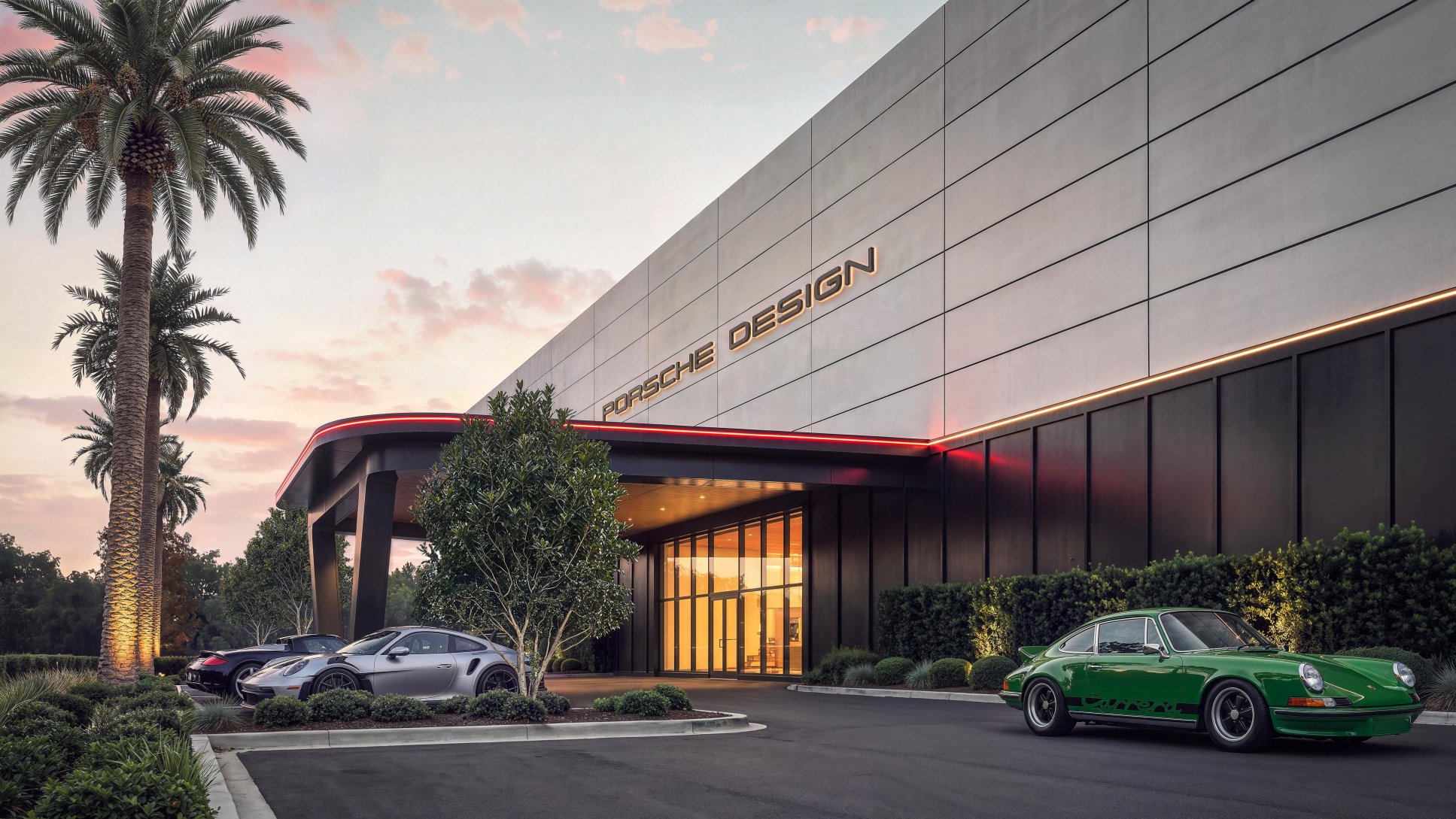
What an owner actually gets
Each studio is planned with a mezzanine, full bathroom, wet bar and climate control. The latter is essential for protecting valuable vehicles, but the rest of the brief says more about the development’s ambition. Porsche Design and Newgard are making a case for a place that fits into a collector’s day: a morning at the desk, an afternoon looking over the cars, an evening with friends. The company has not published pricing, so any comparison to other collectible-car real estate remains speculative.
At the center of each building is a shared interior promenade called The Concours. Rather than treating arrival as a trip down a utilitarian drive aisle, the design turns circulation into a gallery-like experience. It is an architectural move with a commercial purpose, too: a car looks different when it can be seen and discussed in a room designed for display. It shifts storage into social space.
The architecture was developed with Porsche Design. Gensler is handling the Dallas project locally, while Urban Robot Associates is responsible for West Palm Beach. Renderings show a restrained palette, large areas of glass, and cars as the defining visual feature. Renderings are plans, of course; details may change as the buildings progress toward construction and opening.

The clubhouse is part of the pitch
Owners are also being offered access to a private, membership-based Clubhouse. Planned amenities include dining, lounges, coworking, terraces, event space, concierge services, 24-hour security, padel, spa and wellness facilities. The final mix will matter because this concept depends on repeated use. A beautiful garage might impress once; a club succeeds only when members want to return.
One detail broadens the idea beyond the marque’s established audience: Porsche ownership is not required. The studios are meant for collections from different manufacturers, eras and categories. That makes the club less of a brand shrine and more of a meeting point for people who share a serious interest in cars. It also gives the development a wider potential buyer pool than a strictly Porsche-only offering would have.
Newgard founder and CEO Harvey Hernandez described the project as a response to a question he kept asking about why treasured cars so often sit in spaces disconnected from the passion behind them. His real estate company has worked on branded residential and lifestyle developments, and Porsche Design brings a long history of applying the marque’s design language beyond vehicles. Here, those two interests meet in a specialized form of ownership.
Why West Palm Beach and Dallas
Both cities have affluent collector communities and growing markets for high-end lifestyle spaces. The developers say their goal is to place each Concours approximately 10 to 15 minutes from where its local audience lives and spends time. That proximity is a key part of the logic. A remote warehouse is a place to retrieve a vehicle. A nearby club can become part of a weekly routine.
There is also a broader story in the way luxury brands are expanding into physical experiences. Porsche Design already operates across watches, accessories and other design categories; this project applies the name to a place with deeded private space, community programming and hospitality. The value proposition will depend on how well those pieces work together once the sites open, rather than on the badge alone.
The distinction between owning a studio and joining the clubhouse will also be worth watching. A deeded space offers a tangible real estate asset, while the club promises access to people, services and programming that can change over time. Prospective buyers will want clarity on association costs, operating rules, vehicle access and the treatment of gatherings or events. None of those details was specified in the announcement. They are the practical questions that will shape daily use as much as the architecture does. The concept is persuasive on paper precisely because it makes the car visible within a wider social life; its execution will determine whether the promise holds.
For now, the firm has announced the two locations and a larger U.S. network ambition, while key buyer questions such as pricing, membership terms and precise opening dates await further detail. The most useful way to read this announcement is as a preview of how collector real estate may evolve: less emphasis on where to park, more attention to where owners want to spend time.