
Sanlorenzo’s Contigo, 164 feet of Italian restraint and methanol-powered silence, just opened for charter at $355,000 a week. Whether it signals the future of sustainable ultra-luxury yachting, or is simply the most beautiful argument ever made for environmental credibility, depends on who writes the cheque.
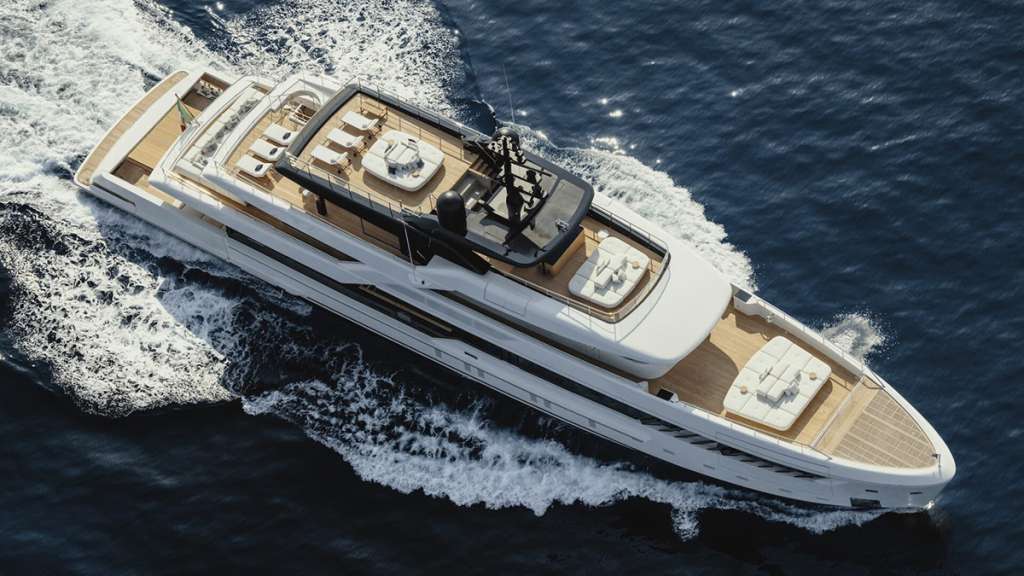
Contigo, formerly Almax: the Sanlorenzo 50Steel that became the world’s first methanol fuel-cell superyacht. Photo: © Guillaume Plisson / Cecil Wright
The loudest thing about Contigo, at anchor, is the sound of water against her hull. No generator hum. No diesel vibration working through the soles of your feet. The 164-foot Sanlorenzo sits as though it belongs to the sea rather than imposed upon it. For a yacht powered by the world’s first green methanol fuel-cell system, that quality is less a selling point than a statement of intent.
This week, Cecil Wright listed Contigo for charter at $355,000 per week, opening the 2026 yachting season with a vessel that has already done more for the conversation about sustainable superyachting than a decade of press releases. She was built by Sanlorenzo for the shipyard’s own CEO, Massimo Perotti, delivered in mid-2024 under the name Almax, then sold in an off-market transaction and rechristened. The name Contigo, in Spanish, means “with you.” It suits her. She does not call attention to herself.

The technology at Contigo’s core is more complex than the marketing language suggests. A fuel-cell system converts methanol into hydrogen, which is then converted into electricity. That electricity runs every onboard system when the yacht is at anchor: lighting, air conditioning, navigation, the kitchen, the spa. Zero noise. Zero local emissions. The diesel-electric hybrid propulsion is still there for passage-making, giving her a range of approximately 4,000 nautical miles and a top speed of 16 knots. But the distinction matters: this is not a yacht with a solar panel on the sundeck. This is a vessel that has fundamentally redesigned its power architecture.
“Enjoy extended luxury at anchor with zero noise, zero emissions. This is yachting’s next evolution.” — Sanlorenzo spokesperson
Contigo, formerly Almax: the Sanlorenzo 50Steel that became the world’s first methanol fuel-cell superyacht. Photo: © Guillaume Plisson / Cecil Wright
Whether methanol is truly clean is a conversation worth having. Green methanol, produced from renewable sources, does reduce lifecycle emissions in a material way. The methanol used on Contigo is classified as sustainable by Siemens Energy, who provided the technology. But the infrastructure for green methanol at Mediterranean marinas is still nascent. For now, Contigo is far ahead of the supply chain that would make her environmental claims fully watertight. That is not a reason to dismiss the achievement. It is a reason to watch where the industry goes next.
What €355,000 a Week Actually Buys
Contigo was built on Sanlorenzo’s 50Steel platform, the shipyard’s tri-deck workhorse with a volume of 1,347 GT. The exterior is shaped by Zuccon International Project: clean horizontal lines, expansive windows, nothing that shouts. Inside, Piero Lissoni’s Studio Lissoni has done what it always does: dark wood, pale stone, the kind of material palette where nothing dates because nothing was trying to be fashionable in the first place.
Ten guests across five cabins. The owner’s suite is positioned on the upper deck, described by the shipyard as a floating penthouse: private study, dual dressing rooms, an ensuite of some scale. Four additional guest cabins are below. Eleven crew look after all of it. The beach club opens directly to the sea. The full-beam ocean lounge spans the width of the main deck. A Jacuzzi sits on the sundeck with 360-degree views. Water toys include Jet Skis, Seabobs, wakeboards, tenders, canoes. The chase boat is a Wajer 55.
Sanlorenzo has been the most deliberate of the major Italian shipyards on sustainability. The SX112 Hybrid launched in 2019. The SD90 hydrogen project followed. Contigo, built for the CEO’s personal use before entering the charter market, is less a proof of concept than a demonstration of confidence: Perotti did not commission a green prototype for marketing purposes. He built one for himself, sailed it, sold it. That trajectory says more about where the technology is than any press release could.
The shipyard has not announced additional 50Steel hulls with fuel-cell systems. The technology adds significant cost and complexity to a build. But the charter listing at $355,000 per week places Contigo at the upper tier of the 50-metre market without a premium specifically attributed to her green credentials. She is competing on design, specification, and experience. The sustainability is included.
Somewhere in the Ligurian Sea this summer, Contigo will be sitting at anchor in the dark. Lights on, music playing, a table set for ten, the water completely still around her. Not a sound below the waterline. That is either the future of luxury yachting, or one of the most compelling arguments for it.