A good magic trick does more than make someone wonder how it happened. It changes the way a room feels. For a few seconds, attention narrows, certainty loosens, and a stranger’s reaction becomes part of the performance. That is the space Roman Royss works in: not only the mechanics of illusion, but the human instinct to search for an explanation.

His Edition 006 profile in LAPSOFLUX described a modern magician interested in psychology, presence, and performance. The distinction matters. A trick can be technically perfect and still leave an audience at a distance. Royss’s aim, as the magazine framed it, is to create a moment that feels close enough to question and immediate enough to remember.
His own account of the beginning is simple. He was five when he performed his first trick for his grandmother. Seeing her genuine astonishment, he wanted to make more faces light up that way. What began as a childhood moment gradually became a life organized around performance.
The moment before the explanation
Magic depends on attention. The performer and audience share a small window of time, and each person in the room is trying to decide where to look, what to believe, and when the impossible became possible. Royss’s work, as presented in the Edition 006 feature, is built around that tension.
That is also why close-up performance carries a different charge from spectacle at a distance. When the action happens inches away, the audience feels involved in the event. The reaction is no longer only to the effect. It is to the experience of being there, watching carefully, and still not being able to settle on an answer.
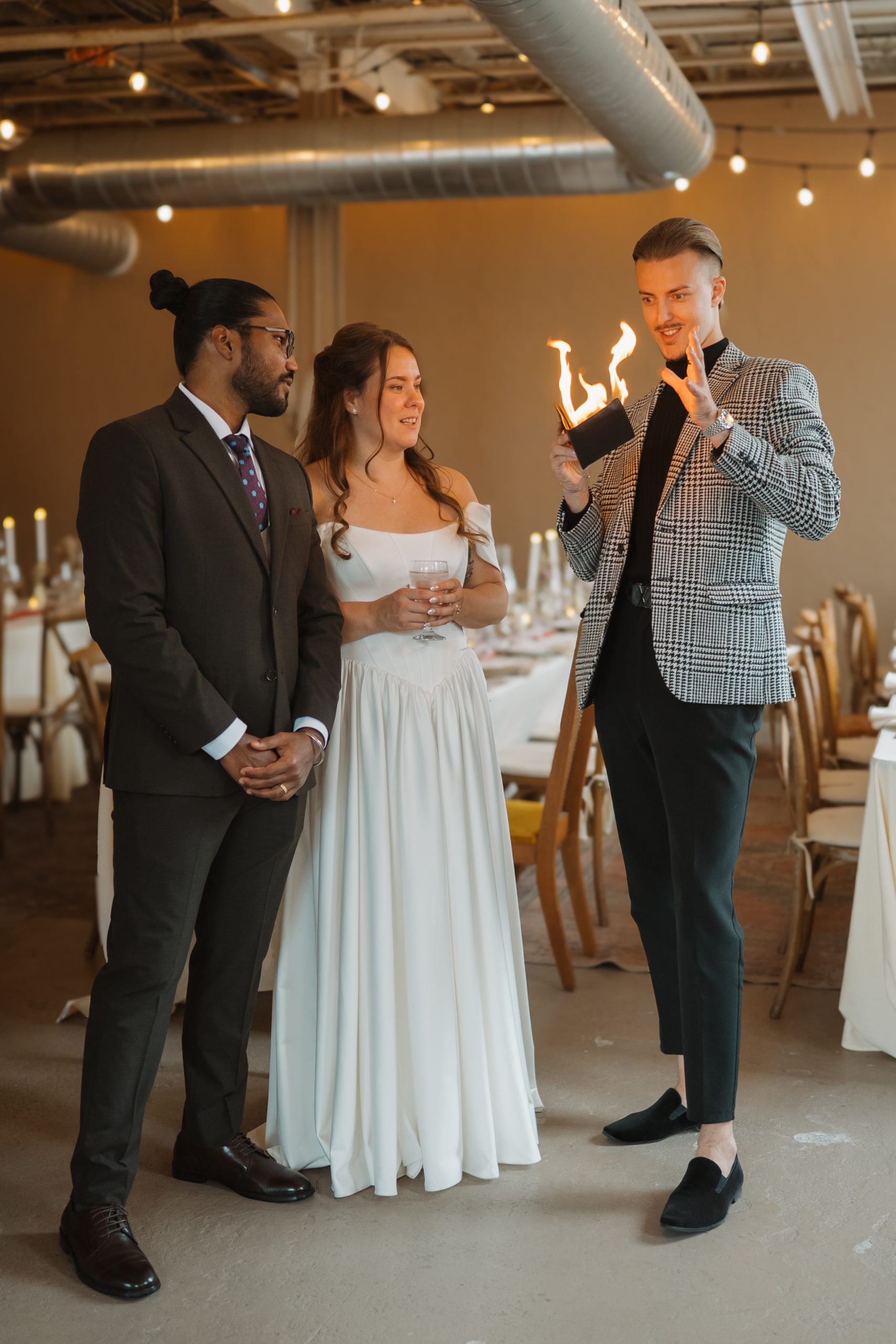
Royss works across magic and mentalism. On his official site, he presents performances for corporate events, weddings, and private gatherings, with formats that range from close-up entertainment to stage shows. The setting changes, but the central task stays much the same: hold attention, build anticipation, and give a group something to experience together.
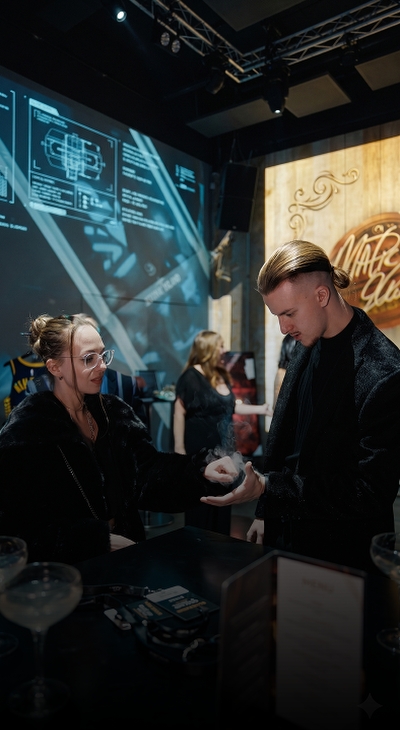
Keeping mystery in a replayable world
In the magazine, Royss’s story was placed against a familiar modern habit: everything can be recorded, slowed down, and watched again. That has changed the relationship between performer and audience. People arrive ready to test what they see. They look for the hidden move, the camera angle, the planted clue.
For a magician, that scrutiny can become part of the atmosphere. The audience is not asked to switch off its skepticism. It brings that skepticism into the room. The performance has to make space for both impulses: the desire to believe and the desire to solve the puzzle. Royss’s profile described his work as living between control and surrender, with precision tucked inside the experience rather than presented as a lesson in method.

The strongest moment may not be the reveal. It may be the pause just before it, when the room is trying to understand what it has seen. That pause cannot be fully reproduced by a clip on a phone. A video can show the effect, but a live audience carries the uncertainty together. People look at one another for confirmation, laugh, protest, and immediately start comparing theories.

Performance as a shared experience
That social dimension helps explain why magic continues to work across different kinds of events. A close-up performance gives guests a reason to gather. A stage set can bring a larger room into the same moment. On his site, Royss describes both intimate performances and interactive shows for wider audiences, adapting the format to the event.
There is craft in that adaptability. The performer has to read a room, judge its energy, and decide how much to reveal at each moment. In a quiet dinner, the smallest gesture can carry the effect. In a large celebration, timing and presence have to travel farther. The method may vary, but the audience remains the point of reference.
That idea connects Royss to the larger spirit of LAPSOFLUX’s “Titans of Toronto” edition. The issue looked at people building influence through distinct forms of work. For a magician, influence is measured in attention: the ability to make a room stop, look, and take part. You can explore the other profiles in Edition 006: Titans of Toronto.

What the audience carries away
A performance ends, but the conversation tends to continue. People replay the moment in their minds, challenge one another’s explanations, and remember how they felt when the expected answer never arrived. That afterlife is part of the art. The trick is temporary; the uncertainty can last much longer.
Roman Royss began by trying to bring astonishment to one person, his grandmother. The scale of a performance can grow, but the essential exchange remains personal: someone watches, something impossible seems to happen, and the room responds together. In a culture that rewards constant scrolling and instant answers, that brief suspension of certainty is a rare kind of presence.
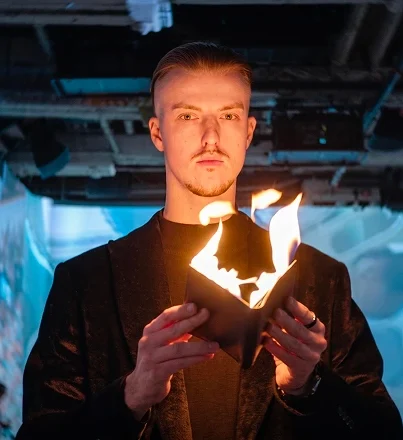
Edition 006 introduced Royss as a performer working in that space between psychology and illusion. The magazine feature provides the foundation; his current performance formats continue to bring that approach to private, corporate, and public settings. Learn more about his work at Roman Royss.