
A century-old mansion on the eastern slopes of Table Mountain is becoming the centerpiece of Cape Town’s next serious dining conversation. Palm House Boutique Hotel & Spa, set in Upper Wynberg, is preparing to open an outdoor fire kitchen from Heritage Day, September 24, 2026, led by Executive Chef Gregory Henderson. The move builds on the property’s existing dining identity, anchored by its two restaurants, Palm Terrace and de Tafel, and its gardens that already frame much of the guest experience. For travelers who track where South African hospitality is heading next, this is a property worth watching closely.
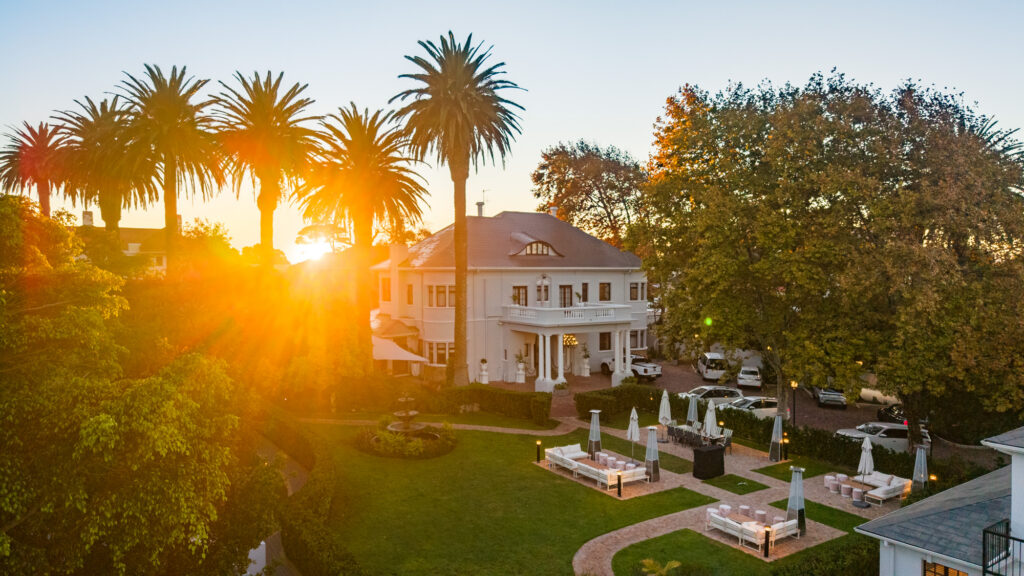
Where a 1920s mansion fits into Cape Town’s dining map
Upper Wynberg sits in a quiet, leafy pocket of Cape Town, close enough to the city center and the coast to make it a practical base, yet removed enough to feel like a retreat. Palm House occupies a heritage mansion from the 1920s, a period when this part of the southern suburbs was defined by large gardens, generous verandas, and homes built for slower living. Rather than treating that history as decoration, Palm House has organized its hospitality around it: the architecture, the grounds, and the outdoor spaces are used as active parts of the guest experience rather than a backdrop for photographs.
This positioning matters in a city where luxury dining is often associated with waterfront views or vineyard settings. Palm House offers a different proposition: a residential-scale heritage property where dining, spa, and garden life are designed to overlap. That distinction is becoming more relevant as travelers increasingly search for destinations that feel discovered rather than heavily marketed, and a converted mansion with working gardens fits that search intent directly.

The outdoor fire kitchen and Executive Chef Gregory Henderson
The most concrete new development at Palm House is its outdoor fire kitchen, scheduled to launch on Heritage Day, September 24, 2026. Heritage Day is a deliberate choice of date in South Africa, closely associated with shared food culture and open-fire cooking traditions, so the timing signals intent rather than coincidence. An outdoor fire kitchen shifts cooking into the garden setting itself, turning meal preparation into something guests can watch, smell, and engage with directly rather than experience only as a finished plate.
Executive Chef Gregory Henderson leads the kitchen program at Palm House, overseeing a style of cooking built around seasonal, sustainable, and where possible foraged or locally sourced ingredients. That approach is consistent with a broader shift in Cape Town’s fine dining scene, where provenance and technique are increasingly discussed alongside setting. An open fire format demands precision, since there is far less room to hide behind heavy sauces or elaborate plating, and it rewards a kitchen that already prioritizes ingredient quality over embellishment.
Palm Terrace and de Tafel: two restaurants, one philosophy
Palm House’s dining program is built around two signature restaurants, Palm Terrace and de Tafel, each offering a distinct way to experience the same underlying philosophy of seasonal, garden-connected cooking. Palm Terrace leans into the property’s outdoor character, using the mansion’s terrace and garden setting as the dining room itself, ideal for guests who want their meal to feel woven into the landscape rather than separated from it by walls.
De Tafel, meanwhile, offers a more intimate, indoor counterpoint within the historic house, suited to guests who want the heritage architecture itself, rather than the garden, to set the tone. Having two restaurants under one roof gives Palm House flexibility that single-concept properties often lack: it can serve a relaxed lunch on the terrace and a more considered evening service at de Tafel without either format compromising the other. For visitors staying at the hotel, this also means dining does not need to be planned around a single sitting or a single mood.
Together, the two venues suggest a kitchen that is not simply attached to a hotel for convenience, but treated as a core part of what the property is selling. That is an increasingly common pattern among boutique heritage hotels positioning themselves as dining destinations in their own right, not just accommodations with a restaurant on-site.
Beyond the table: gardens, the Açaí Spa, and outdoor living
Dining at Palm House does not exist in isolation. The property’s gardens are a working part of its identity, supplying both atmosphere and, where seasonal ingredients allow, produce for the kitchen itself. This garden-to-table connection is part of why the outdoor fire kitchen makes sense here specifically: the cooking format mirrors the outdoor living the rest of the property already promotes.
The Açaí Spa rounds out the experience, giving guests a wellness component that complements rather than competes with the dining program. For a property built around a 1920s mansion, pairing heritage architecture with contemporary spa treatment is a natural extension of the outdoor-living concept: guests move between garden, table, and treatment room without leaving the grounds. This kind of integrated day, rather than a single standout restaurant booking, is increasingly what defines “destination” status for boutique hotels in competitive markets like Cape Town.
What this signals for luxury travel in Cape Town
Palm House’s timing and format reflect a wider pattern in luxury hospitality: heritage properties are increasingly using site-specific features, gardens, historic architecture, open-fire cooking, to differentiate themselves from generic five-star formats. Rather than importing an international restaurant concept wholesale, Palm House is building its dining identity around what the property already has, a century-old house, established gardens, and a specific slope of Table Mountain.
For travelers, this trend is worth noting beyond Palm House itself. Properties that root their dining in provenance, place, and architecture tend to offer a more memorable and less replicable experience than those relying purely on brand or view. Cape Town has no shortage of dramatic scenery, but a mansion-based dining program built around foraged ingredients and open fire cooking offers something genuinely distinct within that landscape.
Frequently asked questions
When does the outdoor fire kitchen open?
The outdoor fire kitchen at Palm House is set to launch from Heritage Day, September 24, 2026.
What is the difference between Palm Terrace and de Tafel?
Palm Terrace is oriented around the property’s outdoor garden and terrace setting, while de Tafel offers dining within the historic mansion itself. Both draw on the same seasonal, garden-connected kitchen.
Is Palm House only a restaurant, or a full hotel experience?
Palm House is a boutique hotel and spa. Dining, including Palm Terrace, de Tafel, and the new fire kitchen, is one part of a broader stay that also includes the Açaí Spa and the property’s gardens.
Plan your visit to Palm House
Explore rooms, dining, and spa details directly on the official site before booking your Cape Town stay.
Source note: Details on Palm House Boutique Hotel & Spa, its location in Upper Wynberg, Executive Chef Gregory Henderson, Palm Terrace, de Tafel, the Açaí Spa, and the outdoor fire kitchen launching from Heritage Day, September 24, 2026, are credited to official Palm House information at palmhouse.co.za.