

There is something powerful about taking an object people already know and making them see it differently. A LEGO brick fits between your fingers. Put enough of them together, with a clear idea behind the build, and suddenly that familiar object becomes something you could plan an afternoon around.
In Shanghai, LEGO took that idea to the waterfront.
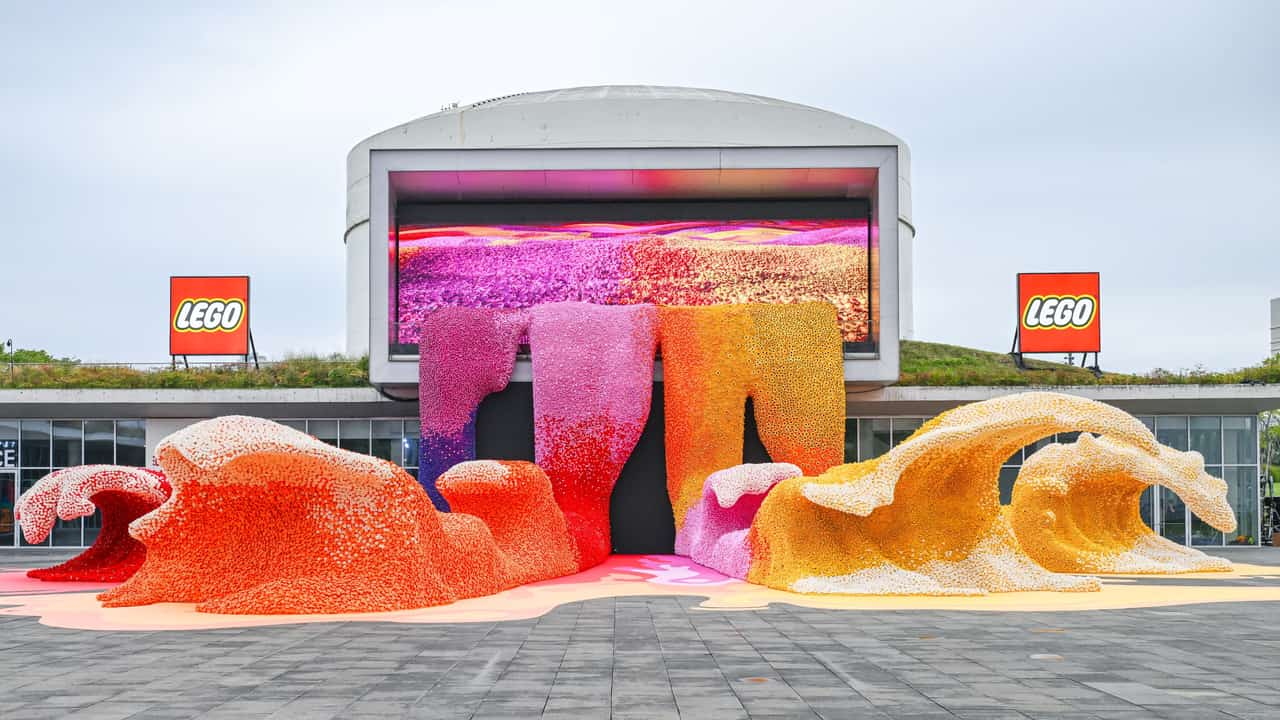
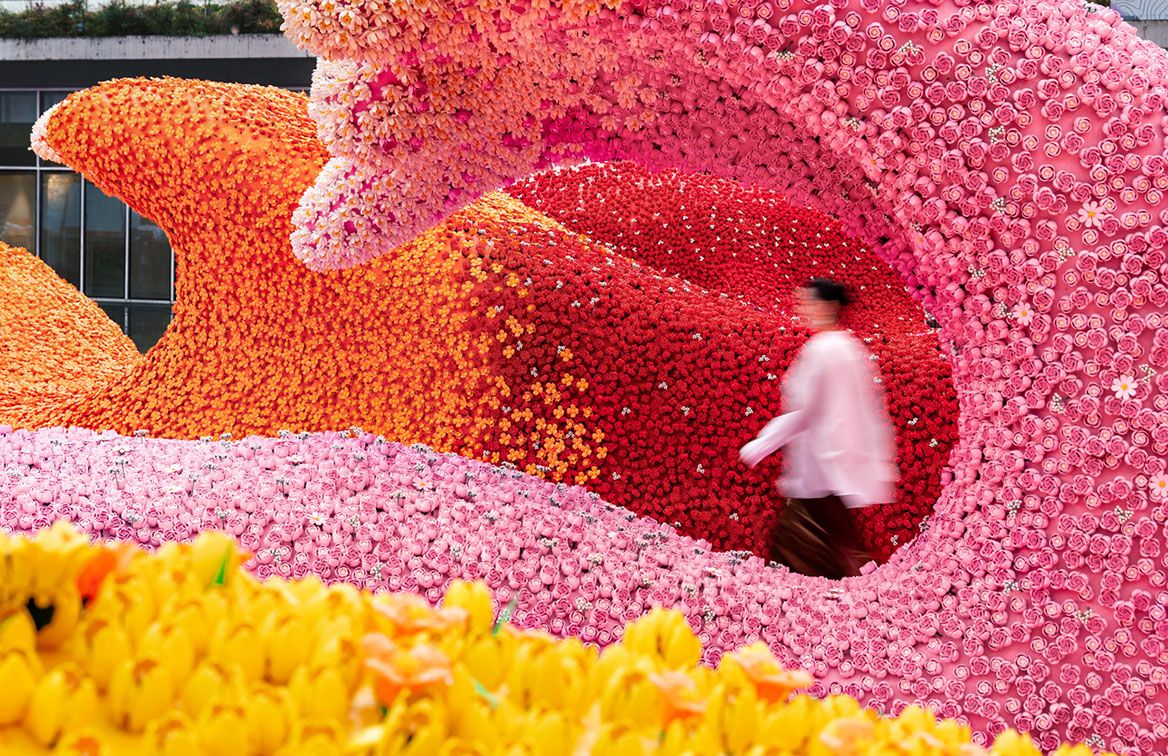
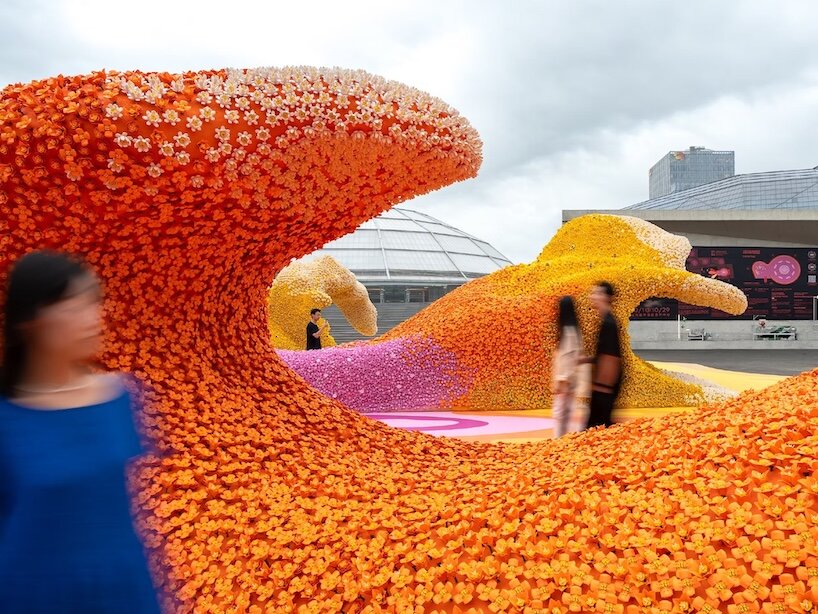
Its Botanical Wave brought more than 380,000 LEGO Botanicals pieces to TANK Shanghai, stretching approximately 30 metres, or 98 feet, across an installation covering around 800 square metres. LEGO’s October 23 announcement identifies it as the largest LEGO Botanicals build constructed worldwide. Roses, sunflowers and tulips appeared to pour from a former oil tank, turning a piece of industrial architecture into the starting point for a colourful landscape.
The numbers get your attention. The relationship between the flowers and the building gives the project its character. Something small and playful takes over something enormous and heavy. You understand the contrast immediately, before reading a description or knowing anything about the campaign.
A Former Oil Tank Becomes Part of the Artwork
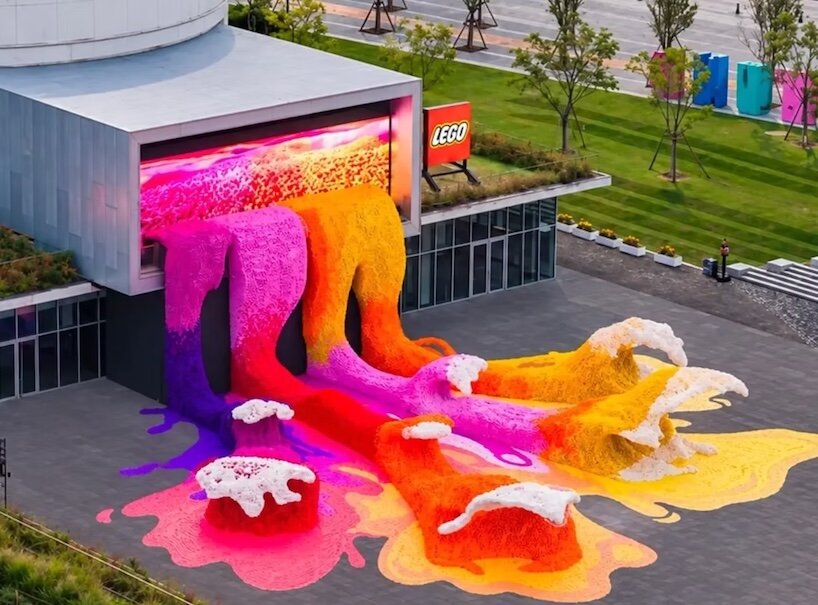
The installation formed the centrepiece of the LEGO Bloom Exhibition on Shanghai’s West Bund waterfront. Open from October 1 to 29, 2026, it placed a temporary botanical landscape against the concrete forms of TANK Shanghai. LEGO reported more than 229,000 visitors as of its October 23 announcement; that figure was an interim count.
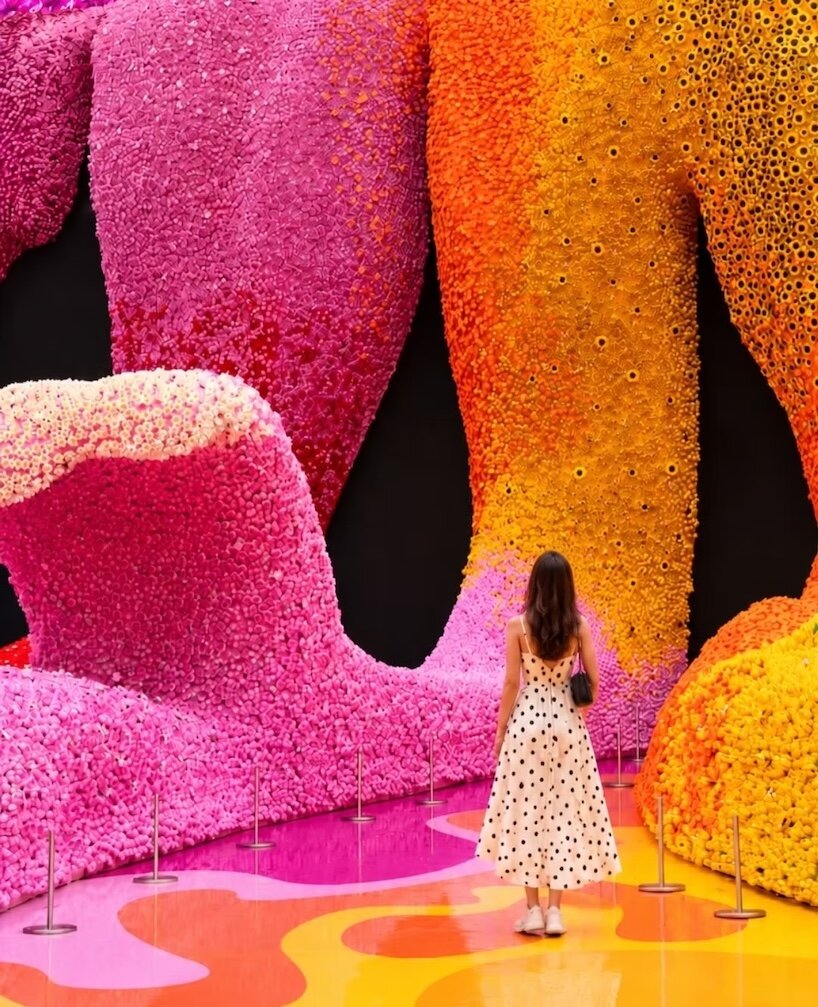
The flowers followed broad ribbons of red, yellow, orange and white. Their arrangement suggested a wave spilling from the structure and continuing across the ground. Indoors, the exhibition extended into artworks incorporating materials such as metal, textiles and mirrors, alongside an immersive digital display.
What makes the outdoor composition interesting is how much it depends on its setting. A floral wave in a neutral exhibition hall would carry a different energy. Here, the tank provides resistance: a massive, restrained surface against which every bright element becomes more visible.
It also gives the flowers somewhere to come from. They appear to escape the architecture, making the building an active part of the composition.
For anyone working across art, events or design, that is a useful detail. A venue can do much more than accommodate an idea. Its shape, history and material can help tell the story. The strongest installations make you consider the space and the work together.
The Craft Is in the Accumulation
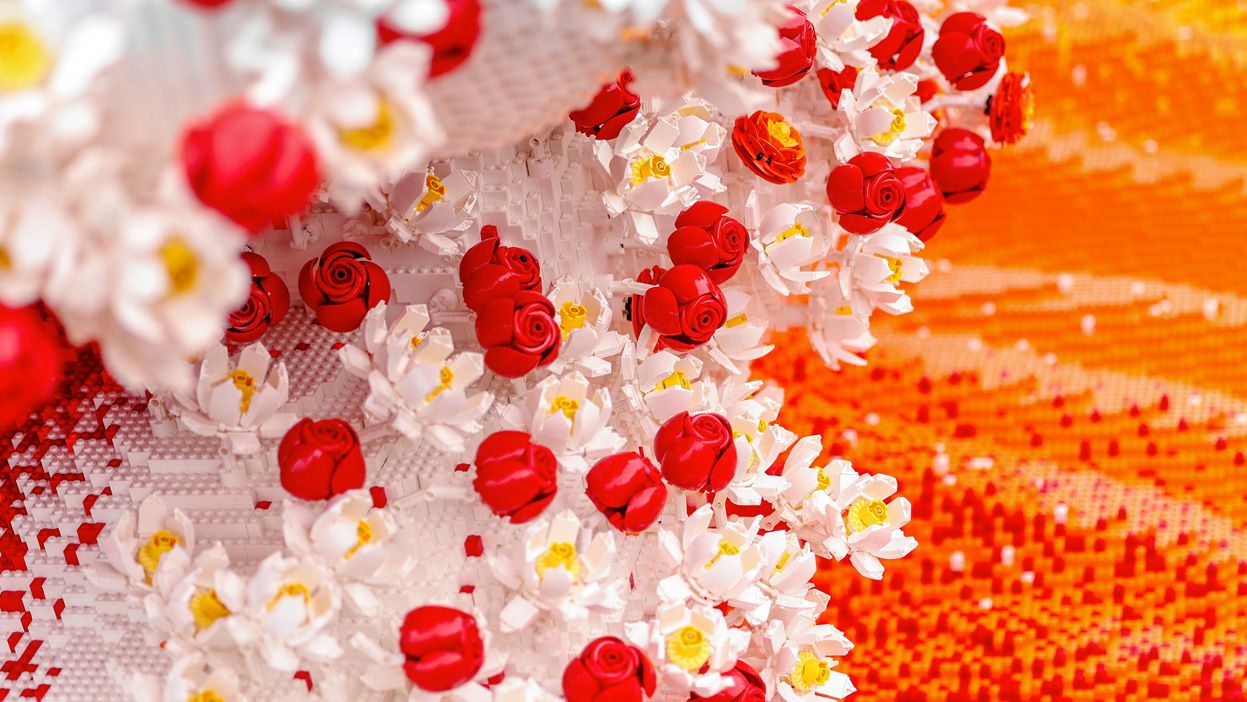
LEGO reports that the installation was created by hand over 1,200 hours. Combined with the scale of the build, that detail brings the craftsmanship into focus: a monumental landscape assembled from individual pieces, with each contribution working towards the larger composition.
Each flower belongs to a larger arrangement. Colour, density and placement have to work across the whole surface, while the individual botanical forms still need to register up close. That creates two ways to read the installation: as a sweeping landscape from a distance, and as a collection of constructed details as you approach it.
That shift in scale is part of the appeal. You can recognise the overall gesture in a photograph, then become curious about how the smaller pieces hold it together.
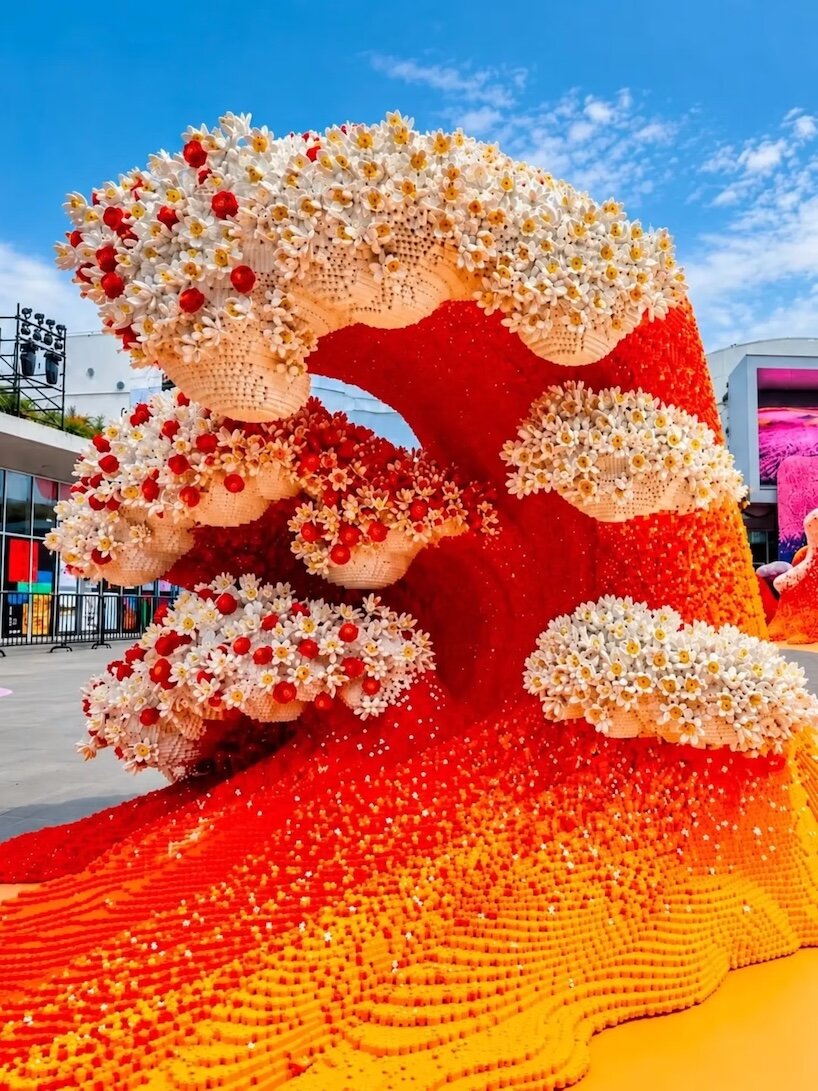
There is a familiar connection here to fashion, jewellery and interiors. Repetition can produce richness when someone has paid attention to the relationship between the parts. A repeated element becomes interesting through its placement, through the rhythm it establishes, and through the patience the finished work suggests.
LEGO gives that process an unusually accessible vocabulary. You may never have assembled a couture garment or set a gemstone, but you can understand the action of joining two bricks. The installation makes a monumental result feel connected to a gesture almost anyone could attempt.
Visitors Could Become Part of the Landscape
The adult audience was central to LEGO’s own explanation of the exhibition.
“Adults don’t stop being creative, but making time for creativity can become harder,” said Remi Marcelli, Senior Vice President, Global Brand Development at the LEGO Group, in the announcement.
That observation gives the spectacular setting a relatable purpose. Making room for creativity can begin with a modest, tangible activity.
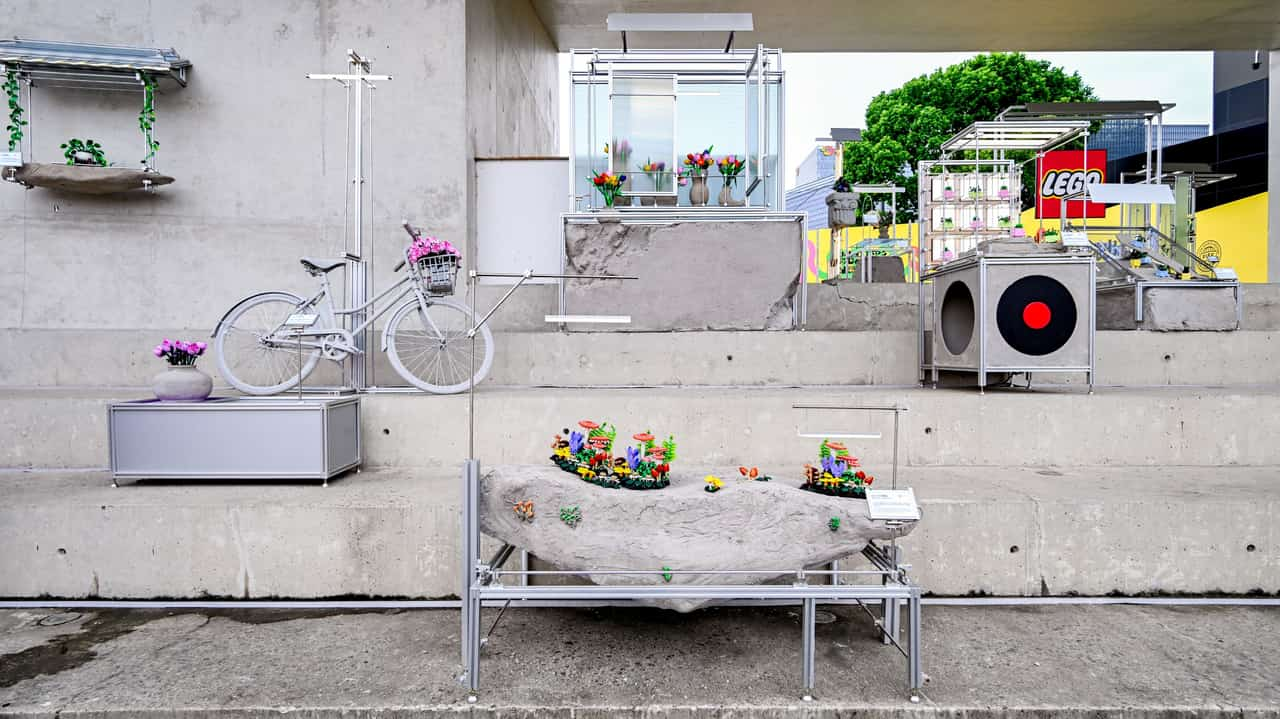
The exhibition included 18 lifestyle displays presenting Botanicals in domestic settings, alongside 18 original artworks co-created with artists and adult LEGO fans. Visitors could also construct their own creations, scan them and add digital versions to a shared virtual landscape.
That sequence gives the participation a clear purpose. You encounter an enormous collective work, build something at a personal scale, and then see your contribution join other people’s creations.
The physical and digital experiences share the same idea: individual pieces coming together. The technology carries the thought forward because it grows directly from what visitors have made with their hands.
There is also something appealing about the invitation to adults. Creative activity does not have to lead to a professional identity or a finished portfolio. It can be an enjoyable use of an hour. Building a flower offers a manageable beginning, with an object you can recognise emerging from the process.
“We are accelerating the growth with adults, too,” said Maciek Selinski, Head of the China Market Group at the LEGO Group, in the same release. The company also announced an adult-focused Shanghai pop-up store for November, extending the invitation beyond the exhibition.
A public installation can create that opening. Someone arrives to look, discovers an opportunity to participate, and leaves with a closer understanding of the work.
What Brands Can Learn From a Flower Wave
From an experiential perspective, the project offers a clear idea worth examining: give people something they can understand quickly, then reward their curiosity.
The wave provides the immediate image. Its construction offers detail. The visitor activity creates a personal connection. Each layer gives someone a reason to spend more time with the same central concept.
A photograph can introduce that experience, but it cannot complete the act of making a flower yourself. That distinction matters when designing an event. The visual moment helps people discover it; the activity gives them something to remember beyond how it looked.
The industrial setting strengthens the idea further. The flowers change the way the tank is perceived, while the tank gives the flowers their drama. Neither needs a complicated explanation.
For LAPSOFLUX, that relationship between setting, craft and participation is where the story becomes most interesting. A memorable experience gives people an entry point and enough substance to stay curious.
Shanghai’s Botanical Wave began with a material many people associate with childhood and used it to invite a fresh look at a substantial piece of the city. Its most compelling proposition was available at a much smaller scale, too: pick up a few pieces and see what you can make.
