

Gucci and ZEGNA’s latest results raise a sharper question for luxury marketing: what turns admiration into a visit, a purchase and a lasting relationship?

A customer can watch a runway show, save a campaign and recognise a handbag from across a restaurant without ever entering the boutique that sells it. For luxury brands, that distance between cultural visibility and commercial participation deserves closer attention.
Desire remains essential. It gives a product meaning beyond its materials and allows a house to occupy a place in someone’s imagination long before a purchase becomes possible. But desire needs somewhere to go. When the next step feels unclear, inconvenient or unremarkable, even a beautiful campaign can leave the customer exactly where it found them: scrolling.
The third-quarter 2026 results from Gucci and Ermenegildo Zegna Group offer two different perspectives on that challenge. They also suggest a useful question for the industry: how effectively does marketing connect the world a brand creates with the experience a customer can actually enter?
Gucci’s Traffic Problem Reveals the Gap
Gucci recorded €1.291 billion in third-quarter revenue, down 4% as reported and 6% on a comparable basis. Sales through its directly operated retail network fell 9% on a comparable basis. Yet Kering identified weaker traffic as the principal constraint, while conversion, average prices and average transaction values improved. [1]
That combination deserves attention. The customers who reached the brand were showing encouraging purchasing behaviour, but those improvements were insufficient to offset the traffic weakness.
It would be too simple to diagnose the problem as a marketing failure. Product cycles, regional conditions, pricing and the wider economy all affect demand. Kering itself pointed to a tougher comparison base and pressure on traffic in Asia Pacific, particularly Mainland China, and Japan. [1]

Still, the commercial question is immediate. If a house is becoming more effective at selling to the customers it reaches, what would persuade more relevant customers to engage?
Another campaign might help. But its usefulness depends partly on what happens after someone sees it. Can they discover the product locally? Arrange a fitting? Speak with someone who understands what caught their attention? Does the boutique offer something that makes the journey worthwhile?
ZEGNA Shows Why the Relationship Matters
Ermenegildo Zegna Group reported third-quarter revenue of €433.8 million, up 8.9% year on year. Across the group, direct-to-consumer revenue increased 13% as reported. Within the ZEGNA brand specifically, direct sales rose 18.2% as reported, or 16.4% organically. [2]
The store figures add an important detail. ZEGNA ended September with 275 directly operated stores, compared with 282 a year earlier. The group’s combined network, including Thom Browne and TOM FORD FASHION, stood at 471, versus 472. [2]
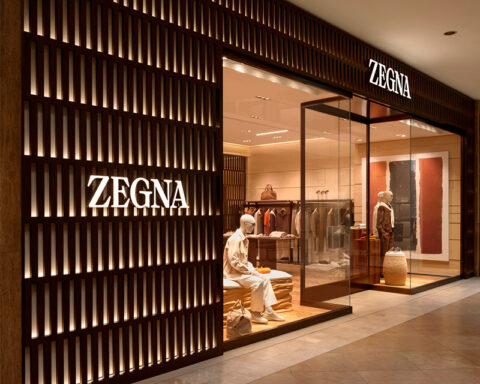
Stronger direct sales alongside a smaller network challenge the assumption that growth must come from opening more doors.
These figures do not establish that closures caused growth, nor do they isolate the performance of existing boutiques from other direct channels. Gucci and ZEGNA also operate with different customer bases and product mixes. Their results cannot serve as a controlled test of competing marketing strategies.
They do, however, make the quality of the customer relationship worth examining. Zegna’s annual reporting explicitly places clienteling and personalised service at the centre of its retail model. [3] For marketers, the implication is practical: a store’s value depends on the relationships and demand it can sustain, as well as its address.

Give the Customer a Specific Reason to Visit
Luxury marketing should make the transition from inspiration to participation feel natural.
Imagine a customer saving a tailoring campaign because of the silhouette. A useful next step could be an appointment with an adviser who has prepared relevant sizes and fabrics. Someone considering a handbag might value a private introduction to its construction, proportions and available finishes. A returning client may respond to a thoughtful message about a piece that fits their existing wardrobe.
These are proposed approaches, rather than claims about what either company did during the quarter. Their common principle is relevance: the invitation gives the customer a clear benefit.

That is also where clienteling earns its place. Remembering a preference should improve the next interaction. A database becomes useful when an adviser can act on it with judgement, whether by setting aside the right size, arranging an alteration or recognising that a customer prefers to browse quietly.
Experiences should meet the same standard. A dinner, exhibition or collection preview can create a meaningful encounter with a house when its content belongs to the brand’s world. Access to a craftsperson, a revealing conversation about design or time to explore a collection can give guests something they cannot obtain from a feed.

Hospitality alone leaves work unfinished. The invitation, product experience and follow-up need to form a coherent relationship. Otherwise, the evening risks becoming a memory with little connection to the next visit.
Measure What Happens After the Attention
This approach changes what a marketing team should want to learn.
Reach and engagement remain useful signals, but they leave important questions unanswered. How many interested customers requested appointments? How many attended? Did the experience produce purchases, useful conversations or subsequent visits? Did customers return after the initial excitement passed?
Measurement should also recognise that luxury purchases can take time. An exhibition visitor may become a client months later. Someone may discover a product in a boutique and purchase online. The task is to understand those journeys well enough to improve them, while avoiding claims that every later sale belongs to a single event or campaign.
Marketing and retail teams therefore need shared responsibility for the handover. A compelling invitation loses force if the product is unavailable or the adviser knows nothing about the campaign. Equally, an excellent store experience needs a credible way to reach people who would value it.
The opportunity is to make each stage reinforce the next: the image creates curiosity, the invitation offers relevance, the visit delivers substance and the follow-up gives the relationship continuity.
A customer who admires a brand from their phone has value. That attention can carry cultural influence and future demand. But a customer who arrives, discovers something they love and feels understood has a reason to return.
For luxury marketers, that is the harder and more useful ambition. After creating desire, give it somewhere worth going.
